

When it comes to riding in New Zealand's unpredictable weather, choosing between waterproof and weather-resistant motorcycle boots depends on your needs. Waterproof boots are built for heavy rain and prolonged wet conditions, keeping your feet dry with specialised membranes like Gore-Tex. They’re ideal for winter rides or wet regions like the South Island but can feel heavier and less breathable. Weather-resistant boots, on the other hand, are lightweight and breathable, perfect for light rain or summer rides. However, they won’t hold up in heavy downpours.
Key Takeaways:
- Waterproof Boots: Best for heavy rain, creek crossings, and cold weather. Less breathable, heavier, and bulkier.
- Weather-Resistant Boots: Better for light rain, warm weather, and short commutes. Lightweight, flexible, but limited water protection.
Quick Comparison:
| Feature | Waterproof Boots | Weather-Resistant Boots |
|---|---|---|
| Rain Protection | High (heavy rain, prolonged) | Low (light rain, short-term) |
| Breathability | Moderate | High |
| Weight | Heavier | Lighter |
| Best For | Winter, wet regions, touring | Summer, urban rides, short trips |
For New Zealand riders, the choice depends on your riding habits and the weather conditions you face.
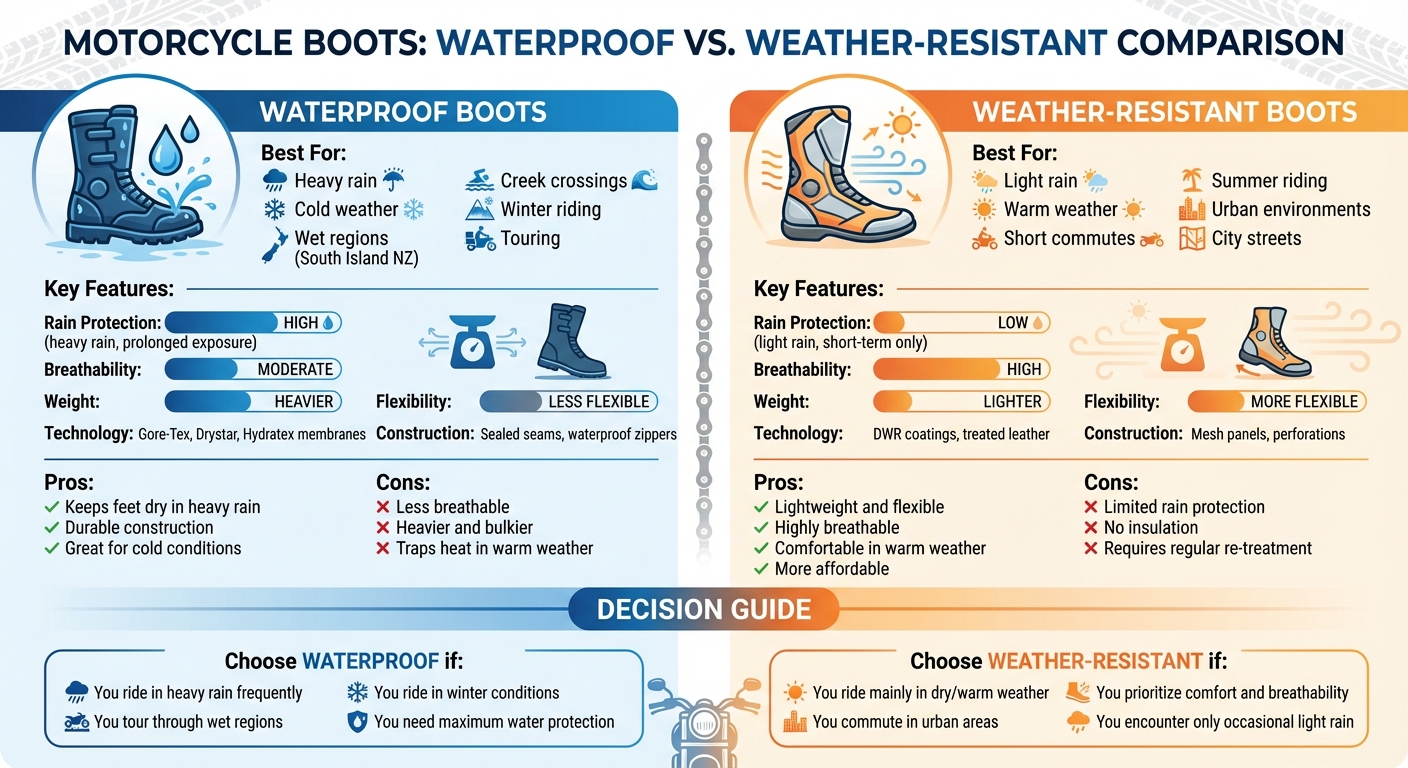
Waterproof vs Weather-Resistant Motorcycle Boots Comparison
What Are Waterproof Motorcycle Boots?
Waterproof motorcycle boots are designed to keep your feet dry in wet conditions, whether you're riding through heavy rain, crossing creeks, or dealing with brief submersion. These boots use specialised membranes like Gore-Tex, Drystar, and Hydratex, which block water from entering while allowing sweat to escape. This dual function ensures your feet stay dry and comfortable, even during extended exposure to water. Unlike weather-resistant boots, which can only handle light rain, waterproof boots are built to stand up to prolonged wet conditions. As PowerSports puts it:
It is physically impossible to make anything waterproof unless there is an impenetrable barrier between the water and the skin.
The secret lies in the technology. Waterproof boots feature a breathable membrane sandwiched between the outer shell and the inner lining. This membrane prevents water from entering while letting moisture from sweat evaporate, so you're not left with damp feet from the inside out.
How Waterproof Boots Are Made
The effectiveness of waterproof boots comes down to their construction. Two main types of membranes are used:
- Microporous membranes: Materials like Gore-Tex have tiny pores that are smaller than water droplets but larger than water vapour molecules. This allows sweat to escape while keeping water out .
- Non-porous membranes: Options like Sympatex work differently, using hydrophilic properties to absorb moisture and transport it outward. These membranes are also known for being eco-friendly and resistant to clogging.
In addition to the membranes, manufacturers use sealed seams and waterproof zippers to block water from entering through stitching or closures. The height of the boot also plays a role - taller boots offer better protection by stopping water from running down your legs or splashing up from the road. As an added bonus, many waterproof membranes also provide windproofing, which helps keep your feet warm on colder rides.
These thoughtful design features make waterproof boots reliable for even the harshest conditions.
When to Use Waterproof Boots
Waterproof boots are a must-have for riders tackling heavy rain, creek crossings, or New Zealand's cold and wet winters. Whether you're commuting through Auckland's unpredictable weather or exploring the lush, rainy West Coast, these boots will keep your feet dry where standard weather-resistant options might fail.
That said, waterproofing has its limits. If a boot reaches 70% of its saturation threshold and isn't fully dried, its ability to block water drops by about 70% for the next ride. To maintain their performance, it's important to:
- Wear riding pants over the boot collar to stop water from running inside.
- Let your boots air dry thoroughly between rides.
- Use a Durable Water Repellent (DWR) spray on the exterior to help water bead off and reduce saturation risk.
Given New Zealand's unpredictable weather, waterproof boots are a practical and reliable choice for any rider looking to stay dry and comfortable on the road.
sbb-itb-bfda696
What Are Weather-Resistant Motorcycle Boots?
Unlike waterproof boots that rely on sealed membranes to block water, weather-resistant motorcycle boots focus on being lightweight and breathable. These boots are designed to handle light rain or splashes but aren’t built for full immersion or prolonged exposure to water. Think of them as ideal for riding in dry conditions with the occasional drizzle - they’re not the best choice for creek crossings or heavy downpours, where water can eventually seep in.
The key difference lies in construction. Weather-resistant boots typically use treated leather or canvas uppers combined with sturdy rubber soles. They don’t feature the internal waterproof membranes (like Gore-Tex) found in waterproof models. Instead, the outer material is treated with water-repellent coatings that cause water to bead up and roll off. This simpler design makes these boots lighter, more flexible, and often more affordable. However, this comes at the cost of total waterproofing, meaning they require specific care and are best suited for particular riding conditions.
One major advantage of weather-resistant boots is their improved airflow. Without the sealed layers of waterproof options, these boots allow for better ventilation, helping to prevent overheating - a common issue with fully waterproof designs. Some models even include mesh panels or perforations to maximise breathability, making them a great option for New Zealand’s warm summer rides.
How Weather-Resistant Boots Work
The outer materials of these boots are treated with hydrophobic coatings, which repel water by causing it to bead and slide off. However, even the best weather-resistant boots have limits. Once the outer layer becomes fully saturated, water can start to seep in through seams and other vulnerable areas.
To keep them effective, it’s important to maintain these coatings. Regularly applying a water-repellent spray helps sustain the beading effect and prevents moisture from soaking into the material. After wet rides, clean the boots and let them air-dry naturally to maintain their durability and performance.
By understanding how these boots function, it’s easier to determine when they’re the right choice for your riding needs.
When to Use Weather-Resistant Boots
Weather-resistant boots shine in urban settings, short commutes, and during New Zealand’s dry, warm summer months when heavy rain is unlikely. They’re perfect for places like Auckland during summer, Wellington’s mild days, or Christchurch’s pleasant weather, offering protection against light drizzle or road spray.
For longer rides in warm weather, these boots excel at keeping your feet cool, thanks to their superior airflow. Pairing them with moisture-wicking socks, such as those made from merino wool, can further enhance comfort and temperature regulation. In cooler conditions, thicker wool socks are a great alternative.
However, for wetter situations - like New Zealand’s rainy West Coast winters or adventure routes with water crossings - weather-resistant boots won’t cut it. In these cases, waterproof boots are the better option, providing the full protection you’ll need.
Key Differences Between Waterproof and Weather-Resistant Boots
Let's dive into the key distinctions that affect comfort, protection, and flexibility.
Materials and Technologies
The way these boots are built sets them apart. Waterproof boots are designed with internal membranes like Gore-Tex or Drystar. These membranes have tiny pores, allowing sweat vapour to escape while keeping water out. Add in sealed seams, waterproof zippers, and durable materials like full-grain leather or direct-injected PU, and you’ve got a boot that’s built to keep water completely at bay.
On the other hand, weather-resistant boots rely on simpler methods. They use Durable Water Repellent (DWR) coatings or hydrophobic treatments on the outer material - often leather or fabric. This makes water bead up and roll off the surface rather than soaking in. However, their effectiveness depends entirely on the durability of the outer coating.
While waterproof boots excel in full water protection, they tend to be bulkier and pricier. Weather-resistant boots, though less protective, are lighter and better suited for light moisture.
These construction differences also play a big role in comfort and ventilation.
Comfort and Breathability
When it comes to long rides, comfort and airflow are critical. Waterproof boots can feel warmer because their sealed membranes, while great at keeping water out, also limit airflow. Even though the microscopic pores allow some sweat vapour to escape, they may struggle in humid conditions or during intense activity. As Peak Moto points out:
The sealed construction that keeps water out can also trap heat and moisture on warm days, creating a trade-off between protection and comfort.
In contrast, weather-resistant boots shine in the breathability department. Without sealed layers, air moves more freely through the boot. Some models even feature mesh panels or perforations to boost ventilation. This makes them a solid choice for warm-weather riding or city commutes where frequent stops and starts are common. However, this increased airflow means they’re less effective in heavy rain or standing water.
For riders in New Zealand, this difference is worth considering. If you’re cruising through Auckland or Christchurch in summer, breathable boots are a lifesaver. But for winter rides along the West Coast or through the South Island’s mountain passes, waterproof boots might be the better option - even if they’re less ventilated.
Boot weight and flexibility also play an important role in overall performance.
Weight and Flexibility
Waterproof boots tend to be heavier due to their multiple layers - membranes, linings, and sealed seams. Some even include insulation, which adds to the weight. This extra bulk can reduce sensitivity and lead to leg fatigue during long rides or on off-road adventures.
Weather-resistant boots, in contrast, are lighter and more flexible. With fewer layers and no internal membrane, they’re easier to move in and less tiring to wear. This makes them a great choice for urban riding or when you plan to spend time off the bike.
For Kiwi riders tackling diverse terrains, finding the right balance between protection and flexibility is key. Touring and adventure riders often prioritise the robust protection of waterproof boots, while urban commuters and fair-weather riders lean towards the lighter, more agile feel of weather-resistant options.
Pros and Cons of Waterproof vs. Weather-Resistant Boots
When it comes to choosing between waterproof and weather-resistant boots, it’s all about weighing the benefits against the drawbacks. Here’s a closer look at how they stack up.
Waterproof boots are your go-to option for heavy rain and cold conditions. Their sealed construction ensures your feet stay dry, even in New Zealand’s famously unpredictable winter weather. This makes them a great choice for tackling those wet, chilly days. However, the same features that keep water out can also trap heat and moisture inside, which isn’t ideal for warmer conditions. For urban riders, this can lead to sweaty feet and reduced comfort, especially when dealing with frequent stops and starts. Plus, their bulkier design might make walking and fine control on the bike a bit more challenging.
Weather-resistant boots, on the other hand, shine when it comes to versatility and comfort. They’re lightweight, breathable, and flexible - perfect for summer rides or navigating the city streets. The added airflow helps keep your feet cool, which is a big plus during Auckland’s humid summers or when stuck in traffic. The downside? They’re not built for prolonged exposure to heavy rain. While they can handle light showers, their protection is limited, and they often lack the insulation needed for colder rides.
Comparison Table
| Type | Pros | Cons |
|---|---|---|
| Waterproof Boots | Keeps feet dry in heavy rain; durable; great for cold conditions | Less breathable; heavier; bulkier; traps heat and moisture |
| Weather-Resistant Boots | Lightweight; breathable; flexible; good for light rain and warmer weather | Limited rain protection; no insulation; needs regular re-treatment |
For Kiwi riders, the choice really depends on your riding habits and the conditions you face. If you’re planning a winter tour of the South Island, waterproof boots are a must. But for daily commuting in Wellington’s milder months, weather-resistant boots might be the better pick for all-day comfort without the extra weight.
Performance in New Zealand's Weather Conditions
New Zealand's weather offers a real test for riders, with everything from sudden West Coast downpours to humid Auckland summers and frosty Southland mornings. How well your boots stand up to these conditions depends largely on whether they’re waterproof or weather-resistant. Let’s take a closer look at how each type performs.
Waterproof boots are your best bet in heavy rain, but even they have their limits. Membranes like Gore-Tex or AquaTech can only handle so much before reaching their saturation point. Prolonged exposure to rain can force moisture through seams and weak spots. Add New Zealand's high humidity into the mix, and drying your boots becomes a challenge. If your boots hit 70% of their waterproof capacity during a ride and don’t fully dry before your next outing, you’re starting with only 30% of their protective capability. For Kiwi commuters who ride daily, making sure your boots dry completely between trips is critical.
Humidity also creates issues inside the boot. Waterproof membranes have microscopic pores designed to vent sweat, but in high humidity, they can struggle to keep up. This can leave you with damp socks - not from leaks, but from perspiration.
Here are a couple of tips to deal with internal moisture:
- Opt for thin merino wool or synthetic socks that wick moisture away.
- Wear riding pants over your boots to stop rainwater from running down your legs and bypassing the membrane, especially in humid conditions.
Weather-resistant boots, on the other hand, dry much faster. Without the layered membrane structure, they often feature mesh panels or perforations that enhance airflow. This makes them a practical choice for riders who deal with unpredictable weather and need boots that dry quickly between rides. However, they’re not built to handle New Zealand’s intense downpours. In sustained wet conditions, water will eventually seep through.
After wet rides, drying your boots properly is essential. Remove the insoles, open the boots fully, and let them air dry naturally. Avoid direct heat, as it can damage both the membranes and leather. Applying a water-repellent spray to the exterior can help water bead off, slowing saturation of the outer material. For waterproof boots, regular cleaning to remove mud and grime is crucial to keep the membrane’s pores functioning properly. These steps are vital for keeping your boots in top shape, no matter how unpredictable New Zealand’s weather gets.
Choosing the Right Boots for Your Riding Style
When picking the perfect boots, your riding style should guide the decision. For touring across varied weather conditions, waterproof boots with a mid-to-tall height are a solid choice. These often feature Gore-Tex linings, ergonomic soles, and cushioning to keep you comfortable on long rides. If you're planning a journey through stunning spots like New Zealand's South Island or taking on iconic routes like the Forgotten World Highway, waterproofing is a must to keep your feet dry and warm.
For adventure riders who split their time between on-road and off-road riding, hybrid boots are the way to go. These boots strike a balance between protection and flexibility. Typically, they come with a mid-calf design, reinforced shin plates, and ankle bracing to handle the bumps and impacts of off-road trails. Plus, they include waterproof membranes to handle creek crossings or muddy paths. Their lighter weight compared to full motocross boots makes them comfortable for long rides, whether you're navigating the rugged tracks of the Rimutaka Ranges or cruising through city streets.
Urban riders, on the other hand, might prioritise flexibility, comfort, and style. Short or mid-height weather-resistant boots are often favoured for city commutes, as they help reduce sweat during stop-and-go traffic. Features like oil-resistant soles can improve grip on slippery roads, providing safety both on and off the bike. In cities like Auckland or Wellington, where the rain comes and goes, pairing weather-resistant boots with breathable merino wool socks can keep your feet comfortable and dry.
Whatever your riding style, safety should always come first. Look for boots that meet CE certification (EN 13634:2017) for impact and abrasion resistance. It's worth noting that nearly 30% of motorcycle crash injuries involve the lower limbs, so investing in protective footwear is crucial. When trying on boots, wear the socks you plan to ride in - your toes should have room to wiggle, but your heel should stay snugly in place.
Moto 1's Range of Waterproof and Weather-Resistant Motorcycle Boots

Moto 1 understands the diverse riding conditions across New Zealand, and their collection of motorcycle boots is designed to handle everything from heavy downpours to light drizzles.
Their range includes trusted brands like Danner, Icon, Milwaukee Leather, Joe Rocket, Fly Racing, and Ride Tecs. Whether you're navigating the wet roads of the South Island or commuting through Auckland's occasional showers, there's something for every rider.
Waterproof Boots: These models feature advanced membranes such as GORE-TEX, eVent, Dry Tech, and Sympatex, ensuring top-notch water protection while remaining breathable. For example, the Danner Quarry USA boots incorporate GORE-TEX liners for 100% waterproofing and breathability. Similarly, the Icon Tarmac riding shoe boasts ICON Level 3 waterproofing. Many options also use 2.2mm full-grain cowhide treated for water resistance, offering durability alongside protection.
Weather-Resistant Boots: These combine treated leather uppers with internal membranes for layered defence against the elements. Features like gusseted tongues, as seen in the Fly Tradesman, prevent water from seeping through laces. Additionally, most models come equipped with oil- and acid-resistant outsoles with non-skid treads, providing reliable grip on slippery surfaces.
All boots in the collection meet CE certification (EN 13634:2017) standards, meaning they are rigorously tested for impact, abrasion, and crush resistance. Customer feedback reflects this commitment to quality, with 1,981 reviews praising Moto 1's products and service. Riders frequently mention their fast delivery times, even to rural locations.
"Excellent service. Ordered bike pants over the weekend, they were sent within 2 days and arrived before the end of the week (rural Canterbury)." - Tony Simpson
Moto 1 also makes it easy for Kiwi riders to gear up with free shipping on orders over NZ$149. For instance, the Gaerne Aspen Gore-Tex Boot, starting at NZ$204.45, qualifies for free delivery. Whether you're after full waterproofing or a balance of protection and breathability, Moto 1 has the perfect pair of boots ready to meet your needs.
Conclusion
When deciding between waterproof and weather-resistant motorcycle boots, it’s all about weighing the pros and cons. Waterproof boots, often featuring membranes like Gore-Tex or AquaTech, are excellent for keeping your feet dry during New Zealand’s sudden downpours or extended rides. That said, they can feel warmer in hot weather and are generally heavier and stiffer. On the other hand, weather-resistant boots prioritise breathability but won’t fully protect you in heavy rain.
For riders navigating New Zealand’s diverse conditions - whether it’s the wet roads of the South Island or Auckland’s sporadic showers - the choice depends on your typical riding environment. Adventure riders often lean towards waterproof designs that balance dryness with comfort over long distances. Meanwhile, urban commuters in milder climates might appreciate the lightweight flexibility of weather-resistant boots.
To make your boots last, regular cleaning, re-treatment, and proper drying are essential. Pairing them with moisture-wicking socks can also make a big difference in comfort.
FAQs
How can I tell if boots are truly waterproof?
To determine if boots are waterproof, pay attention to specific features. Look for materials like Gore-Tex or other waterproof membranes, as these are designed to repel water effectively. Check for sealed or taped seams, which prevent water from seeping through the stitching. A snug fit around the ankle and opening is also crucial, as it helps block water from entering. Many waterproof boots also include a waterproof lining, offering extra protection to keep your feet dry even in heavy rain. These details set waterproof boots apart from those that are merely weather-resistant.
How do I stop waterproof boots getting clammy in summer?
To keep your feet dry and comfortable during summer rides, opt for boots with breathable membranes like Gore-Tex. These materials allow moisture to escape while still blocking water from getting in. Pair them with moisture-wicking socks to pull sweat away from your skin. Steer clear of heavily insulated boots in warm weather, as they can trap heat and sweat. After your ride, make sure to air out your boots to help them stay dry and fresh.
How often should I re-spray weather-resistant boots?
To keep your weather-resistant boots in good shape, it's important to re-spray them with a water-repellent treatment every three months. If you're in an especially rainy area, you might want to apply it more often to keep them fully protected.