

Motorcycle tyres are essential for your safety and riding experience. Choosing the right ones can feel overwhelming, but it doesn’t have to be. Here’s what you need to know:
-
Tyre Specs: Understand sidewall codes like
120/70ZR17to identify tyre width, aspect ratio, construction type, rim size, load index, and speed rating. - Types of Tyres: Options include sport (grip-focused), touring (durable), adventure (off-road), and cruiser (comfort for heavy bikes). Match your tyres to your riding style and terrain.
- Replacement Rules: Replace tyres every 5–7 years or when tread depth falls below New Zealand's legal minimum of 1.5 mm.
- Maintenance: Check tyre pressure monthly, inspect for wear, and avoid mixing radial and bias-ply tyres.
Proper tyres improve handling, durability, and safety. Decode your bike’s requirements, choose tyres that suit your needs, and maintain them regularly for the best performance.
Picking Motorbike Tyres | Choosing the Correct Tyre for Your Motorbike
If you're heading off-road, choosing the right adventure tyres is essential for traction and durability.
sbb-itb-bfda696
How to Read Motorcycle Tyre Specifications
Motorcycle tyre sidewalls are like a secret code, packed with essential details about safety and performance. Once you understand these markings, choosing the right tyres becomes much easier. This section breaks down the information so you can make confident, informed decisions.
Breaking Down Tyre Size Numbers
Let’s take an example: 120/70ZR17 58W. Each part of this code tells you something important about the tyre's size and capabilities.
- 120: This is the tyre's width in millimetres, measured from sidewall to sidewall.
- 70: This number represents the aspect ratio. In this case, the sidewall height is 70% of the tyre's width, which works out to 84 mm.
-
ZR: Indicates a high-performance radial tyre. Other construction types include:
- A dash (–) for bias-ply tyres
- B for bias-belted tyres
- R for radial construction.
- 17: The wheel rim diameter, measured in inches.
The next two elements focus on load and speed:
- 58: This is the load index, showing the tyre can handle a maximum load of 236 kg.
- W: The speed rating, meaning the tyre is safe for speeds up to 270 km/h.
Most motorcycle tyres follow one of three coding systems: Metric, Standard Inch, or Alpha.
Speed Ratings Table
| Speed Rating | Max Speed (km/h) | Max Speed (mph) |
|---|---|---|
| H | 210 | 130 |
| V | 240 | 149 |
| W | 270 | 168 |
| Y | 300 | 186 |
You’ll also notice a four-digit date code near the DOT symbol. For instance, "4712" means the tyre was made in the 47th week of 2012. Tyres with a three-digit code were manufactured before 2000 and should be replaced immediately. Even if the tread looks fine, tyres should generally be replaced every 6 to 7 years.
Where to Find Your Bike's Tyre Specifications
Now that you can decode tyre markings, the next step is ensuring they match your bike’s requirements.
Your motorcycle's manufacturer specifies the correct tyre sizes and ratings for both the front and rear. The best place to find this information is your owner’s manual, which lists the recommended specifications.
No manual? No problem. Check the swingarm (the metal arm holding the rear wheel) for a sticker with tyre details. Many bikes also have a frame label, often located near the headstock or under the seat, with the same information.
When it comes to tyre pressure, always follow the recommendations in your owner’s manual. The maximum pressure listed on the tyre sidewall is just that - the absolute maximum - not what you should use for everyday riding.
Different Types of Motorcycle Tyres
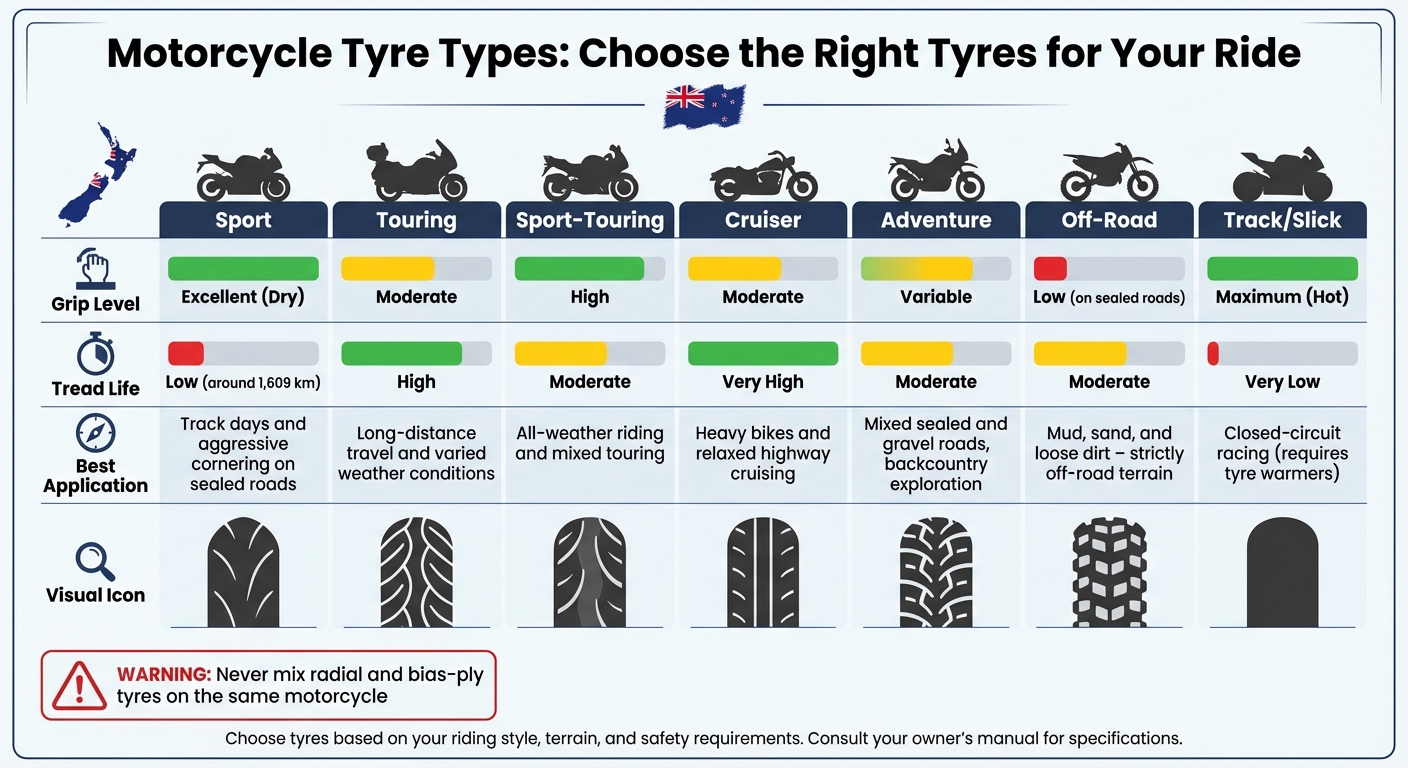
Motorcycle Tyre Types Comparison Guide: Grip, Lifespan and Best Use Cases
Once you've got a grasp on tyre specifications, the next step is figuring out which ones suit your riding conditions best.
Common Tyre Categories Explained
The type of tyre you choose can make a huge difference in how your bike handles and how long the tyres last.
Sport tyres are made with soft rubber compounds designed to maximise grip on dry surfaces. They're perfect for aggressive cornering and track days, but their softer material means they wear out quickly - often lasting just around 1,609 km. These tyres typically have a triangular profile, which increases the contact patch when you're leaning hard into corners.
Touring tyres, on the other hand, are crafted from harder rubber, making them ideal for long-distance rides. They provide dependable grip even in cooler conditions, which is a big plus when dealing with New Zealand's unpredictable weather.
Sport-touring tyres aim to strike a middle ground, offering a mix of cornering grip and durability, making them versatile for a variety of riding conditions.
For those venturing into New Zealand's rugged backcountry, adventure or dual-sport tyres are the go-to choice. These tyres often feature deep grooves and segmented tread patterns, and they’re typically rated with an on-road/off-road ratio, such as 40/60 or 60/40, to indicate their balance between sealed and unsealed road performance.
Cruiser tyres are built for heavier motorcycles, focusing on stability, comfort, and long-lasting performance rather than sharp cornering ability. Meanwhile, off-road or motocross tyres are designed with "knobby" treads to maximise grip in mud, sand, and gravel. However, these tyres are not stable on sealed roads and aren’t suitable for highway use.
"Never mix radial and bias-ply tyres on the same motorcycle. Mixing the two can cause unpredictable handling and is dangerous."
– JR Motorcycles
Tyre Type Comparison Table
Here’s a quick breakdown of how different tyre designs cater to various riding needs:
| Tyre Type | Grip Level | Tread Life | Best Application |
|---|---|---|---|
| Sport | Excellent (Dry) | Low | Track days and aggressive cornering on sealed roads |
| Touring | Moderate | High | Long-distance travel and varied weather conditions |
| Sport-Touring | High | Moderate | All-weather riding and mixed touring |
| Cruiser | Moderate | Very High | Heavy bikes and relaxed highway cruising |
| Adventure | Variable | Moderate | Mixed sealed and gravel roads, backcountry exploration |
| Off-Road | Low (on sealed roads) | Moderate | Mud, sand, and loose dirt – strictly off-road terrain |
| Track/Slick | Maximum (Hot) | Very Low | Closed-circuit racing (requires tyre warmers) |
Choosing the right tyre is all about balancing performance with your riding style and the terrain you’ll tackle. Each type has its strengths, so understanding these trade-offs will help you make the best choice for your needs.
What to Consider When Buying Motorcycle Tyres
Once you've deciphered tyre specifications and familiarised yourself with the different types, it's time to focus on practical factors that will influence your purchase.
Choosing Tyres for Your Riding Style
The way you ride should guide your tyre choice. If you're commuting around Auckland or embarking on long tours across the South Island, touring tyres are a solid option. They provide a dependable mix of grip and durability, performing well in a variety of weather conditions, making them a versatile choice for New Zealand's unpredictable climate.
For riders who enjoy spirited weekend rides on sealed roads, sport tyres are the go-to. These tyres offer exceptional dry grip thanks to their softer rubber compound, but they do wear out faster. On the other hand, if you're venturing off-road to explore gravel tracks or backcountry routes, adventure tyres are your best bet. While they sacrifice some street performance, they excel in off-road conditions, giving you the flexibility to tackle diverse terrains.
Once you've matched your tyres to your riding style, it's time to think about your budget and how tyre compounds impact both costs and performance.
Tyre Pricing and Budget Planning
Striking a balance between cost and safety is essential when buying new tyres. Prices will vary depending on the brand and size, but some retailers sweeten the deal with perks like free shipping on orders over $99. Understanding tyre compounds can help you make a smarter choice:
- Soft compounds offer excellent grip but wear out quickly.
- Hard compounds last longer but provide less traction.
- Dual-compound tyres combine the best of both worlds, using a harder centre for longevity and softer edges for improved cornering grip.
Although touring and cruiser tyres might have a higher upfront cost, their high-mileage design often makes them a better investment in the long run.
Understanding Speed and Load Ratings
Speed and load ratings are not just technical details - they're crucial for safety. These ratings ensure your tyres can handle your bike's weight, top speed, and braking requirements. You'll find this information on the tyre's sidewall (e.g., 120/70ZR17) or in your motorcycle's manual. Always confirm that the tyre's ratings align with your bike's manufacturer specifications. If you frequently carry passengers or heavy luggage, consider slightly increasing the tyre pressure to account for the added weight.
It's also important to match the construction type - whether radial or bias-ply - on both the front and rear tyres. This ensures consistent and safe handling.
When you're ready to make your purchase, check out the selection available on Moto 1. Their online store offers detailed product specs, competitive pricing, and free shipping on qualifying orders, making it easier to choose the right tyres for your needs.
How to Maintain Your Motorcycle Tyres
Getting the right tyres for your motorcycle is just the beginning - keeping them in good shape is key to staying safe and getting the most out of your investment. With proper care, your tyres can perform better and last longer, especially on New Zealand's diverse roads.
Measuring Tread Depth and Legal Minimums
In New Zealand, the law requires motorcycle tyres to have a tread depth of at least 1.5 mm across all principal grooves and around the entire circumference of the tyre. To help you monitor this, most tyres come with tread wear indicators (TWIs). These small projections inside the grooves show when the tread has worn down to the legal limit. Look for a triangle or TWI mark on the tyre's sidewall for guidance.
While staying above 1.5 mm is the legal minimum, replacing your tyres before they get this worn is a smart move - especially if you're riding in wet conditions. Worn tread can significantly reduce grip on slippery roads. To measure tread depth accurately, use a dedicated tread depth gauge.
Keeping an eye on tread depth goes hand in hand with maintaining the correct tyre pressure for the best results.
Checking and Adjusting Tyre Pressure
Tyre pressure is just as important as tread depth when it comes to safety and performance. Proper pressure affects handling, braking, and even fuel efficiency. In fact, keeping your tyres properly inflated can improve fuel consumption by up to 4%.
Make it a habit to check your tyre pressure at least once a month, and always do it when the tyres are cold. Riding heats the tyres, which expands the air inside and can lead to inaccurate readings.
You'll find the recommended pressure for your bike in the owner's manual or on a label (often located on the frame or swingarm). Avoid using the maximum pressure printed on the tyre sidewall - that's not the operating pressure for your bike. Use a reliable gauge to check the pressure, and adjust it with a portable compressor if needed. If you're carrying a passenger or extra luggage, increase the pressure slightly to compensate.
"Correct tyre pressure is vital for balanced braking, maximum grip and maximum tyre life and can improve fuel economy." – MTA (Motor Trade Association)
Spotting Wear and Damage
A quick visual inspection can help you identify potential tyre issues before they become dangerous. Look for signs like bulges, cuts, cracks, or embedded debris such as nails or glass. If you notice exposed steel cords, it's time to replace the tyre immediately.
Pay attention to wear patterns, as they often reveal underlying problems:
| Wear Pattern | Likely Cause |
|---|---|
| Both shoulders worn | Under-inflation |
| Centre of tread worn | Over-inflation |
| One-sided wear | Poor wheel alignment |
| Uneven bald spots or "cupping" | Wheel imbalance or worn shock absorbers |
If your motorcycle is parked outdoors for extended periods, watch out for "dry rot" - fine cracks caused by UV exposure that weaken the rubber. To prevent this, consider using a UV-resistant cover to shield your tyres from the sun. Regular cleaning also helps by removing road chemicals and debris that can damage the rubber over time.
Getting Professional Installation and Advice
Benefits of Professional Tyre Installation
While fitting tyres yourself might seem like a cost-effective option, professional installation prioritises your safety. One of the most critical errors riders can make is mixing radial and bias-ply tyres on the same motorcycle. This combination can lead to unpredictable handling, making your ride far more dangerous.
Professionals do more than just mount tyres - they perform detailed inspections to catch potential issues. For example, they check if the tyre's rubber has hardened, which often happens in tyres older than five years. They also ensure proper wheel alignment and balancing, which are key to avoiding uneven wear and extending tyre life. These checks are vital because your tyres are the only link between your motorcycle and the road, directly impacting performance and safety.
By addressing these technical details, professional installers also set the groundwork for smarter tyre choices, offering expertise that goes beyond the basics.
Getting Expert Recommendations
If you're new to riding or unsure about tyre options, choosing between sport, touring, adventure, or off-road tyres can feel overwhelming. Experts simplify this process by recommending tyres suited to your bike model and riding habits - whether you're commuting in Auckland, exploring the South Island, or tackling off-road trails.
They also break down the often-confusing sidewall codes, explaining aspect ratios, speed ratings, and load indexes in easy-to-understand terms. Not only do they help you weigh performance factors like grip versus mileage, but they also ensure you avoid common beginner pitfalls. This guidance complements the tyre specification details discussed earlier in this guide.
For advice tailored to New Zealand's unique riding conditions, platforms like Moto 1 connect you with knowledgeable enthusiasts who understand the local terrain and weather.
"Need help choosing the right tyres? Contact us for expert advice and recommendations - we're here to help you ride safer and better." – JR Motorcycles
Conclusion
This guide has walked you through everything from deciphering tyre specifications to keeping them in top shape. Choosing the right motorcycle tyres doesn’t have to be complicated when you understand the essentials. Start by checking your bike's sidewall codes - these provide critical safety details. Then, pick a tyre type that matches your riding habits: touring tyres for Auckland’s daily commutes, sport tyres for track days, or adventure tyres for tackling the South Island's gravel roads.
Stick to one tyre construction type - mixing radial and bias-ply tyres isn't safe. Also, consider the tyre compound based on what matters more to you: grip or durability.
Once you’ve chosen the right tyres, proper maintenance is key to keeping them performing well. Check tyre pressure and tread depth regularly, and remember to replace tyres after five years, as rubber hardens over time. Under-inflated tyres not only wear out faster but can also reduce fuel efficiency by up to 3.3%. Taking care of your tyres not only extends their lifespan but also keeps you safer on the road.
Having your tyres professionally installed ensures correct balancing and alignment while avoiding common mistakes. If you’re unsure about the best tyres for your riding style or New Zealand’s diverse conditions, platforms like Moto 1 can connect you with experts familiar with local terrain and weather.
Your tyres are the only connection between you and the road. Understanding them, choosing wisely, and maintaining them properly is the best way to ensure both your safety and performance.
FAQs
Can I change tyre size from the factory spec?
Yes, you can, but it takes some careful thought. Make sure the new tyre size fits your motorcycle's rim, provides enough clearance, and meets the necessary load capacity and performance standards. Tyre sizing can follow different systems - metric, alpha, or standard inch - so it's important to double-check the specifications. Above all, prioritise safety and handling when making any changes.
How do I choose tyres for New Zealand’s wet roads?
When choosing tyres for New Zealand’s often wet roads, focus on options specifically designed for wet weather conditions. Tyres made with high-silica compounds, advanced tread designs, deep grooves, and siping are ideal. These features help channel water away from the tyre's surface, improving grip and minimising the risk of hydroplaning. To stay safe and maintain performance on rainy days, pick tyres that align with your driving habits and the conditions you encounter most often.
When should I replace a tyre if the tread still looks OK?
Tyres should be replaced even if the tread appears fine if there are signs of wear or damage that could compromise safety. Make it a habit to inspect for issues such as cracks, cuts, or uneven wear. Tread depth plays a key role in water drainage and maintaining grip, particularly on wet roads. If tyres show noticeable wear or the tread falls below the recommended depth, it’s time to replace them.