

When you're starting out as a rider, it’s easy to spend most of your budget on a bike and leave little for protective gear. But here’s the good news: you don’t need to overspend to stay safe. Budget motorcycle gear can meet the same safety standards as premium options, like ECE 22.05/22.06 for helmets (including affordable full face helmets) and CE ratings for clothing and armour. The trick is knowing what to look for and shopping smartly.
Key points to remember:
- Safety First: Always prioritise certified gear like ECE-rated helmets and CE-protected clothing. Price doesn’t always mean better protection.
- Budget Options: Full-face helmets like LS2 Stream (NZ$200) or HJC CS15 (NZ$180) offer solid safety without the price tag.
- Smart Shopping Tips: Buy during seasonal sales (March–April, July–August) or look for last season’s models to save 30–50%.
- Complete Kit for Under NZ$800: With careful planning, you can gear up with a helmet, jacket, gloves, pants, and boots without overspending.
This guide breaks down how to find affordable, certified gear and build a full kit while keeping safety and comfort in mind.
Affordable, Beginner Motorcycle Gear List (for Men & Women)
sbb-itb-bfda696
Safety Standards for Budget Gear
When shopping for budget motorcycle gear, understanding safety standards is essential. It’s not just about how gear looks - it’s about ensuring it provides genuine protection. In New Zealand, the law mandates that all riders and pillion passengers wear a securely fastened, approved safety helmet. The good news? Budget gear from trusted brands often meets the same safety certifications as premium options. The key is knowing what to look for.
As Ride Forever puts it:
"A higher price doesn't always mean higher protection. Look for gear that has been approved to the relevant safety standards and that performs well in independent testing".
In fact, some budget-friendly gear performs just as well - or even better - than pricier alternatives in independent tests. Often, higher prices reflect added features rather than improved basic safety. Let’s explore the certifications that matter most for helmets and protective clothing.
Helmet Safety Ratings
The ECE 22.06 is the latest European safety standard for helmets, replacing the older ECE 22.05. This certification involves rigorous testing, including rotational impacts and both high- and low-speed impact scenarios. In New Zealand, look for an ECE 22.06 (or 22.05) sticker on the back or chin strap of a helmet. This confirms the helmet meets legal safety requirements and has passed stringent tests.
Budget helmets like the LS2 Stream or Fox V1, available for under NZ$200, prove that quality protection doesn’t have to break the bank. For the best safety, opt for a full-face helmet, as it offers critical chin and jaw protection compared to open-face or modular designs.
Avoid buying used helmets, as hidden damage may compromise safety. To clean your helmet, stick to mild soap and water to avoid weakening the shell.
CE Certification for Protective Clothing and Armour
Helmets aren’t the only gear that needs proper certification. When it comes to jackets, pants, and other protective clothing, CE certification plays a key role. Typically, CE certification applies to the impact protectors (armour) included in the gear. Look for armour marked with EN 1621-1 for joints (elbows, shoulders, knees) and EN 1621-2 for back protectors. Avoid relying solely on foam pads, as they don’t provide real protection.
Impact protectors are rated under the EN 1621 standard, with Level 2 armour offering twice the energy absorption of Level 1 before transferring force to your body. Many budget jackets include only a foam pad in the back pocket, so upgrading to an EN 1621-2 certified back protector is a smart move.
For jackets, pants, and gloves, MotoCAP ratings provide independent, lab-tested scores for protection and comfort. This safety rating scheme, specific to Australia and New Zealand, is a helpful resource when evaluating gear.
| Gear Type | Safety Standard | What It Covers |
|---|---|---|
| Helmets | ECE 22.06 (or 22.05) | Impact and penetration resistance |
| Joint Armour | EN 1621-1 | Elbows, shoulders, and knees (Level 2 preferred) |
| Back Protectors | EN 1621-2 | Spinal impact protection |
| Gloves | EN 13594 | Abrasion resistance and seam strength |
| Boots | EN 13634 | Rigidity, crush resistance, and ankle protection |
Budget Motorcycle Gear: What to Buy
Now that you’re familiar with safety standards, let’s dive into the essential gear to prioritise when assembling your kit. The aim is to find items that meet safety certifications without paying extra for unnecessary bells and whistles. Here's what to focus on in each category.
Affordable Helmets
A full-face helmet is the single most important piece of protective gear you can buy, even on a budget. Many cost-effective helmets use polycarbonate shells, which are durable and impact-resistant, though they may weigh a bit more than pricier carbon fibre options. Models like the LS2 Stream (around NZ$200), THH TS-39 (approximately NZ$130), and HJC CS15 (approximately NZ$180) are excellent examples. These helmets meet ECE 22.06 or 22.05 certification standards, showing that safety doesn’t have to break the bank.
Look for features like adjustable vents, anti-fog visors, and washable liners made from moisture-wicking material. If you wear glasses, helmets with integrated grooves for eyewear can make a big difference in comfort. A secure fastening system - whether a micrometric quick-release buckle or a Double-D ring - is also essential.
"Never compromise on safety, fit, and comfort in the name of price or fashion. These should be your number one priority when making your decision." - Moto1
Always test the fit before buying. If you can take the helmet off without undoing the chin strap, it’s not safe.
Jackets and Pants
Once your head is protected, the next step is to safeguard your body. Textile jackets and pants often offer the best value, with options under NZ$250 that deliver a good mix of durability and features. Many of these garments use abrasion-resistant fabrics with reinforced stitching, and they often include removable waterproof and thermal liners, making them versatile for year-round riding. Adjustable waist belts, arm tabs, and cuffs help ensure that CE-rated armour stays in place. Reflective details are another bonus for visibility during night rides.
Look for jackets and pants with CE-rated armour in key areas like the shoulders, elbows, and knees. At a minimum, opt for CE Level 1 protection. A snug fit is critical - loose gear can let the armour shift out of place during an accident, reducing its effectiveness. Shopping during end-of-season sales can save you 30% to 50%, and last season’s models often meet the same safety standards at a lower price.
Gloves and Boots
Gloves and boots are just as important as helmets and jackets when it comes to safety. For gloves, choose those with CE Level 1 (EN 13594:2015) certification, which ensures abrasion and impact protection. Look for gloves with full leather palms or high-quality synthetic alternatives, moulded knuckle protection, and palm sliders to minimise wrist injuries during a slide. In New Zealand, protective gloves start at around NZ$44.95. A dual-closure wrist strap is ideal for keeping gloves securely in place. Having two pairs - lightweight mesh gloves for summer and insulated waterproof gauntlets for winter - can help you stay comfortable in all conditions.
When it comes to boots, focus on features like rigid ankle support, steel toe boxes, and oil-resistant soles with aggressive tread patterns for better grip. To extend their lifespan, clean your boots after every ride to remove mud and debris, and ensure they dry completely. Budget options can be found on sale for around NZ$249, offering solid protection without the hefty price tag.
Budget Accessories for Safety and Comfort
You don’t need to break the bank to enhance your riding experience. With the right budget-friendly accessories, you can improve both visibility and comfort on the road.
High-Visibility Gear
Staying visible on the road doesn’t require a hefty investment. Bright colours like neon yellow, green, or orange are highly effective for catching attention in traffic. If you prefer something more understated, white is a solid choice, especially in rainy conditions.
One of the simplest and most affordable options is a hi-vis vest. It can be thrown over any jacket, instantly increasing your visibility in low-light or high-risk areas. Reflective strips are another cost-effective addition. These strips reflect light from car headlights, ensuring you remain visible even in the dark.
| Visibility Option | Pros | Cons | Best For |
|---|---|---|---|
| Hi-Vis Vest | Cheap, lightweight, works with any gear | Limited weather protection | Warm weather or layering |
| Reflective Strips | Affordable, easy to attach to existing gear | May wear off over time | Enhancing visibility of current gear |
| Neon Helmet | Adds visibility at no extra cost compared to darker colours | Fewer colour options | Riders prioritising safety on a budget |
These high-visibility options are simple yet effective ways to make sure you’re seen on the road. But safety and comfort go beyond just being visible.
Other Accessories
Small investments in additional accessories can make a big difference in your riding experience. For example, anti-fog inserts like Pinlock MaxVision are lifesavers in cold or rainy weather, keeping your visor clear and your vision unobstructed. If you’re purchasing a budget helmet, check if it’s Pinlock-ready so you can add this feature later.
Another essential? High-fidelity earplugs. These are vital for protecting your hearing from wind noise while still allowing you to hear important road sounds. Options like Eargasm earplugs offer excellent noise reduction (up to 21dB) and cost around NZ$43.95.
For added protection, consider body armour. Budget jackets and pants often lack robust impact protection, so items like knee guards (NZ$35–$60), elbow guards (NZ$25–$50), and chest protectors (NZ$60–$120) can fill the gap. If your jacket doesn’t include back protection, investing in a back protector insert (NZ$80–$150) is a smart choice.
These accessories, combined with your core gear, create a well-rounded kit that prioritises both safety and comfort - without straining your wallet.
How to Shop for Budget Motorcycle Gear
Timing and careful planning can help you find quality motorcycle gear without breaking the bank. In New Zealand, the best discounts usually pop up during end-of-summer (March–April) and winter (July–August) clearance sales, with markdowns ranging from 30–50%. Black Friday in November and Boxing Day in December are also prime opportunities to snag great deals.
Another smart tactic is buying gear from previous seasons. Manufacturers often refresh designs and graphics each year but keep the same safety features. This means last year's helmet or jacket can offer the same protection at a much lower price - often 30–50% less. Signing up for newsletters can also score you exclusive discount codes for an extra 10–15% off. With these strategies in mind, let’s dive into how to shop smartly.
Shopping with Moto 1
Moto 1 simplifies budget shopping with perks like free shipping on orders over NZ$149 and verified customer reviews to help you assess fit and performance. Their clearance road gear section is packed with genuine products that come with full warranty support.
You can save even more by bundling items like jerseys, pants, and gloves. Package deals often knock NZ$50–NZ$100 off the total price compared to buying each item separately. With these bundles, you can put together a complete riding outfit for under NZ$300.
Once you’ve found a deal, make sure to double-check that the gear fits properly. Comfort and safety go hand in hand.
Sizing and Fit
Getting the right size is crucial, especially for online purchases. For helmets, measure the widest part of your head about 2.5 cm above your eyebrows using a flexible tape measure or a piece of string and a ruler. Since sizing varies across brands, always refer to the specific manufacturer’s size chart before making a purchase.
Head shape also matters. Helmets are typically designed for long oval, intermediate oval, or round head shapes. Even if the circumference matches, an incorrect shape can lead to discomfort.
For jackets, measure the fullest part of your chest (just under your armpits), your natural waistline, and the length of your arms from shoulder to wrist. Choose a jacket that’s 1–2 inches larger than your chest measurement to accommodate base layers.
"A motorcycle jacket should fit snugly but not be overly tight. The goal is to ensure the protective armour stays in place during a fall while allowing for comfortable movement." – Moto1.nz
When your gear arrives, do a quick fit test. For helmets, try the "shake test" - the helmet should stay firmly in place when you move your head. The chin strap should sit snugly, with room for just one or two fingers between the strap and your chin. If you’re between sizes, go smaller for helmets but larger for jackets to maintain mobility.
Complete Budget Kit Under NZ$800
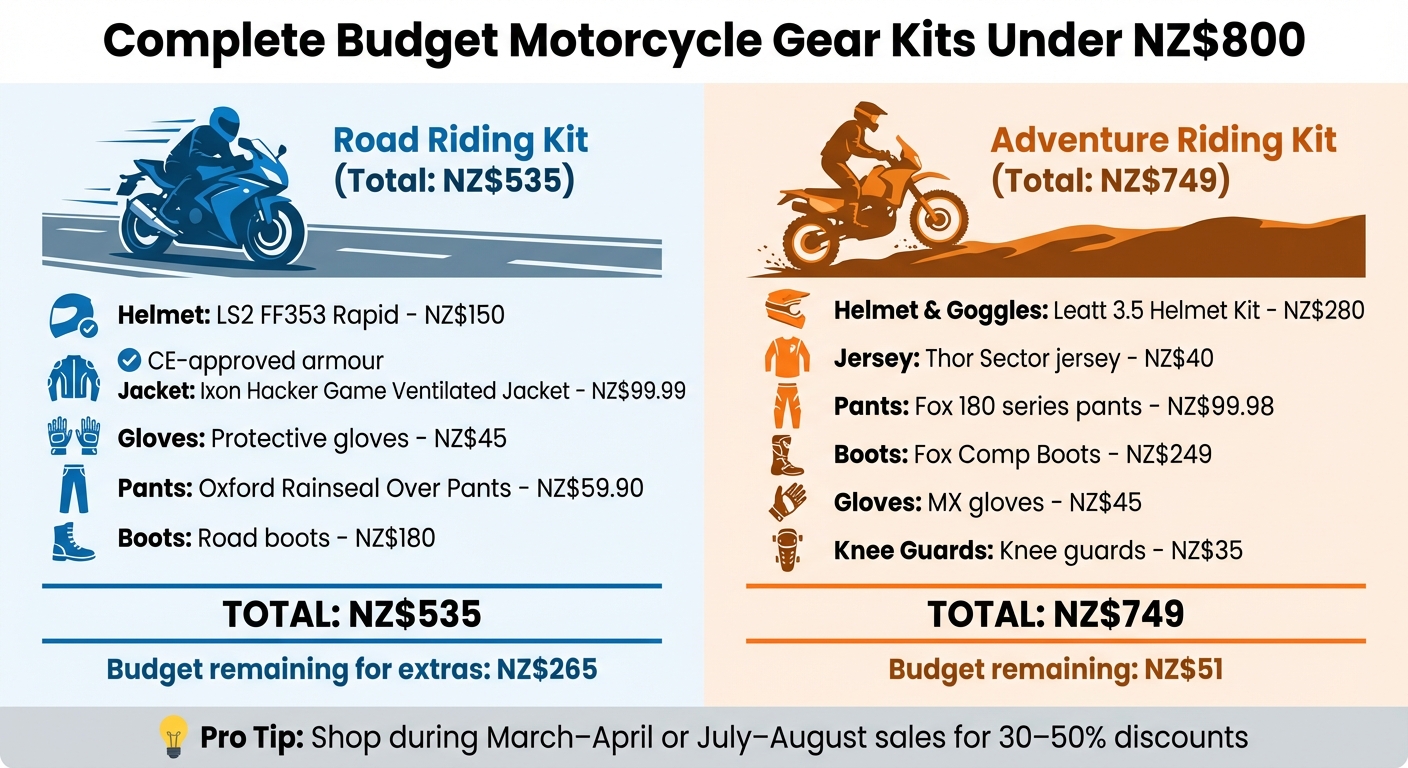
Complete Budget Motorcycle Gear Kit Under NZ$800 - Road vs Adventure Riding
Yes, you can put together a full riding kit for under NZ$800! By focusing on certified safety gear and keeping an eye on clearance sales, you can stay within budget while meeting all legal safety standards (like the ECE 22.06 certification). The key is to shop smart - look for discounts on last season's gear and prioritise safety certifications over brand loyalty. Here’s how road and adventure riders can gear up without overspending.
Road Riding Kit Example
If you're a road rider looking to save, here's a budget-friendly setup:
- Helmet: LS2 FF353 Rapid (around NZ$150, ECE 22.05 certified)
- Jacket: Ixon Hacker Game Ventilated Jacket with CE-approved armour (NZ$99.99 on sale)
- Gloves: Protective gloves (NZ$45)
- Pants: Oxford Rainseal Over Pants (NZ$59.90)
- Boots: Road boots (NZ$180)
This totals approximately NZ$535, leaving you room for extras like a thermal balaclava (NZ$16.99) or knee guards (NZ$35–NZ$60). It’s a solid, affordable kit that doesn’t compromise on safety or comfort.
Adventure Riding Kit Example
Adventure riders can also stay within budget with this setup:
- Helmet and Goggles: Leatt 3.5 Helmet Kit (NZ$280)
- Pants: Fox 180 series pants (NZ$99.98 on sale)
- Jersey: Thor Sector jersey (NZ$40)
- Boots: Fox Comp Boots (NZ$249 on sale)
- Gloves: MX gloves (NZ$45)
- Knee Guards: Knee guards (NZ$35)
This adventure-ready ensemble totals NZ$749, covering all the essentials while keeping costs reasonable.
Both kits can be assembled during the big sales in March–April or July–August, where discounts can range from 30–50%. To stretch your budget further, mix and match items from different brands instead of sticking to matching sets. This not only saves money but also lets you pick the best deals on individual pieces.
Conclusion
When it comes to budget gear, safety should always come first. Focus on certified protection rather than brand names or looks. Whether you're spending NZ$100 or NZ$250 on a helmet, make sure it has official ECE 22.05/06 or DOT certification. Independent tests have shown that a higher price tag doesn’t necessarily mean better protection.
A proper fit is crucial. Gear that shifts or slips - like a helmet that can be removed without unfastening the chin strap - won’t offer adequate protection during an accident. Steer clear of second-hand helmets, as their EPS liners could be compromised. Follow the rule of replacing helmets every five years of use or seven years from their manufacture date to ensure the materials remain effective. Pairing the right fit with smart shopping choices is the key to staying safe without overspending.
Strategic shopping can help you build a certified gear set for under NZ$800. Look out for sales during March–April or July–August, consider last season’s models, and check MotoCAP ratings to get the best value for your money.
"Never compromise on safety, fit, and comfort in the name of price or fashion. These should be your number one priority when making your decision." - Moto1.nz
FAQs
How can I tell if a helmet is genuinely ECE 22.06/22.05 approved?
To verify that a helmet is genuinely ECE 22.06 approved, look for a visible certification label that clearly indicates compliance with this standard. Be wary of helmets that merely claim to meet older standards like ECE 22.05 or DOT without proper third-party certification. Always double-check that the label is authentic and securely attached to the helmet.
What’s the easiest way to upgrade budget gear armour to CE Level 2?
To improve the protection of your budget gear armour to CE Level 2, start by replacing the current armour with CE Level 2 certified inserts. First, check if your gear includes removable armour pockets. If it does, purchase CE Level 2 inserts that are compatible with your gear. Carefully remove the existing armour and replace it with the new inserts, making sure they fit snugly and stay in place. CE Level 2 armour provides better impact resistance and reduces the amount of force transferred compared to CE Level 1.
How can I build a full kit under NZ$800 without ordering the wrong sizes online?
Start by looking into affordable gear that still meets recognised safety standards. Pay close attention to sizing charts, particularly for helmets and jackets, as a proper fit is crucial for both safety and comfort. Reading customer reviews can also help you gauge how true to size the items are.
Prioritise the essentials first - helmets and gloves should top your list. These are critical for protection, so it's worth focusing on quality and fit here. Look for gear with adjustable features like straps or vents to get the most value out of your purchase.
To reduce the hassle of incorrect sizing or unsuitable items, shop with retailers that provide clear sizing guides and flexible return policies. This way, you can exchange or return gear if it doesn't meet your expectations.
With strategic planning and smart choices, it's possible to assemble a complete kit that fits your needs - all within a budget of NZ$800.