

When riding in New Zealand, where the weather can shift dramatically within hours, layering your motorcycle gear is key to staying comfortable and safe. A proper layering system ensures you're ready for sudden temperature changes, rain, or UV exposure. The three-layer system - base, mid, and outer layers - allows you to manage moisture, retain warmth, and shield against the elements. Here's a quick breakdown:
- Base Layer: Wicks sweat and keeps you dry. Go for Merino wool or synthetic fabrics; avoid cotton.
- Mid-Layer: Provides insulation. Lightweight fleece or PrimaLoft works well without adding bulk.
- Outer Layer: Protects against wind, rain, and impacts. Look for windproof, waterproof road gear like jackets with CE-rated armour.
Each layer plays a specific role, and choosing the right materials and fit is essential. Whether you're riding in heat, cold, rain, or unpredictable conditions, this system keeps you prepared. Pack compact layers and maintain your gear for optimal performance. With the right setup, you can focus on enjoying the ride, not battling the weather.
How to Layer Like a Pro: A Motorcycle Rider's Guide #viaterra #layering
sbb-itb-bfda696
The Three-Layer System Explained
Motorcycle Layering System: 3-Layer Guide for All-Weather Riding
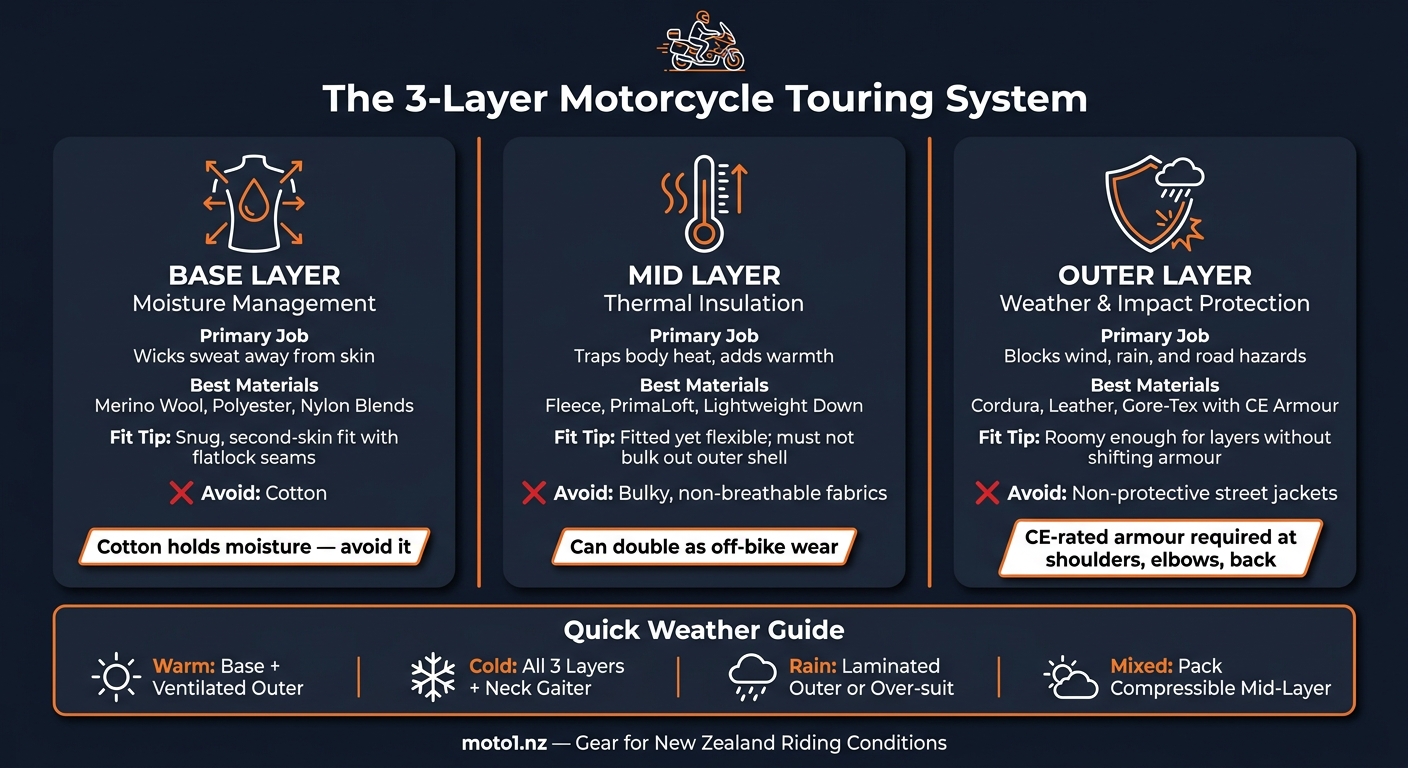
The three-layer system is all about teamwork: the base layer wicks away moisture, the mid-layer keeps you warm, and the outer layer shields you from the elements. When these layers work together as intended, you're ready for whatever weather New Zealand throws your way. Here's a closer look at how each layer pulls its weight.
What Is a Base Layer?
The base layer’s job is simple but crucial: it moves sweat away from your skin. As ViaTerra Gear explains:
"The base layer sits directly on your skin and is crucial for moisture management. It should be breathable, quick-drying, and, ideally, have anti-bacterial properties."
Materials like Merino wool and synthetic blends (polyester or nylon) dominate this category. Merino wool is a favourite for multi-day rides, thanks to its natural odour resistance and temperature-regulating properties. On the other hand, synthetic fabrics dry faster and are often more budget-friendly, making them great for high-intensity activities.
One material to steer clear of is cotton. Cotton absorbs sweat and holds onto it, leaving you damp and uncomfortable - not ideal for long rides in New Zealand's unpredictable weather. For the best fit, your base layer should feel snug, almost like a "second skin", and include flatlock seams to minimise chafing.
What Does the Mid-Layer Do?
The mid-layer is all about warmth. Worn over the base layer, it traps your body heat and acts as an insulating layer without adding unnecessary bulk.
"The mid-layer provides warmth by trapping body heat. It's critical for cold-weather riding but can also be adjusted for milder conditions." - Richa USA
Fleece is a go-to choice here because it’s lightweight, breathable, and easy to pack. For chillier rides, consider synthetic insulators like PrimaLoft or even a lightweight down jacket. These options offer excellent warmth without weighing you down. If you’re after versatility, standalone mid-layers like fleece vests or down jackets can double as off-bike clothing, making them practical for varying conditions.
The Outer Layer: Protection from the Elements
Your outer layer is your first line of defence against wind, rain, and potential road hazards.
"The outer layer is your motorcycle jacket, which serves as the primary barrier against wind, rain, and impacts." - Richa USA
A reliable riding jacket should be windproof and waterproof, featuring membranes like Gore-Tex or equivalent materials to keep rain out while letting sweat escape. For abrasion resistance, high-denier textiles like Cordura are ideal for touring, while leather offers excellent protection but often requires an additional waterproof layer for wet conditions. Most importantly, your jacket must include CE-rated armour at key impact points like the shoulders, elbows, and back. When layering underneath, make sure the fit doesn’t compromise the position of this protective armour.
| Layer | Primary Job | Best Materials | Avoid |
|---|---|---|---|
| Base | Moisture wicking | Merino wool, polyester, nylon blends | Cotton |
| Mid | Thermal insulation | Fleece, PrimaLoft, down | Bulky, non-breathable fabrics |
| Outer | Weather & impact protection | Cordura, leather, Gore-Tex with CE armour | Non-protective street jackets |
How to Layer for Different Weather Conditions
Adjusting your clothing layers to match the weather is key to staying comfortable and protected, especially in New Zealand, where the weather can change dramatically in a short time. Imagine leaving Queenstown under sunny skies, only to encounter sleet by the time you reach the Lindis Pass. Proper layering can make the difference between an enjoyable ride and a miserable one.
Layering for Warm Weather
When it’s warm, the focus shifts to staying cool while maintaining protection. Skip the mid-layer and stick to a moisture-wicking base layer paired with a ventilated outer jacket. Materials like synthetic fabrics or Merino wool work best for base layers, as they draw sweat away from your skin to prevent discomfort caused by wind chill.
Here’s an interesting fact: when the air temperature exceeds 33°C, wind hitting your skin can actually make you hotter instead of cooling you down. A mesh jacket with CE-rated armour, such as the Klim Induction Pro, provides airflow while ensuring abrasion protection. Even in the heat, riding in just a t-shirt is a bad idea - it compromises your safety.
Layering for Cold Weather
Cold weather calls for the full three-layer system. Start with a Merino wool or synthetic fleece base layer to manage moisture, as sweating still happens even in the cold. Add a lightweight insulating mid-layer, such as PrimaLoft or fleece, to trap warm air. Finally, top it off with a windproof outer shell to prevent the cold air from stripping away your body heat, especially at higher speeds.
Pay attention to sealing gaps. Cold air creeping in around your collar can zap your warmth quickly on long rides. A neck gaiter or balaclava can effectively block that gap. For your extremities, consider wearing Merino or silk glove liners beneath your winter gloves. These thin layers add warmth without making your gloves bulky.
Layering for Rain and Wet Conditions
Riding in the rain is less about warmth and more about keeping your layers dry and effective. A wet mid-layer loses its insulating ability, so your outer layer must be up to the task. Jackets with laminated waterproof membranes like Gore-Tex are ideal because they resist "wetting out", keeping the fabric lightweight and breathable even in heavy rain.
If your jacket uses a Z-liner membrane (where the waterproof layer is sandwiched between the shell and lining), the outer fabric can still soak up water and feel heavy. In such cases, a dedicated waterproof over-suit is a smart choice - put it on before the rain starts. Quick-drying base layers are equally important; they help you stay comfortable even if a little water sneaks through.
Layering for Changing Weather
New Zealand’s unpredictable weather often means dealing with multiple seasons in one day. The best approach? Packable, modular layers that are easy to add or remove during a quick stop. A compressible fleece mid-layer and a lightweight rain liner tucked into a tail bag or pannier pocket can save the day.
"A well-layered motorcycle jacket setup provides temperature regulation, weather protection, comfort, and safety." - Richa US
Start your day with all three layers if it’s chilly. As the temperature rises, make use of your jacket’s zippered vents and remove the mid-layer when it’s no longer needed. The trick is to keep your layering system simple and quick to adjust so you can focus on enjoying the ride rather than fiddling with gear on the roadside.
Tips for Layering and Choosing the Right Gear
Checking Fit and Freedom of Movement
Nailing the fit of all three layers in your touring setup is key - and often underestimated. Each layer must work in harmony with the others, not against them.
Here’s a simple guideline: your base layer should fit snugly against your skin, your mid-layer should be fitted yet flexible, and your outer shell should have enough space to accommodate the other layers without compressing insulation or shifting your armour. As Wardler explains:
"The right fit is essential keeping it not too tight. Your base and mid layers should be able to zip up your jacket conveniently and enable you to have free movement of your arms."
When testing your setup, sit on your bike to ensure nothing feels restrictive and that your elbow, shoulder, and back pads remain properly aligned. This ensures not only comfort but also optimal protection in case of an impact. If your jacket zipper struggles over your mid-layer, consider switching to a thinner, more technical option rather than forcing it to fit.
Packing Your Layers Efficiently
Once your layers fit well, packing them effectively can make your ride more convenient. A good three-layer system eliminates the need to carry multiple jackets for varying conditions, but the secret lies in choosing compressible and adaptable pieces.
Standalone mid-layers, like lightweight down vests or thin fleece jackets, are often better than integrated liners. They’re compact, can double as off-bike wear, and allow you to adjust warmth by swapping layers based on the weather. For rain protection, a packable over-jacket stored in a tank bag or pannier is a smart choice - easy to grab and throw on in under a minute without digging through your luggage.
To save space, roll your base layers tightly instead of folding them. This reduces bulk and prevents creases in technical fabrics. Keep quick-access items - like a rain shell, neck warmer, or glove liners - in outer pockets or top boxes. And remember, your outer shell should stay on while riding; if you need to remove it, a top box is the most practical storage spot.
Once everything is packed efficiently, the next step is keeping your gear in top condition.
Caring for Your Gear
To keep your gear performing at its best, proper maintenance is essential. Base layers, which are in direct contact with your skin, need the most frequent washing. Sweat and body oils can reduce their moisture-wicking abilities over time. Wash them on a gentle cycle with cold or lukewarm water, and avoid fabric softeners or bleach - these can damage the material and reduce its effectiveness.
For your waterproof outer shell, use a specialised detergent like Nikwax or Grangers. Regular household detergents leave residues that can clog the breathable membrane. After washing, tumble dry on low heat (if the care label allows) to reactivate the DWR (Durable Water Repellent) coating. If your jacket still doesn’t bead water, apply a spray-on DWR treatment to restore its water resistance.
While cleaning your outer shell, take the opportunity to inspect your CE armour for cracks or wear, especially if it’s been in use for several years. Always remove armour and internal liners before washing the shell, and close all zippers to avoid snags during the wash cycle. Regular care not only extends the life of your gear but ensures it’s ready to perform when you need it most.
Conclusion: Be Ready for Whatever the Road Brings
Touring New Zealand means being prepared for weather that can shift dramatically - sometimes within the same day.
"Layered motorcycle gear is not just about wearing multiple items of clothing; it's a strategic system designed to keep you comfortable, safe, and focused, regardless of what Mother Nature throws your way."
The key pieces? A moisture-wicking base layer, an insulating mid-layer, and a weatherproof outer shell that integrates CE-rated armour. Choosing the right materials is equally important - think Merino wool, advanced synthetics, and laminated membranes. And don’t forget regular care to ensure your gear performs consistently, ride after ride.
With these basics covered, Moto 1 offers a selection of jackets, base layers, gloves, and other gear designed for New Zealand's diverse riding conditions, whether you're cruising the Coromandel coast or navigating the Central Plateau. The right gear from Moto 1 ensures your focus stays where it belongs - on the ride, not the weather.
FAQs
How do I stop my layers from bunching up while riding?
To keep your layers from bunching while cycling, opt for fitted, moisture-wicking base layers that hug your skin. Combine these with mid-layers and outer layers that are snug enough to stay in place but not so tight that they restrict movement. Properly fitted layers help reduce shifting and make your ride more comfortable.
What’s the easiest way to add or remove layers on the road?
The simplest way to stay comfortable during your ride is by using a three-layer system: base layer, mid-layer, and outer layer. This setup makes it easy to adjust to changing weather. If it warms up, you can shed the outer layer; if it gets colder, you can add more insulation. This method keeps you prepared and comfortable, no matter what the conditions throw at you.
How can I tell if my waterproof jacket needs reproofing?
To figure out if your waterproof jacket needs reproofing, watch for a few tell-tale signs. If water stops beading on the surface and instead soaks into the fabric, it’s a clear indication. Similarly, if the jacket feels damp or heavier on the inside during rain, or if water starts seeping through the outer layer, it’s probably time to reproof. Using products like Nikwax regularly can help bring back its water-repellent finish.