

Motorcycle riders face constant noise from wind, engines, and traffic. Noise-cancelling intercoms solve this problem by using advanced tech like Active Noise Cancellation (ANC) and Digital Signal Processing (DSP) to filter out unwanted sounds. These systems provide clear communication, reduce fatigue, and improve focus while riding. Whether you're talking to fellow riders, listening to music, or taking calls, they ensure crisp audio without cranking up the volume.
Key features include:
- Active Noise Cancellation (ANC): Reduces wind and engine noise by up to 18 dB.
- Dual-Microphone Systems: Focus on your voice while filtering background noise.
- Safety and Comfort: Lower noise levels reduce fatigue and help riders stay alert.
- Group Connectivity: Mesh networks allow seamless communication for multiple riders.
With options ranging from budget-friendly models to premium devices, choosing the right intercom system is a practical step for safer, more comfortable rides.
Motikom MPlus Review | The first Noise-Cancelling Bluetooth Intercom Headset

sbb-itb-bfda696
How Noise Cancellation Technology Works
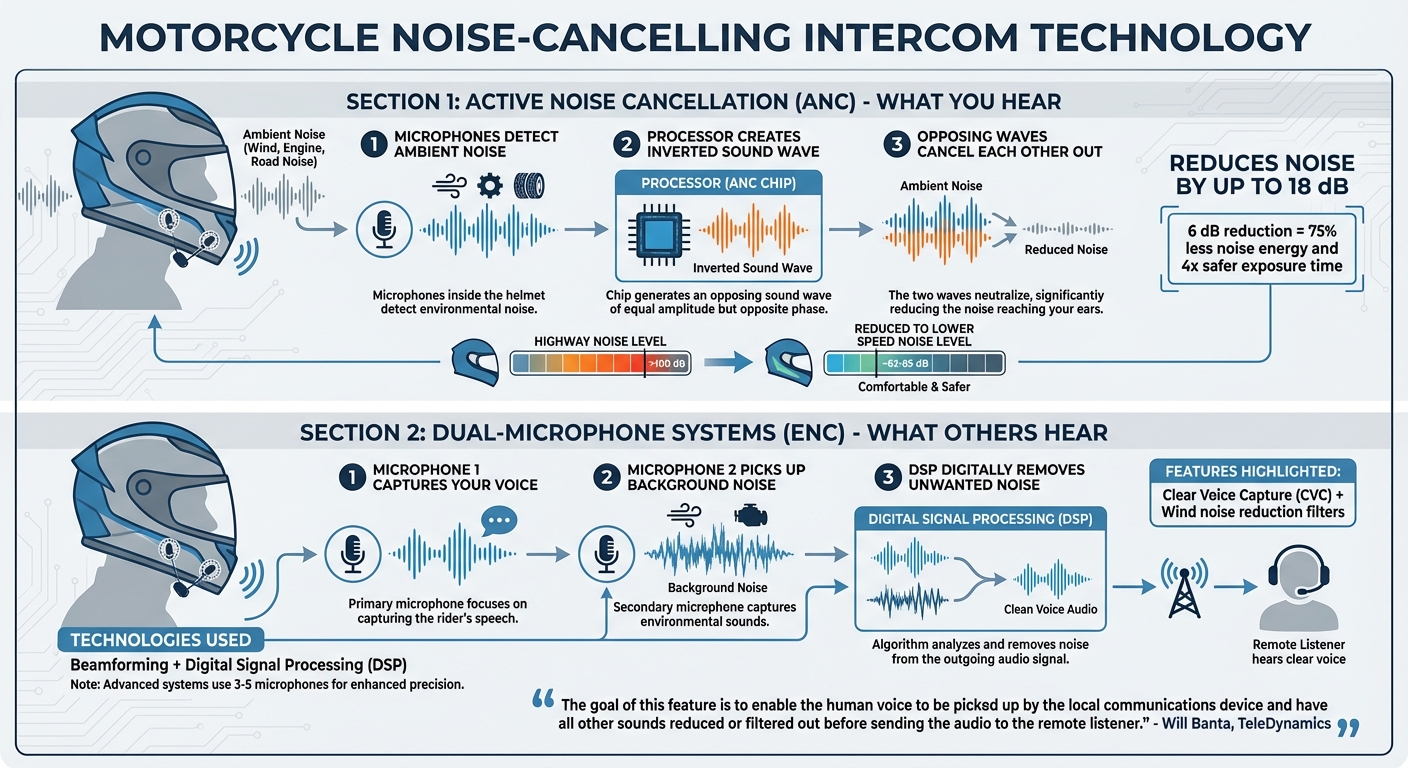
How Motorcycle Noise-Cancelling Intercom Technology Works
Noise-cancelling intercoms tackle the challenge of motorcycle noise through two main techniques: Active Noise Cancellation (ANC) and dual-microphone systems. Each serves a unique purpose - ANC reduces the noise you hear, while dual-microphone setups clean up the sound transmitted to others. Let’s break down how these systems function in the demanding environment of road riding.
Active Noise Cancellation
ANC works by neutralising ambient noise. Tiny microphones pick up surrounding sounds - like wind, engine rumble, and road noise - so a processor can create an inverted sound wave to counteract them. When these opposing waves collide, they cancel each other out.
Motorcycle ANC faces tougher challenges compared to systems used in headphones or planes. On a bike, wind noise is chaotic, comes from multiple directions, and changes unpredictably. To handle this, effective ANC systems rely on fast-response microphones and specialised algorithms designed to counteract these erratic sounds. This approach can reduce noise by up to 18 dB, which is like transforming highway noise into the quieter levels typically experienced at lower speeds. For context, a 6 dB reduction cuts noise energy by 75% and quadruples the time you can safely be exposed to it. This reduction not only makes rides more comfortable but also improves rider focus and communication clarity.
Dual-Microphone Systems
While ANC focuses on what you hear, dual-microphone systems clean up what others hear from you. One microphone captures your voice, while another picks up background noise. The system then digitally removes the unwanted noise from your outgoing audio.
Often called Environmental Noise Cancellation (ENC), this technology is a game-changer for the person on the other end - whether it's a fellow rider, a phone caller, or a passenger. Some systems go a step further by using beamforming to zero in on your voice. Advanced setups combine beamforming with Digital Signal Processing (DSP) to isolate voice frequencies while suppressing disruptive background noise. Features like Clear Voice Capture (CVC) and wind noise reduction filters focus on eliminating low-frequency interference that could otherwise drown out your voice. Many modern headsets use three to five microphones to achieve this level of precision.
"The goal of this feature is to enable the human voice to be picked up by the local communications device and have all other sounds reduced or filtered out before sending the audio to the remote listener." - Will Banta, TeleDynamics
This digital refinement ensures that your voice comes through clearly, even in noisy environments. For group rides, clear communication isn’t just convenient - it’s crucial for safety. This is especially true when navigating technical terrain in adventure gear.
How Intercoms Control Noise While Riding
Detecting and Reducing Background Noise
Motorcycle intercoms deal with a tricky noise environment - wind turbulence shifts with speed, and engine sounds vary with RPM. To tackle this, modern systems rely on multi-microphone arrays, often featuring three to five microphones on the headset. Here's how it works: one microphone focuses on your voice, while the others pick up surrounding noise like wind and engine hum.
These systems use Digital Signal Processing (DSP) to digitise the captured sounds, filtering out non-speech frequencies, such as low-frequency wind and mechanical vibrations. Some advanced models even incorporate AI-driven suppression, which can instantly recognise and remove specific noises like traffic or engine patterns. This adaptability ensures the system adjusts as your riding conditions change.
Amplifying Voice Frequencies
After cutting out the background noise, the intercom ensures your voice stays front and centre. Technologies like Automatic Gain Control (AGC) and Acoustic Echo Cancellation (AEC) work together to adjust microphone sensitivity and eliminate feedback. This creates a full-duplex audio experience with consistent voice clarity.
"Automatic Gain Control (AGC) automatically adjusts the microphone gain based on the distance of the speaker... It also keeps static and other noise from being amplified." – Tim Bruxvoort
When paired with Active Noise Cancellation (ANC), these systems filter out low-frequency engine noise, isolating your voice and enhancing clarity. The result? Your speech cuts through, even during group rides.
Balancing Noise Reduction with Road Awareness
The key challenge is filtering out disruptive noise while keeping you aware of your surroundings. To address this, effective systems use adaptive filtering that adjusts to varying wind and engine noise levels. This ensures that while repetitive, high-decibel sounds are filtered out, important audio cues - like traffic alerts or horn sounds - still come through.
Zero-latency processing is another crucial feature, delivering instant audio to keep you tuned in to road alerts without delay. By cutting up to 40 dB of unwanted noise, these systems reduce auditory fatigue, making it easier to stay focused on long rides. This balance of noise control and situational awareness helps improve both safety and comfort on the road.
Noise Cancellation in Mesh Intercom Networks
Mesh intercom networks take group riding communication to the next level by integrating advanced noise cancellation techniques with dynamic connectivity.
Group Communication Features
Mesh intercoms revolutionise group riding by replacing the traditional Bluetooth chain with a web of direct connections among all participants. This setup, common in high-quality road and off-road rider gear, ensures that if one rider moves out of range or disconnects, the rest of the group stays seamlessly connected.
In private mode, the system supports up to 24 participants, allowing six riders to communicate simultaneously with top-notch audio quality. Open Mesh mode offers even more flexibility, enabling virtually unlimited participants across nine public channels. These channels help separate groups and minimise signal interference.
One standout feature is the simplicity of joining the network - manual pairing is unnecessary. Riders can connect effortlessly, and the system automatically manages all connections. BMW Motorrad explains:
"Mesh adapts to your current driving situation, meaning there is no negative impact on the connection if someone overtakes you or leaves the group."
Signal Clarity During Movement
Mesh networks excel in scenarios where riders frequently change positions - such as overtaking, splitting at intersections, or navigating through traffic. The network uses intelligent routing management to continuously poll devices and choose the clearest path for data transmission.
This routing works hand-in-hand with noise cancellation. Systems like the Control-Com AMi use level-dependent microphones to filter out loud, disruptive ambient noise while still allowing critical background sounds to come through safely. Designed for tough environments, these systems remain unaffected by WiFi, electrical interference, or other communication signals.
As riders shift positions or encounter changing noise levels, the network automatically reconfigures itself. This self-healing capability ensures consistent audio clarity, adapting in real time to the riding environment. The result? A premium intercom experience that keeps communication clear and reliable, no matter the conditions.
Why Riders Choose Noise-Cancelling Intercoms
Riders are increasingly turning to noise-cancelling intercoms to elevate their experience on the road. These devices are a game-changer for Kiwi motorcyclists who want clear communication without dealing with wind noise, engine rumble, or resorting to hand signals. At motorway speeds, they deliver sharp, uninterrupted audio, making conversations effortless. But their benefits don't stop there. These intercoms can provide real-time alerts about road hazards like potholes, sharp bends, or unexpected traffic, adding an extra layer of safety to every ride.
Top-tier models even include voice-activated controls (e.g., "Hey Cardo"), so you can adjust music, answer calls, or tweak settings without lifting a finger. For instance, the LS2 4X offers an impressive 13 hours of talk time, with just 20 minutes of charging giving you an additional 2 hours of use. Many modern systems also feature auto-reconnecting Bluetooth, keeping groups of up to four riders connected within a range of 1.2 kilometres, ensuring seamless communication throughout your journey.
Noise-Cancelling vs Standard Intercoms
The gap between noise-cancelling and standard intercoms becomes evident once you hit the road. Here's how they stack up:
| Feature | Noise-Cancelling Intercoms | Standard Intercoms |
|---|---|---|
| Wind/Engine Noise | Actively suppressed with DSP/CVC/ENC technology | Relies on foam covers; struggles above 80 km/h |
| Voice Clarity | High-definition speakers (e.g., 40mm JBL) focus on voice frequencies | Basic speakers often distort at higher volumes |
| Control Method | Voice-activated commands for hands-free use | Requires manual button presses, even with gloves |
| Battery Performance | Up to 13 hours talk time, with quick-charge options | Limited battery life, no rapid charging |
| Rider Awareness | Minimises noise fatigue, improving focus | High noise levels can cause mental strain |
| Durability | Fully waterproof and dustproof | May lack robust protection against the elements |
When choosing the best helmet communication systems, make sure it’s compatible with your helmet and built to withstand New Zealand's variable weather conditions. Look for units with solid weatherproofing and regular over-the-air firmware updates to keep the noise-cancellation technology at its best.
Conclusion
Noise-cancelling intercoms have transformed how riders in New Zealand communicate on the road. By using advanced technologies like DSP and CVC, these devices actively minimise wind and engine noise, ensuring crystal-clear audio even at high speeds. As Moman PhotoGears highlights, "Using a noise cancelling motorcycle intercom... can lessen the chance of hearing loss, ease tension, and improve the enjoyment of motorcycling".
The benefits go beyond just clearer conversations. Reduced fatigue from constant wind noise means riders can take on longer trips with greater comfort. Enhanced situational awareness also helps you stay focused on traffic and react quickly, making every ride safer. Whether you're opting for an affordable option like the Moman H2 Pro (NZ$55.99) or investing in a high-end model like the Cardo Packtalk Pro (NZ$499.95) that connects up to 15 riders, there's a solution for every type of rider.
To get the most out of your intercom, consider mounting it on a full-face helmet, using a wind muff for the microphone, keeping your visor down, and adding soft padding to reduce external noise further.
With features like advanced noise filtering, premium 45mm speakers, and dependable Bluetooth or Dynamic Mesh connectivity, these intercoms let you stay connected, enjoy your favourite music, and communicate with ease. Whether you're cruising along New Zealand's scenic coastal roads or navigating alpine passes, a noise-cancelling intercom is more than just a convenience - it's an essential tool that elevates both your safety and your overall riding experience.
FAQs
Does ANC block important road sounds?
Active Noise Cancellation (ANC) is effective at reducing ambient noise, but it can also filter out some important road sounds. While its primary purpose is to minimise background noise and improve communication, the level of sound reduction depends on how you configure the settings. It’s crucial to adjust these settings thoughtfully to maintain a balance between clear communication and staying aware of your surroundings.
Will my voice still sound clear at 100 km/h?
Your voice can stay clear even at 100 km/h if the noise-cancelling intercom is designed effectively. Active noise cancellation (ANC) plays a big role here by cutting down background noise, allowing for clearer communication in noisy settings. To get the best performance, make sure the system is set up correctly.
What should I check for helmet fit and mounting?
Make sure your helmet fits snugly and feels comfortable without causing any pressure points. Double-check that the intercom is firmly attached in a way that doesn’t interfere with the helmet’s fit or your comfort. Position the microphone near your mouth and the speakers directly over your ears to ensure clear communication. A proper fit and securely mounted intercom are crucial for both safety and clear audio while riding.