

Tank pads protect your bike’s paint. Tank grips improve your control. That’s the core difference.
- Tank Pads: Positioned on the top or centre of your fuel tank, these shield against scratches from zippers, keys, or tank bags. Ideal for riders focused on maintaining their bike’s appearance and resale value.
- Tank Grips: Installed on the tank’s sides, they provide traction for your knees, improving handling during braking, cornering, and acceleration. Perfect for sportbike riders or those who prioritise control.
Quick Tip: Many riders in NZ use both for a mix of protection and performance.
Quick Comparison
| Feature | Tank Pads | Tank Grips |
|---|---|---|
| Purpose | Protects paint | Improves rider control |
| Placement | Top/Centre of tank | Sides of tank |
| Material | Vinyl, TPU, Gel, Silicone | Rubber, Silicone, Textured TPU |
| Durability | 6–24 months | 1.5–4 years |
| Price Range | NZ$10–$60 | NZ$30–$100 |
Whether you’re cruising New Zealand’s highways or hitting the track, your choice depends on what matters more: keeping your bike looking sharp or enhancing your ride’s performance.
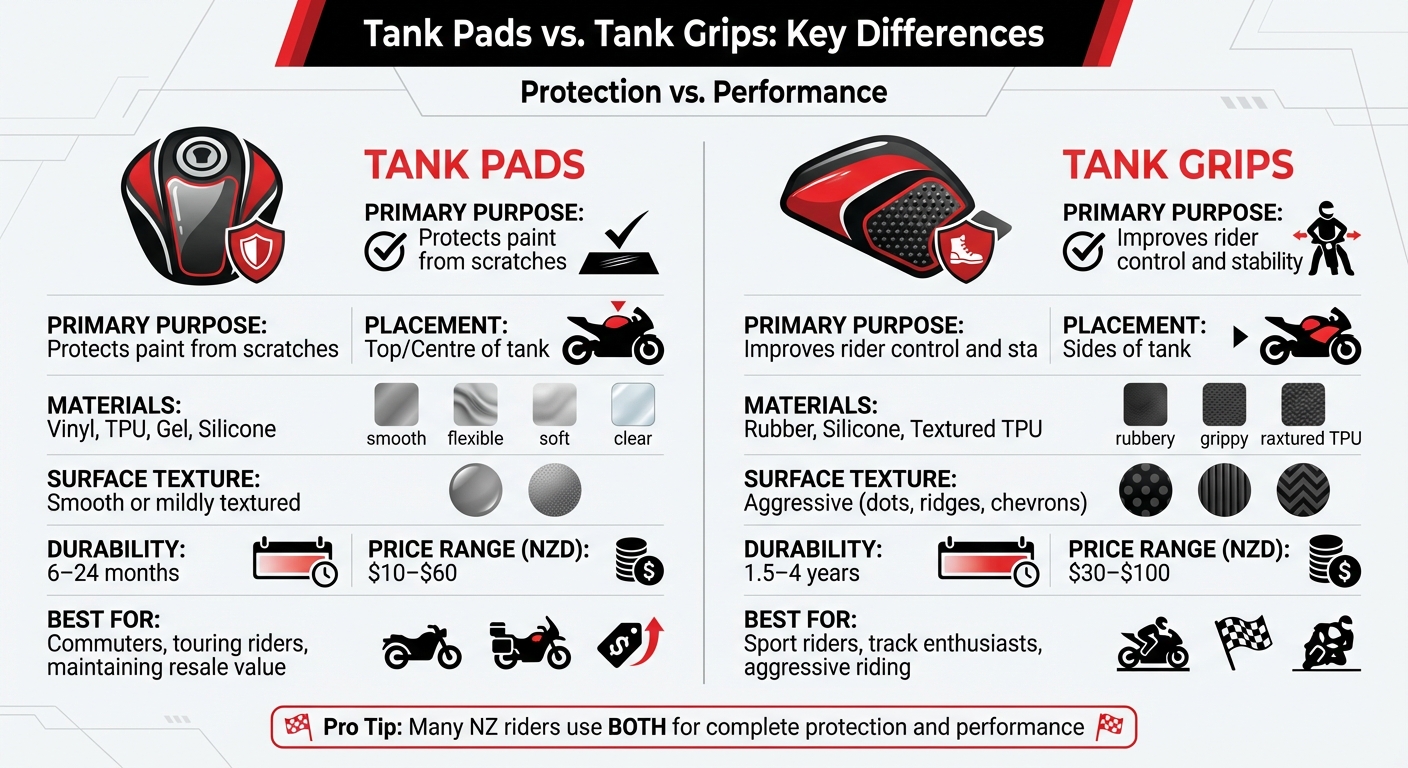
Tank Pads vs Tank Grips Comparison Chart for Motorcycles
Motorcycle Tank Grips Explained | The Shop Manual
sbb-itb-bfda696
What Are Tank Pads?
A tank pad is a thin, self-adhesive layer designed to shield your fuel tank from scratches, scuffs, and general wear caused by things like belt buckles, zippers, keys, or tank bags. By acting as a protective barrier, it helps preserve your bike's paintwork and maintain its resale value.
Tank pads don't improve performance or grip - they're all about keeping your bike looking sharp. For riders who want their motorcycle to stay in top-notch condition, especially road bike owners who often have direct torso-to-tank contact, tank pads are a smart addition.
Materials and Design
Tank pads come in a variety of materials to suit different needs. Here's a quick breakdown:
- Vinyl: A budget-friendly option, though it may yellow within 6–18 months.
- TPU (Thermoplastic Polyurethane): Offers durability for about two years.
- Raised Gel Pads: Provide extra cushioning and impact resistance.
- Silicone: Highly resistant to oil, chemicals, and New Zealand's unpredictable weather.
Designs range from clear “paintsaver” films to textured carbon fibre styles, with prices typically between NZ$21.99 and NZ$69.90.
Installation and Maintenance
Most tank pads feature a self-adhesive backing, making them easy to apply. However, proper preparation is key for a successful installation. Make sure the tank is thoroughly cleaned and free of wax or oil before applying the pad. For a secure fit, align it carefully and opt for pads with bevelled edges to minimise the risk of peeling.
For cleaning, stick to mild soap and water - avoid petroleum-based cleaners, as they can weaken the adhesive. If you ever need to remove the pad, use dental floss or fishing line to gently cut through the adhesive, and clean off any residue with isopropyl alcohol.
By following these steps, your tank pad can provide lasting protection on New Zealand's roads.
When to Use Tank Pads
Tank pads are ideal for riders who prioritise keeping their bike's appearance intact, especially if they often use SW Motech tank bags or wear jackets with stiff materials. They’re particularly handy for road bikes, where your torso naturally leans against the tank during rides through New Zealand's scenic highways. However, if you're looking for better control during aggressive riding, tank grips might be a better fit. High-performance options like R&G Eazi-Grip tank grips are specifically designed for this purpose.
What Are Tank Grips?
Tank grips are textured accessories designed to attach to the sides of your fuel tank - right where your knees and thighs naturally rest. Unlike tank pads, which are more about protecting your tank's finish, tank grips focus on enhancing control. They offer a high-friction surface, helping you stay securely connected to your bike during sharp braking, tight cornering, or quick acceleration.
For performance riders, tank grips are a game-changer. By shifting the load from your arms to your legs, they reduce strain on your wrists and shoulders, cutting down on arm fatigue and even preventing arm pump. This allows you to "lock in" with the bike, improving responsiveness and building confidence - whether you're tackling New Zealand's winding roads or a track day.
"From MotoGP to World Superbikes, pretty much all professional racers use tank grips on their bikes because of the additional control they provide." – Luimoto
Let’s dive into the materials, design, and installation that make tank grips ideal for aggressive riding.
Materials and Design Features
Tank grips are built using materials that balance traction and durability. Most are made from textured rubber, TPU, or silicone, with thicknesses ranging from 0.8mm to 1.5mm. Their surfaces often feature patterns like dimples, ridges, or domes - designed to be felt even through your riding leathers.
Higher-end grips use marine-grade vinyl or medical-grade silicone, offering excellent UV and water resistance - critical for New Zealand's unpredictable weather. Silicone grips, for instance, deliver strong traction and can withstand high temperatures (up to 60°C), making them a favourite for track riders. On the other hand, rubber or TPR grips provide a softer, more comfortable feel, ideal for everyday use.
Installation and Durability
Proper installation is key to getting the best out of your tank grips. Most come with an adhesive backing, often using trusted 3M adhesives for easy application. Before installing, clean the tank surface with isopropyl alcohol to remove dirt or grease. For a stronger bond, warm both the tank and the grip using a hairdryer before applying.
When it comes to durability, rubber or TPU grips typically last 1.5 to 2 years with regular use. Premium versions can last even longer - up to 4 years - depending on your riding conditions. If you need to remove them, warming the adhesive first will make the process much easier.
When to Use Tank Grips
Tank grips are perfect when control takes priority over aesthetics. They’re a must-have for sportbike riders, track enthusiasts, and anyone who enjoys spirited rides through New Zealand’s twisty canyon roads. If you frequently brake hard, corner aggressively, or need precise body positioning, tank grips can make a noticeable difference.
Even urban riders are starting to embrace tank grips for their practicality during sudden stops or quick manoeuvres in heavy traffic. However, if you prefer a more relaxed riding style or are mainly concerned with keeping your tank scratch-free, a tank pad might suit your needs better.
Tank Pads vs. Tank Grips: Main Differences
Tank pads and tank grips might both stick to your bike’s fuel tank, but they’re designed for entirely different purposes. Tank pads are all about protecting your bike’s finish with road and off-road rider gear. They shield the tank from scratches caused by zippers, belt buckles, or tank bags, helping to keep your bike looking sharp and maintaining its resale value. On the other hand, tank grips are performance-focused. They provide extra friction for your knees, giving you better control and stability while riding.
When it comes to placement, tank pads are typically positioned on the top or centre-rear of the tank to protect against torso contact, while tank grips are mounted on the sides to give your knees extra traction.
The materials reflect their purposes too. Tank pads are often made from vinyl, poly resin, or clear TPU, offering a sleek or nearly invisible look. Tank grips, however, use rubberised or textured polymers with patterns like dots, ridges, or chevrons to maximise grip. Durability also varies: clear vinyl pads might last 6–18 months, while high-quality rubber grips can hold up for over two years.
Here’s a quick breakdown of the key differences:
Comparison Table
| Feature | Tank Pads | Tank Grips |
|---|---|---|
| Primary Function | Protects paint from scratches/scuffs | Enhances rider stability and control |
| Typical Placement | Centre/Top of fuel tank | Sides of fuel tank |
| Common Materials | Vinyl, Poly resin, Clear TPU | Rubber, Textured Silicone, TPU |
| Surface Texture | Smooth or mildly textured | Aggressive (dots, ridges, chevrons) |
| Rider Benefit | Preserves aesthetics/resale value | Reduces arm fatigue; aids cornering/braking |
| Durability | 6–18 months (vinyl); up to 2 years (TPU) | Over 2 years (high-quality rubber) |
| Price Range | $10–$60 NZD | $30–$60 NZD |
Pros and Cons
Tank pads and tank grips each come with their own set of advantages and disadvantages. Understanding these trade-offs can help you decide which one suits your riding preferences best.
Tank pads are an affordable option, typically priced between $10–$25 NZD, and are easy to replace when needed. They protect your bike from scratches caused by belt buckles, zippers, or tank bags, which can help preserve its resale value. Plus, they come in a wide range of designs and colours, allowing you to personalise your bike's appearance. However, their benefits are mainly cosmetic - they don't offer any performance enhancements. Cheaper vinyl versions may wear out quickly, and if not bevelled, they can collect dirt along the edges.
Tank grips, on the other hand, focus on enhancing riding performance. They provide better stability during braking and cornering, reduce strain on your wrists and arms, and create a more secure connection with your bike. High-quality rubber grips are built to withstand demanding conditions. That said, they aren't without drawbacks. Riders may find the aggressive textures uncomfortable, and these grips can wear out faster than smoother pads. In hot weather, some materials can become sticky, and improper installation may cause them to peel.
Here's a quick comparison of the pros and cons to help you weigh your options:
Pros and Cons Table
| Accessory | Pros | Cons |
|---|---|---|
| Tank Pads | • Protects against scratches from buckles/zippers • Affordable and easy to replace • Offers a variety of designs and colours |
• Primarily cosmetic with no performance benefits • Cheaper versions may wear out quickly • Can collect dirt along edges if not bevelled |
| Tank Grips | • Improves stability during braking and cornering • Reduces wrist and arm strain • Durable under intense riding conditions • Strengthens connection between rider and bike |
• Aggressive textures might feel uncomfortable • May wear out faster than smooth pads • Can become sticky in high temperatures • Prone to peeling if not installed properly |
Which Should You Choose?
The best choice comes down to your riding style and what you prioritise: tank pads for protecting your bike's paint or tank grips for better control on the road.
Recommendations by Riding Style
Casual and commuter riders who want to keep their bike's finish in top shape should go for tank pads. These pads shield the tank from scratches caused by gear or accessories. For affordable and stylish options, check out the Oxford Spine Tank Pad (Carbon) for NZ$21.99 or the R&G Centre Tank Pads, starting at NZ$39.50.
Aggressive and track riders will get more out of tank grips. These grips provide the stability needed for sharp turns, late braking, and high-speed track riding. A great option is the Oxford Tank Knee Grip Road Universal (Pair) at NZ$99.90, designed to give you the traction needed for demanding manoeuvres. Tank grips let you use your legs for support during acceleration and braking, which can significantly reduce fatigue in your arms and hands.
Long-distance touring and adventure riders should consider using both. Tank grips help reduce fatigue by allowing your legs to support your body during extended rides, while tank pads protect the fuel tank from wear caused by riding gear. Combining these two ensures better control and keeps your tank in great condition for those long journeys.
Whatever your riding style, Moto 1 has options to match your needs.
Shop Tank Pads and Grips on Moto 1
Whether you're after protection, performance, or both, Moto 1 offers a range of solutions tailored to your riding requirements. Explore tank pads and grips from trusted brands like R&G, Oxford, and Progrip. With options for sportbikes, cruisers, adventure bikes, and more, you'll find the perfect fit. Plus, enjoy free shipping across New Zealand on orders over NZ$100, making it easy to gear up without overspending.
Conclusion
Tank pads shield your fuel tank from scratches caused by zippers, belt buckles, and tank bags, helping maintain its look and resale value. On the other hand, tank grips offer the traction needed for confident braking, cornering, and more dynamic riding.
"The real shift isn't technological - it's behavioural. Riders today expect gear to do double duty: protect and perform".
Choosing between the two - or deciding to use both - should come down to your riding style. Commuters and touring riders often prioritise the scratch protection of tank pads, while sport and track riders value the added stability from tank grips. For adventure riders tackling long distances, combining both options can provide the ideal mix of comfort and protection, ensuring your ride is smooth and your bike stays in top shape.
Check out Moto 1 for tank accessories that match your riding needs, and enjoy free shipping on orders over NZ$100.
FAQs
Will tank grips damage my paint?
When used correctly, tank grips are generally safe for your bike's paint. High-quality grips, particularly those made from silicone, are designed to leave no residue and reduce the likelihood of damage. On the other hand, cheaper vinyl grips can sometimes peel over time, and improper removal might harm the paint. To prevent problems, opt for durable grips and apply them carefully.
Can I use a tank pad and tank grips together?
Tank grips and tank pads can absolutely be used together. Tank grips improve rider control and stability, especially during acceleration, braking, and cornering. On the other hand, tank pads shield your tank from scratches and general wear. Using both means you get the best of both worlds - enhanced grip where it counts and protection for your paintwork. Together, they make for a more comfortable and well-protected ride.
How do I remove a tank pad or grip without residue?
To take off a tank pad or grip without leaving any sticky residue, start by carefully peeling it away from the edges, applying slow and steady pressure. Silicone-based pads are usually easier to remove without leaving adhesive behind. If there’s any residue left over, try a mild solvent like isopropyl alcohol or an adhesive remover. Once the residue is gone, wash the area with soap and water to ensure a clean, smooth surface.