

When tackling mountain motorcycle rides, having the right gear is crucial for safety, comfort, and performance. Mountain conditions are unpredictable, with abrupt weather changes, rugged terrain, and long hours in remote areas. Here's a quick breakdown of what you need:
- Helmets: Dual-sport models like the Klim Krios Pro or Bell MX-9 Adventure MIPS offer impact protection, ventilation, and features like photochromic shields for changing light conditions.
- Jackets and Pants: Look for waterproof, abrasion-resistant materials like Gore-Tex with CE-certified armour in critical areas. Top picks include the Klim Badlands Pro and Alpinestars AMT-10R.
- Gloves: Carry waterproof gloves for cold and wet conditions (e.g., Spidi NK6) and lightweight options for warm weather (e.g., Dririder Tour Air).
- Boots: Opt for sturdy, waterproof adventure boots like the REV'IT! Expedition GTX or hiking-style options for off-bike activities.
Key tips:
- Use a three-layer clothing system (base, mid, outer) for temperature control.
- Always pack essential accessories like a hydration pack, tyre repair kit, and first aid supplies.
- Regularly check your gear for wear and tear to maintain reliability.
Mountain riding demands preparation and the right equipment to handle the challenges ahead.
From Budget to Pro: The Best Adventure Jackets & Pants (Full Buyer’s Guide)
sbb-itb-bfda696
Top Helmets for Mountain Motorcycle Adventures
When you're heading into the mountains on a motorcycle, having the right helmet isn't just a luxury - it's a necessity. Mountain riding throws a mix of challenges your way: unpredictable weather, intense UV exposure, and rough terrain. A standard road helmet just won’t cut it. You need something that can handle it all.
Dual-Sport Helmets for Mixed Terrain
Dual-sport helmets are designed specifically for the diverse conditions you'll encounter during mountain rides. Whether you're cruising down smooth tarmac, grinding up gravel paths, or navigating tricky trails, these helmets have you covered. Take the Klim Krios Pro and Klim X1 Alpha for example. They offer up to four ride modes - Street, Adventure, Dirt, and Trail - so you can switch things up as the terrain changes. Plus, their peak visors are a lifesaver on exposed ridges, shielding your eyes from harsh sun or rain. These visors can also be removed without tools, making transitions to faster road sections hassle-free.
The helmet's shell material is another critical factor. The Krios Pro and X1 Alpha use hand-laid carbon fibre, which keeps them lightweight while maintaining impressive strength. On the other hand, the Bell MX-9 Adventure MIPS offers a more budget-friendly option with its polycarbonate/ABS shell. Despite being more affordable, it doesn’t skimp on safety, thanks to its MIPS (Multi-directional Impact Protection System) technology. For peace of mind, always check for helmets rated to ECE 22.06 and consider additional safety features like MIPS or KOROYD® to manage rotational impacts during a crash.
| Helmet Model | Shell Material | Key Safety Tech | Ride Modes |
|---|---|---|---|
| Klim X1 Alpha | Hand-laid Carbon Fibre | KOROYD® + EPS | 4 (Street, Adv, Dirt, Trail) |
| Klim Krios Pro | Hand-laid Carbon Fibre | KOROYD® | 4 (Street, Adv, Dirt, Trail) |
| Bell MX-9 Adventure MIPS | Polycarbonate/ABS | MIPS | Limited |
| Arai Tour-X5 | Complex Laminate | VAS-A (Glancing-Off) | Standard |
These features make dual-sport helmets a reliable choice for mountain adventures, ensuring you’re ready for whatever the trail throws at you.
Ventilation and Comfort at High Altitude
Comfort is just as important as safety when you're riding in the mountains, especially at higher altitudes. The thinner air means your body is already working harder, so a well-ventilated helmet can make a world of difference. The Leatt 9.5 ADV Carbon is a standout in this area. Wind-tunnel testing has shown it reduces drag by 8% and lift by 38% compared to standard helmets. At just 1,490 grams for a medium/large size, it’s also one of the lighter options available.
Another challenge of mountain riding is the rapid change in lighting conditions, from bright sunlight to deep shadows. Helmets with photochromic shields, like the Klim X1 Alpha, can be a game-changer. These shields automatically adjust to changes in brightness, giving you clear vision no matter the conditions. Arden Kysely from Expedition Portal praised the X1 Alpha, saying:
"The photochromic shield adjusts immediately to lighting changes. And finally, the Pinlock insert kept the shield clear in a double-whammy of rain and fog."
For long rides, the interior lining of a helmet is crucial. Look for moisture-wicking, antimicrobial materials to keep you comfortable. The Klim X1 Alpha features Brrr° Pro Cooling fabric, while the Klim Krios Pro uses a Klimatek liner. Both are designed to handle sweat and keep you cool during tough climbs.
If you're shopping in New Zealand, check out Moto 1 for a variety of adventure helmets from leading brands. They even offer free shipping on eligible orders, making it easier to gear up for your next ride.
Best Jackets and Pants for Mountain Riding
When hitting the mountains, your helmet, gloves, and boots are only part of the equation. Quality armour motorcycle jackets and pants are just as important, especially when you're up against unpredictable weather, sudden temperature drops, and rugged terrain.
Waterproof and Breathable Materials
Mountain riding gear needs to handle the elements, and that's where materials like Gore-Tex 3-Layer Pro laminate come in. This fabric keeps water out while letting sweat escape - a lifesaver when you're working hard on steep climbs and a cold rainstorm hits. Klim backs their waterproof technology with their bold promise: "Guaranteed to keep you dry™".
Durability is just as critical. Features like 630d Karbonite™ ripstop and Superfabric® panels offer extra abrasion resistance for tough terrain. Ventilation is another must-have. Look for jackets with 10 or more vents, including intake vents on the core, biceps, and forearms, and exhaust vents on the back and triceps. This setup keeps air flowing and helps you stay cool during intense rides. With weather under control, your gear also needs to stand up to impacts.
Armoured Adventure Suits
Weatherproofing is only half the story. For mountain riding, impact protection is non-negotiable. The gold standard is CE Level 2 certification, with top-tier adventure suits using D3O® Aero Pro armour in key areas like the shoulders, elbows, back, and chest. This armour stays flexible for comfort but hardens on impact to protect you when it matters most.
The Klim Badlands Pro Jacket (4th Generation) is a standout option, offering a CE AA rating under EN 17092-3 standards. It’s priced at NZ$2,795.00, with matching pants available for NZ$1,849.00. For long rides, comfort features like pre-curved arms, an "action back" gusseted shoulder, adjustable armour pockets, and a removable kidney belt ensure the jacket stays in place and reduces fatigue.
For a wide range of adventure jackets and pants, check out Moto 1, where you can find top brands and enjoy free shipping on qualifying orders.
Gloves for Mountain Expeditions
Your hands are your direct connection to your bike. On mountain terrain - where conditions can change in an instant - poor-quality gloves can mean a shaky grip and slower response times. To ensure a smooth and safe expedition, your gloves need to strike the right balance between waterproofing, insulation, protection, and sensitivity. Look for gloves that meet the EN13594:2015 KP safety certification, ensuring they’ve been rigorously tested for impact resistance and abrasion protection. Materials like 0.6mm to 0.8mm goat leather for durability and variable-density polyurethane shields for shock absorption are key features to consider. As the final piece of your protective gear, gloves work alongside helmets, jackets, and boots to complete your safety system. Now let’s dive into glove options that can handle the demands of ever-changing mountain climates.
Waterproof Gloves for Cold and Wet Weather
At high altitudes, where cold and wet conditions are common, a gauntlet-style glove with a full waterproof membrane is a smart choice. Take the Spidi NK6, for example. This three-season glove features a waterproof, windproof H2Out lining, 200g of Primaloft insulation, and a micropile lining to keep your hands warm without adding unnecessary bulk. It also has touchscreen-compatible fingertips for convenience. At NZ$349.00, the Spidi NK6 meets EN13594:2015 KP standards, offering both protection and practicality.
Another great option is the Dririder Adventure 2, which uses a Hipora membrane for waterproofing and a Thinsulate thermal liner for warmth. It features a silicone-printed Clarino palm for improved grip in wet conditions and even includes a TPR visor wipe on the finger - perfect for clearing rain or mist from your helmet visor during steep descents.
Lightweight Gloves for Warm Conditions
In warm, dry weather or at lower elevations, heavily insulated gloves can feel stifling. This is where all-season touring gloves, like the Dririder Tour Air (NZ$89.90), come into play. These gloves prioritise airflow to keep your hands cool while still providing essential protection. They’re lightweight, easy to pack, and ideal for summer rides. However, since they lack waterproofing, they’re best suited for days when the weather is predictable.
If your journey involves crossing multiple climate zones, it’s worth carrying both a waterproof gauntlet glove and a lightweight mesh option. This way, you’re prepared for whatever the mountain throws at you.
Explore a wide selection of adventure and touring gloves at Moto 1, where qualifying orders come with free shipping.
Durable Boots for Mountain Terrain
After gloves, boots are often the most heavily used gear during mountain expeditions. They face rugged trails, water crossings, loose rocks, and long hours of riding. As Sean Galaway from GearJunkie emphasises:
"The risk of an injury when you are over a day's ride from anywhere is too high to compromise on protection."
To tackle these challenges, boots should provide CE Level 2 impact protection, a waterproof membrane, a high-traction outsole, and strong ankle support. A midsole shank (steel or fibreglass) is also essential for stability during extended rides. Below are two types of boots designed to meet these demanding conditions.
Waterproof Adventure Boots
Adventure boots are ideal for technical mountain terrain. The REV'IT! Expedition GTX (NZ$1,359.00) stands out with its GORE-TEX waterproofing and Dynamic Support Frame (DSF), which allows natural ankle movement while preventing hyperextension. Its Vibram Apex sole ensures excellent grip on mud, loose rocks, and slippery footpegs.
For a more budget-friendly option, the Alpinestars Corozal Adventure uses a Drystar membrane and a biomechanical "flexi-blade" ankle system. It also features a durable lateral clasp for added ankle protection. Another great choice is the TCX Drifter, with its T-DRY waterproof membrane and a rebuildable stitched-down sole - a practical feature for long-term durability when heavy peg wear eventually takes its toll.
For riders who spend significant time off the bike, hiking-style boots with moto protection are worth considering.
Hiking-Style Boots with Gaiters
If your trip involves activities like scouting trails, setting up camp, or walking long distances, a hiking-style boot with integrated moto protection can be a game-changer. The REV'IT! Everest GTX (NZ$599.00) is a lightweight option at just 716g, yet it offers CE Level 2 crush resistance. It combines the comfort of a trail hiker with laminated armour and a GORE-TEX lining, ensuring you don’t sacrifice safety for mobility.
When opting for mid-height or hiking-style boots, make sure your riding pants can cover the boot collar. Alternatively, pair them with a built-in gaiter to keep water out during stream crossings or heavy rain. For multi-day trips, boots with antimicrobial liners, such as those treated with Microban, help manage moisture and reduce odour over consecutive days of wear.
These boots complete your essential gear setup, working alongside helmets, jackets, and gloves to ensure safety and comfort. Explore a wide selection of adventure and touring boots at Moto 1, with free shipping available on qualifying orders.
Gear Comparison Table for Mountain Rides
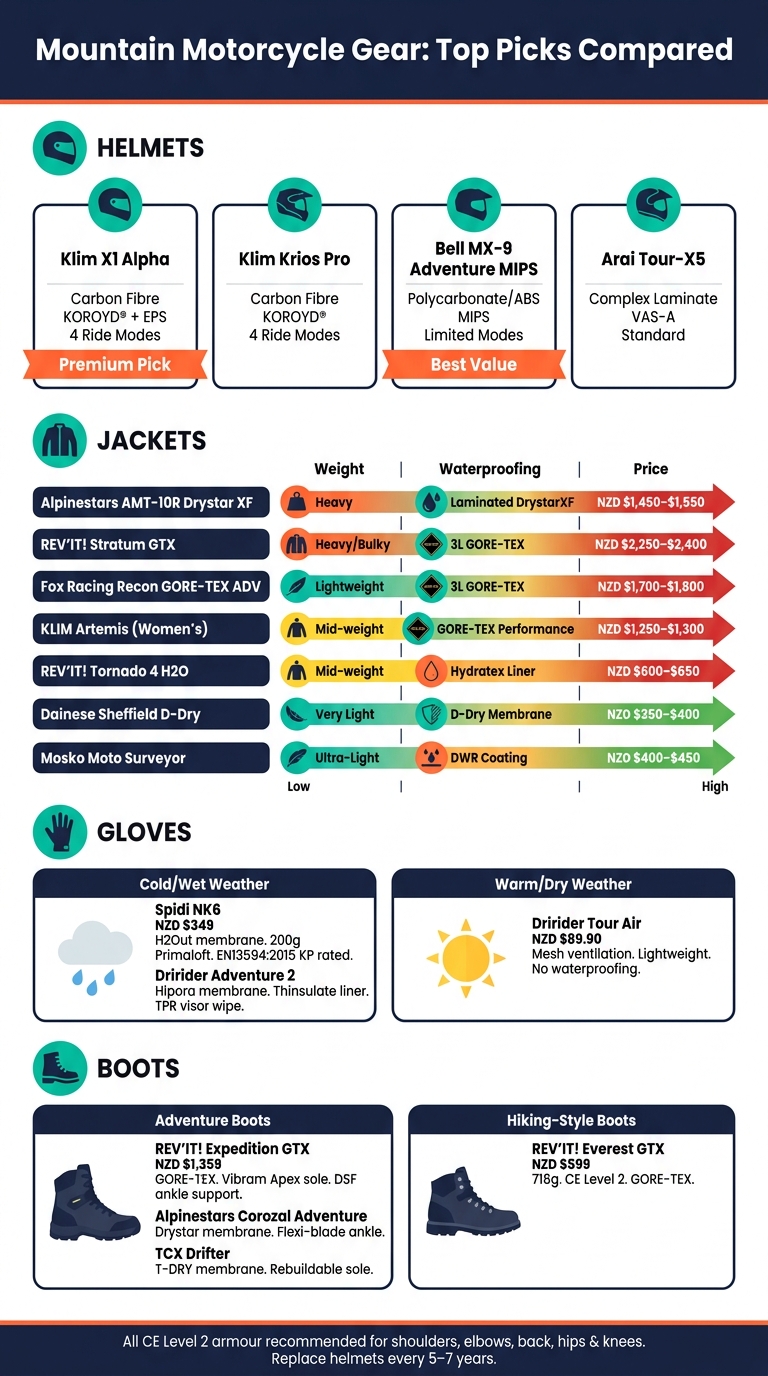
Mountain Motorcycle Gear Comparison: Top Picks by Category
Check out this side-by-side comparison of top motorcycle jackets, highlighting their waterproofing, weight, and price.
Quick tip: Jackets with laminated membranes like GORE-TEX or DrystarXF bond directly to the outer shell, keeping things lighter and more water-resistant - perfect for New Zealand's unpredictable weather. On the other hand, jackets with removable liners offer more flexibility but can absorb moisture initially.
As Sean Galaway from GearJunkie says:
"Among motorcycle jackets, adventure (ADV) sheaths are the Swiss Army knife of gear. The modular layering and adaptable designs excel across diverse conditions, weather, and terrain."
| Model | Weight | Waterproofing | Price (NZD) | Key Pros | Key Cons |
|---|---|---|---|---|---|
| Alpinestars AMT-10R Drystar XF | Heavy | Laminated DrystarXF | $1,450–$1,550 | Converts to mesh; hydration sleeve | Heavy; pricey |
| REV'IT! Stratum GTX | Heavy/Bulky | 3L GORE-TEX | $2,250–$2,400 | 2-in-1 system; premium protection | Very expensive; bulky shell |
| Fox Racing Recon GORE-TEX ADV | Lightweight | 3L GORE-TEX | $1,700–$1,800 | Light for ADV; SuperFabric zones | Vents can't be used while riding |
| KLIM Artemis (Women's) | Mid-weight | GORE-TEX Performance | $1,250–$1,300 | ADV-specific fit; waterproof pockets | Zippers can be stiff |
| REV'IT! Tornado 4 H2O | Mid-weight | Hydratex Liner | $600–$650 | Great value; highly breathable | No back protector included |
| Dainese Sheffield D-Dry | Very Light | D-Dry Membrane | $350–$400 | Affordable; easy to pack | CE Level 1 armour only |
| Mosko Moto Surveyor | Ultra-Light | DWR Coating | $400–$450 | Extremely breathable; packable | No armour included |
When choosing, remember that many jackets come with CE-rated armour for extra safety. Higher-end models like the Alpinestars AMT-10R and REV'IT! Stratum GTX include CE Level 2 armour, while more budget-friendly options, such as the Dainese Sheffield, stick to Level 1. The Mosko Moto Surveyor, however, requires you to add armour separately.
Packing and Layering Tips for Mountain Expeditions
New Zealand’s mountain terrain - whether you're riding through the Remarkables, the Southern Alps, or the Volcanic Plateau - is famously unpredictable. A warm, sunny morning can quickly turn into a cold, wet afternoon. The solution? Stick to a three-layer system. This approach works wonders for rides across the Southern Alps and beyond.
Base and Mid-Layer Essentials
The base layer is the foundation of your comfort. It’s the layer closest to your skin, designed to wick away moisture and keep you dry. Merino wool is a standout choice. It not only wicks sweat and dries quickly but also stays warm even when damp - and it resists odours, which is a lifesaver on multi-day trips. For hotter conditions, synthetic polyester options (like the ViaTerra B100) wick moisture faster, though they lack merino’s natural odour control.
The mid-layer serves to trap heat without adding bulk. A lightweight fleece or thermal layer works well here, providing warmth while fitting snugly under your riding jacket. This ensures you stay comfortable without losing flexibility or reach on the handlebars. As MR MOTO wisely notes:
"Layering is key for adapting to temperature changes throughout the day."
Take time to test your layers at home. You’ll want to ensure they allow free movement and don’t restrict you during long rides. Once your layers are sorted, it’s time to think about the extras that will make your trip smoother.
Must-Have Accessories
Clothing alone isn’t enough to conquer mountain rides - a few key accessories can make all the difference. Start with a hydration pack. Mountain riding is physically demanding, and staying hydrated is crucial for keeping your focus sharp.
For your luggage, a tank bag is perfect for smaller items you’ll need often, like neck warmers, balaclavas, or spare gloves. Heavier gear, like camping equipment, should go into saddlebags or a top case. Pack heavier items low and centred on the bike to maintain stability and ensure smooth handling.
Mechanical prep is just as important. Always carry a tyre repair kit (whether plug or patch) with CO₂ cartridges or a small pump, plus a basic toolkit that includes wrenches, screwdrivers, Allen keys, and pliers. Duct tape and zip ties are handy for quick fixes. Practice using your tyre repair kit before you leave - the middle of a remote trail isn’t the place to learn.
Safety is another priority. A first aid kit is non-negotiable, and it’s smart to carry a card with your blood type, allergies, and emergency contacts. In areas where cell service is unreliable - which is common in backcountry regions - a satellite messenger like the Garmin InReach can be a literal lifesaver. It’s a small addition that offers big peace of mind.
Choosing the Right Gear for Mountain Expeditions
Mountain riding in New Zealand demands gear that prioritises both performance and protection. Every piece you pack or wear needs to serve a clear purpose, whether it's shielding you from the elements or adapting to the rugged terrain.
Start with a dual-sport helmet. Look for one with a peak visor, excellent ventilation, and a recognised safety rating like DOT, Snell, or ECE. This is your first line of defence for mixed-terrain riding. For jackets and pants, choose options with CE-certified armour in key areas - shoulders, elbows, back, hips, and knees. Removable thermal and waterproof liners are a must to handle New Zealand's famously unpredictable mountain weather. Don't forget gloves: bring two pairs - one waterproof and insulated, the other ventilated - for versatility in varying conditions.
Fit is just as important as features. As Lone Rider aptly states:
"Spending all your hard-earned cash on the bike and not having anything left over for yourself is just a slap in the face. You should wear gear whenever you ride... but it's especially important to gear up when riding an adventure bike."
This highlights the importance of properly fitting gear, which can make all the difference in comfort and safety. Helmets must fit snugly, and Dainese motorcycle boots offer reinforced ankle protection and high-traction soles for both riding and walking on uneven ground.
Don't overlook maintenance. Helmets should be replaced every five to seven years, or sooner if they sustain significant impact. Regularly check your gear for wear and tear to ensure it continues to perform as intended. If you're updating your kit, Moto 1 offers a wide selection of adventure helmets, jackets, boots, and gloves from trusted brands, with free shipping on qualifying orders.
FAQs
How do I choose the right helmet fit for mountain riding?
To get the right helmet fit for mountain riding, it’s all about balance. The helmet should sit snugly - not so tight that it’s uncomfortable, but not loose enough to shift around. It needs to sit level on your head, covering your forehead properly, and stay steady even if you shake your head.
Pay attention to the padding - it should rest evenly against your skin without creating any pressure points. For the most accurate fit, measure your head’s circumference and compare it to the manufacturer’s sizing chart. A well-fitted helmet isn’t just about comfort - it’s key to staying safe on the trails.
Do I need laminated waterproof gear, or is a removable liner enough?
When deciding between laminated waterproof gear and a removable liner, it all comes down to the conditions you'll face. Laminated gear delivers reliable, long-lasting waterproofing, making it perfect for heavy rain or extended periods in wet weather. On the other hand, removable liners offer flexibility, allowing you to adjust to shifting conditions. For mountain adventures where the weather can change in an instant, laminated gear might be the safer bet. That said, a well-made jacket with a removable, breathable, and waterproof liner can also hold its own in unpredictable environments.
What should I pack for a multi-day mountain ride?
When planning a multi-day mountain ride, it's important to pack the right gear to ensure both safety and comfort. Start with the basics: a full-face or adventure helmet is non-negotiable for head protection, and sturdy protective clothing - like jackets and gloves - will shield you from potential hazards. Since mountain weather can be unpredictable, pack layers suitable for varying conditions.
You'll also need some practical tools and equipment. Include spare parts like inner tubes and a puncture repair kit in case of tyre issues. Luggage racks or bags are handy for carrying your gear, while navigation tools (like maps or a GPS device) and communication devices are essential for staying on track and connected. Staying organised and prepared can make all the difference when you're tackling rugged mountain terrain.