

When riding in New Zealand, choosing the right road gear like motorcycle gloves for the season is crucial for safety and comfort. Summer gloves prioritise ventilation to keep hands cool and dry, while winter gloves focus on insulation and weather resistance to maintain warmth and dexterity. Here’s what you need to know:
- Summer Gloves: Lightweight, breathable materials like perforated leather and mesh. Provide excellent airflow, tactile control, and grip. Ideal for hot, humid conditions but lack waterproofing and insulation.
- Winter Gloves: Heavily insulated with materials like Thinsulate and Gore-Tex. Designed for warmth, waterproofing, and wind protection. Bulkier but essential for cold, wet weather.
Quick Comparison:
| Feature | Summer Gloves | Winter Gloves |
|---|---|---|
| Materials | Perforated leather, mesh | Leather, heavy-duty textiles |
| Insulation | None | Thinsulate, fleece |
| Ventilation | High | None |
| Weather Resistance | Low | High |
| Cuff Style | Short | Gauntlet |
| Price Range | NZ$40–NZ$250 | NZ$70–NZ$400 |
Switching between summer and winter gloves reduces weather-related control issues by 35%. Investing in both ensures safer, more comfortable rides across New Zealand’s variable climate.
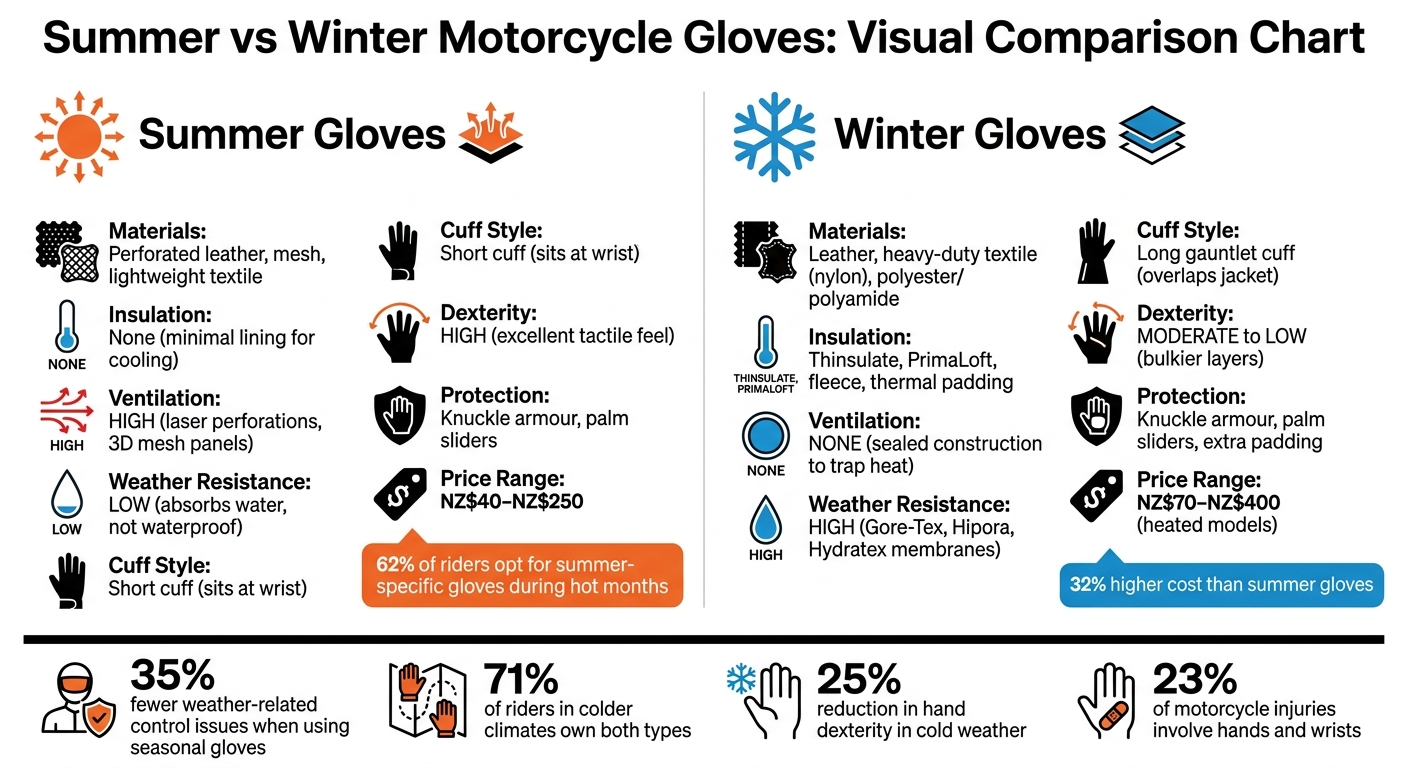
Summer vs Winter Motorcycle Gloves Comparison Chart
Best Motorcycle Gloves for Every Season? Winter, Rain & Summer Riding Gear Tested!
sbb-itb-bfda696
Summer Motorcycle Gloves: Design and Features
Summer motorcycle gloves are built to handle heat, sweat, and ensure precise control, all while keeping your hands protected. They’re lightweight, breathable, and designed to let air flow freely without compromising safety - essential for riding through New Zealand’s warm and often humid conditions. It’s no surprise that 62% of riders opt for summer-specific gloves during the hotter months, valuing their comfort and ventilation.
Materials and Construction
The performance of summer gloves largely depends on their materials. Perforated leather is a top choice, offering excellent abrasion resistance while allowing air to pass through tiny, laser-cut holes. This keeps hands cooler while maintaining durability. Mesh fabric is another staple, often used on the fingers and back of the hand for added breathability and to minimise sweat buildup.
To strike the perfect balance between safety and comfort, many gloves combine leather in high-impact areas with mesh or lightweight synthetics in less vulnerable zones. Kevlar stitching reinforces the seams, while knuckle protection often features TPU or carbon fibre. For added grip, silicone or rubberised sections are integrated into the palms, ensuring a firm hold even when hands get sweaty. This thoughtful construction supports the gloves' advanced ventilation features.
Ventilation and Airflow
Ventilation is key to rider comfort, especially in summer. Many gloves feature 3D mesh panels strategically placed in non-impact areas to channel airflow directly to the skin. Additional perforations enhance this cooling effect without weakening the material. Short-cuff designs, which end at or just below the wrist, help prevent heat buildup and allow air to flow into your jacket. Some higher-end gloves also include moisture-wicking liners to draw sweat away from your skin, keeping your palms dry and ensuring a secure grip.
Protection and Grip
Although summer gloves are lightweight, they don’t skimp on protection. Look for gloves meeting the EN 13594 standard, which ensures they’ve been tested for abrasion, tear resistance, and impact protection. Reinforced knuckles, often made from carbon fibre, and palm sliders are crucial safety features. These hard-plastic inserts are designed to let your hand slide across the pavement in a fall, reducing the risk of fractures.
The thinner materials and minimal padding also provide excellent tactile feedback, giving you precise control over your bike’s throttle, clutch, and brakes.
As David L. Hough, author of Proficient Motorcycling, explains: "Riders who invest in proper gear, including seasonal gloves, significantly reduce fatigue and accident risks".
Summer gloves typically cost between $40 and $120 for standard models, while premium options with full-grain leather and carbon fibre can go up to $250. For maximum comfort, look for gloves with pre-curved fingers, which reduce hand fatigue and ensure a snug fit without cutting off circulation.
Winter Motorcycle Gloves: Design and Features
Winter motorcycle gloves are specifically made to tackle New Zealand's chilly, damp conditions - especially in areas like the South Island or during early morning rides when the cold can bite the hardest.
Materials and Insulation
The best winter gloves are crafted from durable materials like high-denier nylon, polyester, polyamide, or premium cowhide/goatskin leather found in road and off-road rider gear, which offer excellent abrasion resistance. Insulation is the key to keeping your hands warm without sacrificing control. Synthetic options like 3M Thinsulate and PrimaLoft provide warmth while remaining thin enough to maintain precise handling of levers.
Between the outer shell and the insulation, a waterproof membrane - such as Gore-Tex, Drystar, Hipora, or Hydratex - keeps rain and wind out, all while allowing sweat to escape. Inside, a fleece or thermal lining wicks away moisture and adds an extra layer of comfort. This multi-layered design is why riders typically spend 32% more on winter gloves compared to summer ones.
Waterproofing and Wind Protection
Winter gloves are built to handle the worst weather. Many feature a Durable Water Repellent (DWR) finish on the outer layer, which causes water to bead up and roll off. Beneath that, the waterproof membrane creates a breathable, weatherproof barrier.
Gauntlet-style cuffs are a must-have for winter gloves. These extended cuffs overlap your jacket sleeves to block out wind and rain entirely. For added security, dual-closure systems - such as a combination of wrist straps and Velcro or drawstrings - ensure a snug, weather-tight fit. Some gloves even include a rubber "visor wiper" on the index finger or thumb, so you can clear rain from your helmet visor without needing to stop.
Prices for winter gloves vary widely, with basic insulated options starting at around NZ$70. For premium models featuring Gore-Tex, expect to pay anywhere from NZ$120 to NZ$250.
Comfort and Fit
Getting the right fit is critical. Winter gloves should feel snug but not overly tight - leaving a small air pocket at the fingertips helps trap heat and keeps your blood circulating properly. Pre-curved fingers reduce strain during long rides, while soft fleece linings prevent chafing.
Cold weather can reduce your hand dexterity by up to 25%, which is why anti-slip materials or silicone grips on the palms are so important. These features help you maintain control without needing to grip too tightly, which could lead to cramping.
For those riding in temperatures below 10°C, heated gloves are becoming increasingly popular. These battery-powered gloves, priced between NZ$250 and NZ$400, have seen a 27% rise in demand year-on-year. They provide consistent warmth, making them ideal for extended rides in freezing conditions.
As the British Motorcyclists Federation puts it: "The correct gloves are as important as helmets when it comes to rider safety, especially in extreme weather conditions."
Summer vs Winter Motorcycle Gloves: Side-by-Side Comparison
Here’s a detailed look at how summer and winter motorcycle gloves stack up against each other.
Comparison Table
| Feature | Summer Motorcycle Gloves | Winter Motorcycle Gloves |
|---|---|---|
| Primary Materials | Perforated leather, mesh, lightweight textile | Leather, heavy-duty textile (nylon), polyester/polyamide |
| Insulation | None (minimal lining for cooling) | Thinsulate, Primaloft, fleece, or thermal padding |
| Ventilation | High (laser perforations, 3D mesh panels) | None (sealed construction to trap heat) |
| Weather Resistance | Low (absorbs water, not waterproof) | High (Gore-Tex, Hipora, or Hydratex membranes) |
| Cuff Style | Short cuff (sits at wrist for airflow) | Long gauntlet cuff (overlaps jacket sleeve) |
| Dexterity | High (excellent tactile feel for controls) | Moderate to low (bulkier layers reduce sensitivity) |
| Grip | Standard silicone or rubberised palm | Anti-slip materials for wet/icy conditions |
| Protection Level | Knuckle armour, palm sliders | Knuckle armour, palm sliders, extra padding |
| Typical Price Range | NZ$40–NZ$120 (premium up to NZ$250) | NZ$70–NZ$250 (heated models NZ$250–NZ$400) |
The biggest trade-off between these glove types is dexterity versus warmth. Summer gloves are designed to provide excellent tactile control, making them ideal for precise handling. On the other hand, winter gloves prioritise warmth, which inevitably means some loss of sensitivity. This compromise is crucial because cold-induced numbness can reduce reaction times by as much as 25%, increasing the risk of accidents by 20%.
Interestingly, 71% of riders in colder climates choose to own both types of gloves for flexibility and safety across seasons. This comparison makes it easier to decide on the best motorbike gloves in NZ for New Zealand’s ever-changing weather conditions.
Choosing the Right Gloves for New Zealand Conditions
When it comes to selecting gloves for New Zealand's ever-changing weather, understanding the local climate is key. Coastal areas like Nelson, with their damp air and salt spray, require gloves made from fast-drying fabrics. Adding silicone grips ensures you maintain control even in slippery conditions, without the need for bulky insulation. On the other hand, alpine routes around Queenstown, where temperatures can dip below 10°C, call for gloves that prioritise warmth and dexterity. Studies show that insufficient gloves in cold conditions can reduce finger dexterity by up to 25%, which can seriously affect reaction times.
The design of the gloves also plays a big role. For winter rides, gauntlet-style cuffs are a must. These longer cuffs extend over your jacket sleeves, creating a barrier against the wind on those open roads. Meanwhile, short-cuff gloves are ideal for summer, allowing maximum airflow during hot afternoons. However, it’s smart to carry thin, waterproof over-gloves as a backup, especially in places like Nelson, which sees an average of 150 rainy days a year.
Choosing between leather and textile materials depends largely on the conditions. Leather gloves are excellent for abrasion resistance, making them a solid choice for New Zealand roads. However, textile or hybrid gloves with Gore-Tex or Hipora membranes are better suited for wet conditions, offering superior waterproofing during frequent rain showers. For winter gloves, avoid a tight fit - leaving a small gap between your fingertips and the fabric creates a pocket of warm air for added insulation.
Touchscreen-compatible gloves are another practical option, letting you operate GPS or mobile devices without exposing your hands to the cold. This is particularly important, as nearly 23% of motorcycle crash injuries involve the hands and wrists, highlighting the importance of proper hand protection year-round.
Moto 1 Recommendations for Summer and Winter Gloves

Moto 1 provides a range of gloves tailored to New Zealand's ever-changing riding conditions, catering to both budget-conscious riders and those seeking top-tier performance.
For summer rides, the Dririder Coolite Summer Vented Touring Glove is a solid pick at NZ$74.90. Its vented design ensures comfort during long, hot journeys. For riders who prioritise maximum airflow at higher speeds, the Dririder Aero Mesh 2 Summer Hypersports Glove (NZ$87.43) combines reinforced mesh panels with dependable protection. Those who favour the timeless appeal of leather can opt for the Richa Blast Leather Summer Glove at NZ$179.99. With perforated leather construction, it strikes a balance between durability and ventilation.
Adventure riders exploring both sealed roads and gravel tracks might prefer the Leatt 7.5 ADV X-Flow Glove, priced at NZ$239.99. Featuring X-Flow ventilation, it’s a great choice for dual-sport adventures. For urban or off-road riders, the lightweight Fox Airline Gloves at NZ$41.97 offer a minimalist slip-on design with neoprene cuffs, making them ideal for short trips on scorching days.
When it comes to winter conditions, the Alpinestars 365 Drystar 4 in 1 Gloves at NZ$199.90 stand out. These gloves are engineered for year-round use, perfectly suited for New Zealand's unpredictable weather. With a removable thermal liner, they adapt easily to fluctuating temperatures - keeping hands warm on frosty mornings and comfortable during milder afternoons. They’re made with full-grain goat Nappa leather for durability, feature a Drystar® waterproof membrane, and include certified knuckle protection (EN 13594 2015 level 1 KP). Plus, their touchscreen-compatible fingertips make GPS navigation effortless.
Ordering from Moto 1 is straightforward. If your purchase totals over NZ$199, you’ll enjoy free shipping anywhere in New Zealand - perfect for the Alpinestars 365 Drystar gloves. For smaller orders, shipping costs are NZ$7.99 for urban areas and NZ$12.99 for rural addresses, with most urban deliveries arriving overnight. Moto 1 also provides a 30-day return or exchange policy for unused items in their original packaging, ensuring peace of mind with every purchase.
Conclusion
Picking the right motorcycle gloves for summer or winter isn’t just about comfort - it’s about safety and maintaining control. Summer gloves focus on ventilation and flexibility, using perforated leather or mesh to keep your hands cool and your grip secure during hot rides. On the other hand, winter gloves rely on layered designs with materials like Gore-Tex to keep your hands warm and functional, even in New Zealand's cold and wet conditions.
Research backs this up: riders using gloves tailored to the season report 35% fewer weather-related control issues. Considering that nearly 23% of motorcycle-related injuries involve hands and wrists, and cold-induced loss of dexterity can raise accident risks by 20%, the importance of proper gloves becomes clear.
In a country like New Zealand, where the weather can change quickly, having both summer and winter gloves is a smart move. Whether you're cruising through the city or adventuring on gravel roads, the right gloves ensure you're ready for whatever conditions come your way. By choosing season-specific gloves, you’ll not only improve control but also enhance your overall safety on the road.
Check out Moto 1 for gloves designed to handle New Zealand’s unpredictable climate. With free shipping on orders over NZ$199 and a 30-day return policy, you can ride confidently, knowing your hands are protected year-round.
FAQs
Do I need both summer and winter gloves in NZ?
In New Zealand, the climate can be unpredictable, making it a smart choice for motorcyclists to own both summer and winter gloves. Summer gloves are designed with ventilation to keep your hands cool during the warmer months, while winter gloves focus on insulation and protection against cold and wet weather. With temperatures varying widely between seasons, having both types ensures you’re prepared for comfort and safety no matter the riding conditions.
How do I choose the right glove fit for winter warmth?
To keep your hands warm in winter, pick gloves with the right insulation. This will help retain heat without making them feel bulky. A snug fit is key - tight enough to trap warmth but loose enough to maintain good circulation. Opt for gloves made from waterproof and breathable materials. This combination keeps moisture out while letting sweat escape, ensuring your hands stay dry and comfortable. Also, choose gloves that extend over your jacket sleeves. This design helps block out wind and keeps your wrists protected from the cold.
Are heated gloves worth it for rides below 10°C?
Heated gloves are an excellent choice for rides when the temperature dips below 10°C. They deliver extra warmth beyond what standard insulation can provide, making them ideal for cold conditions. This added heat keeps your hands comfortable and functional, which is crucial for maintaining control and ensuring safety during long or freezing rides.