

Your motorcycle gear is your safety net. But for many new riders in New Zealand, making the wrong choices can lead to discomfort, distraction, or even serious injury. Here’s what you need to know:
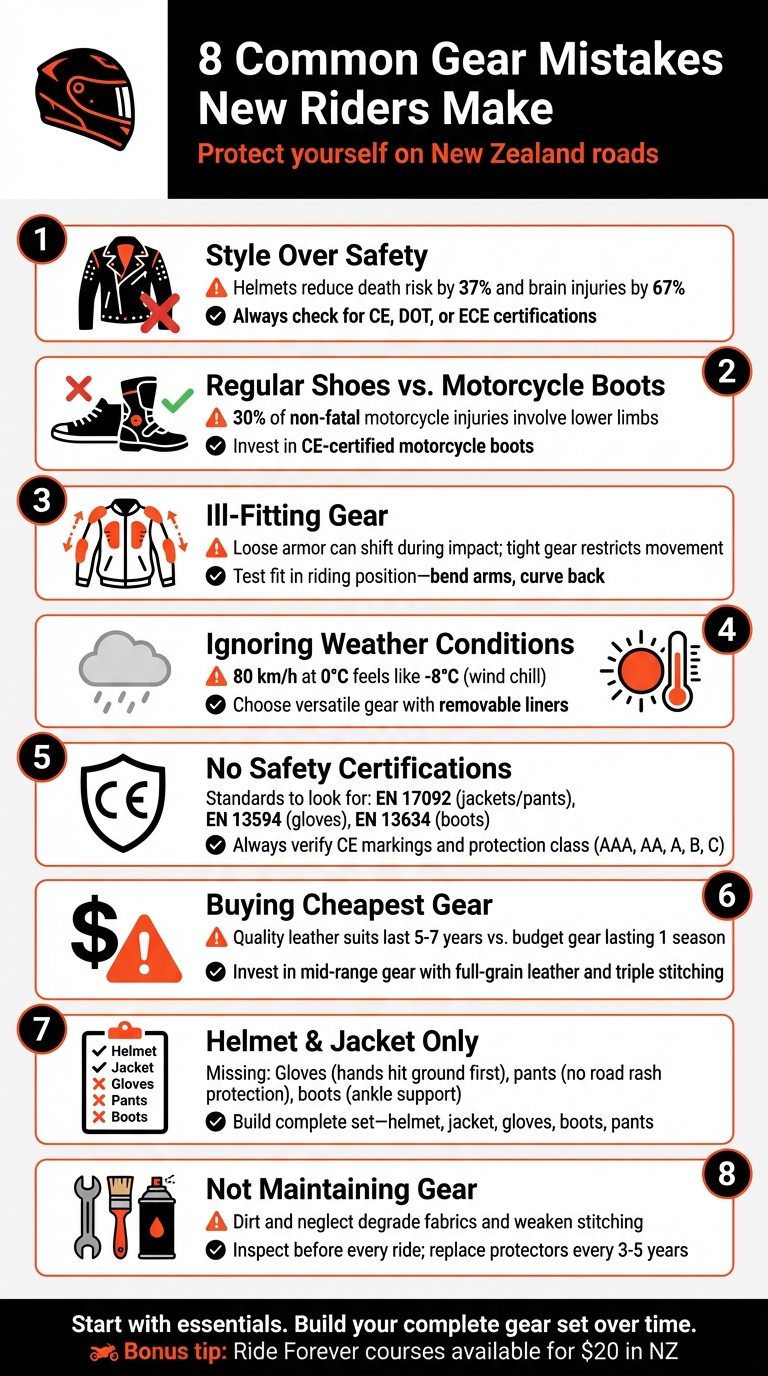
- Style over safety: Choosing gear for looks instead of protection can leave you vulnerable. Always check for certifications like CE, DOT, or ECE.
- Regular shoes vs. boots: Everyday shoes or steel-toed boots don’t offer the protection or grip needed for riding. Invest in motorcycle-specific boots.
- Ill-fitting gear: Gear that’s too loose or tight won’t protect you properly. Ensure it fits securely and comfortably in your riding posture.
- Ignoring weather: NZ’s unpredictable weather demands versatile gear with waterproofing and ventilation.
- Skipping safety certifications: Non-certified gear might fail in a crash. Look for CE markings and protection class labels.
- Cheap gear pitfalls: Low-cost gear often compromises durability and safety. Mid-range options are a better long-term investment.
- Incomplete gear sets: A helmet and jacket aren’t enough. Gloves, boots, and pants are also critical for protection.
- Neglecting maintenance: Poor care weakens gear. Regular cleaning, conditioning, and inspections keep your equipment reliable.
Start with essentials like a helmet, jacket, gloves, and boots. Over time, build a full gear set suited to NZ’s unique roads and weather. Maintaining your gear and prioritising certified, well-fitting options will not only keep you safer but also improve your riding experience.
8 Common Motorcycle Gear Mistakes New Riders Make
7 Beginner Gear Mistakes That Can Cost You Big Time
sbb-itb-bfda696
Mistake 1: Choosing Gear That Looks Good Over Gear That Protects
It’s easy to get drawn to a jacket or helmet that looks amazing. New riders often lean towards gear that matches their bike’s colour or fits a specific style, but safety can get overlooked in the process. The truth is, gear that looks great might not always keep you protected.
Materials that seem durable may not hold up during a crash. For example, a trendy leather jacket might lack the abrasion resistance, impact-absorbing armour, and reinforced stitching found in a CE-certified motorcycle jacket. The difference often lies in features that aren’t visible at first glance.
The numbers back this up: motorcycle helmets can decrease the risk of death by about 37% and reduce the likelihood of traumatic brain injuries by around 67%. However, these life-saving benefits only apply to helmets that meet recognised safety standards such as DOT, SNELL, or ECE 22.06. A helmet chosen purely for its looks won’t offer the same protection when it matters most.
This principle extends to other gear like jackets, gloves, and boots. CE-rated armour at key points - like shoulders, elbows, knees, and hips - absorbs impact energy to help prevent fractures. Materials such as Cordura or Kevlar blends are designed to resist tearing during a slide, reducing the risk of severe road rash. Regular clothing, no matter how thick or expensive, simply isn’t built to handle these forces.
How to Balance Safety and Style
Here’s the good news: you don’t need to give up style to stay safe. Many modern motorcycle gear options combine sleek designs with hidden safety features. As Spada Clothing highlights:
Many brands now create protective gear that looks great too, so you don't have to compromise style for safety.
The key is to check certifications first. Look for the CE pictogram (a motorcyclist icon) on jackets and pants, and ensure helmets meet standards like DOT, ECE, or SNELL. Inside the gear, you’ll find a label with the standard number (e.g., EN 17092) and its protection class (AAA, AA, A, B, or C). CE-certified clothing also includes a technical booklet explaining its protection level and care instructions.
Once safety is confirmed, focus on the design. Make sure stylish gear offers reinforced stitching, impact-resistant padding, and abrasion-resistant linings. When trying on gear, mimic your riding posture - bend your arms, curve your back, and flex your knees - to ensure all protective elements stay in place while riding.
Moto 1 provides a variety of CE-certified helmets, jackets, and other protective gear that blend real safety with modern style. Whether you’re into classic leather looks or prefer contemporary textiles, prioritising certified protection means you can ride safely without sacrificing your personal style.
Up next, we’ll explore how the right footwear can add another layer of protection on the road.
Mistake 2: Riding in Regular Shoes Instead of Motorcycle Boots
Regular shoes simply don’t cut it when it comes to motorcycle safety. Research shows that foot and ankle injuries are among the most frequent outcomes of motorcycle crashes, with about 30% of non-fatal injuries involving the lower limbs. Everyday footwear doesn’t offer the protection needed against the twisting forces that can result in serious ankle injuries. On New Zealand’s often slippery, oil-slicked roads, soft-soled shoes can easily slip off the footpegs. Materials like canvas, suede, or split-grain leather provide little to no resistance during a slide. And while steel-toed work boots might seem like a safer option, they can actually be dangerous. As Sam Ramey, a mechanic and Harley-Davidson rider, points out:
If your foot gets caught under the bike, the right boots can save your ankle from shattering.
In a crash, steel components in work boots can bend or crush, potentially leading to severe injuries or even toe amputations. Regular shoes also lack heat shields, leaving your feet vulnerable to burns from hot engine parts. With motorcyclists being 28 times more likely to die in a crash than car passengers, the need for proper footwear cannot be overstated.
Why You Need Motorcycle-Specific Boots
To address these risks, invest in boots specifically designed for motorcycle riding. These boots are purpose-built, offering CE-certified protection against impacts and abrasions, reinforced ankle support, and soles designed to resist slipping on oily or wet surfaces. Unlike steel-toed boots, motorcycle boots often use composite or thermoplastic reinforcements that maintain their shape during a crash.
Given New Zealand's unpredictable weather, look for waterproof options with membranes like Gore-Tex or HydraDri. Adventure-style boots provide extra shin protection and durable soles for off-road use, while road boots are designed for flexibility and comfort, making them ideal for daily commutes. Always check safety ratings on the Motorcycle Clothing Assessment Programme (MotoCAP). Entry-level CE-certified boots typically range from $170–$260, while mid-range touring boots can cost between $280–$450. Stores like Moto 1 offer a variety of road and adventure boots tailored to New Zealand riders, ensuring you stay protected whether you're cruising through city streets or exploring rugged backroads.
When building your riding gear collection, take the time to compare your options carefully. Safety should never be compromised. Up next, we’ll explore why the right fit is just as crucial as the gear itself.
Mistake 3: Wearing Gear That Doesn't Fit Properly
Once you've picked out safe and stylish gear along with the right footwear, the next critical step is making sure everything fits correctly. Even the highest-quality protective gear won't do its job if it doesn't fit you properly. Ill-fitting gear - whether it's too loose or too tight - can create serious safety risks, especially for new riders. For instance, a jacket that's too loose can cause the armour to shift or slide out of place during an accident, leaving your elbows and shoulders exposed. Loose jackets may also ride up in a fall, leaving your skin vulnerable to road rash. And don't forget - extra fabric flapping in the wind at higher speeds can mess with your stability and control.
On the flip side, gear that's too tight can limit your movement, making it harder to reach the handlebars or maintain an ideal riding posture. This restriction can increase your risk on the road. Tight gear can also be uncomfortable, which might distract you while riding. The Motogear Team highlights this point well:
Being able to move comfortably and freely on the bike is a safety factor. Even form-fitting leather race jackets that appear to be skin tight, need to allow free movement during riding.
How to Get the Right Fit
When trying on gear, always simulate your riding position - bend your arms, push your shoulders forward, and curve your back slightly. Gear that feels great while standing might turn out to be too tight or awkward when you're seated on the bike. Check that elbow armour stays centred over your joints without slipping and that shoulder armour fits snugly over your shoulders with minimal shifting. Sleeves should extend to your wrists without bunching, and the jacket should cover your lower back without riding up when you're seated.
If you're shopping online at Moto 1, don't rely on your usual clothing size. Instead, use the sizing chart provided by the specific brand. Different manufacturers measure differently - some measure arm length from the nape of your neck, while others start at the shoulder edge. Take your measurements while wearing your riding base layers, and keep in mind that leather gear may stretch about 5% in the torso over time.
Also, think about the layers you'll wear underneath. Thin, multiple layers are more practical than a single bulky one, which can make your jacket feel oversized once removed. Test the fit of your gear with and without removable liners to ensure it remains secure and comfortable. A proper fit doesn't just enhance comfort - it plays a key role in keeping you safe on the road.
Mistake 4: Ignoring New Zealand's Weather Conditions
New Zealand's weather is famously unpredictable. You could start a ride under clear blue skies and end it drenched in rain. Many riders make the error of relying on a single set of gear to handle the entire year. This can lead to discomfort and even dangerous distractions while riding - poorly suited gear might leave you shivering in the cold or overheating in the summer, both of which take your focus off the road.
Temperature swings are no joke, especially when you're on the move. For instance, riding at 80 km/h in 0°C conditions can make it feel like -8°C due to wind chill, potentially leading to hypothermia if your body temperature drops below 35°C. On the flip side, wearing heavy winter gear in summer can cause overheating and dehydration. Both extremes - numb fingers or excessive sweating - can impact your focus and even affect tyre performance. That's why having gear suited to the conditions is not just a comfort issue; it's a safety priority.
Choosing Gear for Different Weather
The best approach is investing in versatile, all-season gear with removable liners. Textile jackets and trousers with waterproof and thermal liners are a great option since you can adapt them easily to the weather. This kind of gear works whether you're navigating Auckland's sticky summer heat or braving the winter chills of Queenstown.
For summer, look for jackets with mesh panels or built-in ventilation to encourage airflow. Pair these with perforated gloves that allow your hands to stay cool. In winter or wet weather, opt for gear with waterproof membranes, thermal insulation, and windproof materials. Gloves should be insulated and waterproof, with long cuffs to seal out the elements. Your helmet is equally important - an anti-fog visor is crucial for maintaining visibility during New Zealand's rainy spells. When the rain gets heavy, waterproof over-jackets and over-pants provide an extra layer of protection.
Moto 1 offers a range of jackets, trousers, and gloves designed specifically for New Zealand's unpredictable climate. Choosing the right gear for the conditions you ride in most often not only keeps you comfortable but also makes your rides safer and far more enjoyable.
Mistake 5: Buying Gear Without Safety Certifications
When it comes to motorcycle gear, safety certifications are what truly set protective gear apart from regular clothing. While many riders may be drawn to gear that looks the part, without proper certifications, it might not offer the protection you need in a crash. Essentially, you're risking your safety for style.
Since April 2018, all motorcycle gear sold in Europe must meet Personal Protective Equipment (PPE) certification standards. While materials like leather and textiles can provide abrasion resistance, only CE-certified armour ensures reliable impact absorption. Gear without these certifications might fail when you need it most - fabric could rip during a slide, seams might split, or non-certified armour could transfer dangerous levels of force to your body.
Why Certified Gear Matters
When shopping for motorcycle gear, always look for the CE marking and the corresponding EN standard number. For example:
- Jackets and trousers: EN 17092
- Gloves: EN 13594
- Boots: EN 13634
- Back protectors: EN 1621-2
Certified gear should also come with a booklet outlining its protection class (AAA, AA, A, B, or C) and a web address for the official Declaration of Conformity. If the gear you're considering doesn't include these, it's a red flag - move on to something that does.
At Moto 1, you’ll find a wide selection of CE-certified gear from reliable brands. Whether you’re searching for a Class AA touring jacket or Level 2 armour for high-speed rides, certified gear ensures you're getting protection that’s been rigorously tested and verified. Choosing certified gear isn't just about ticking a box - it's about ensuring your safety on the road. Always check the labels, confirm the certifications, and ride with peace of mind knowing your gear is built to perform when it matters most.
Next up, we'll explore why opting for quality mid-range gear is a smart move to balance safety and cost.
Mistake 6: Buying the Cheapest Gear Available
Opting for the cheapest gear might seem like a smart way to save money, but it often ends up costing more in the long run - both in terms of safety and durability. Low-cost equipment comes with hidden expenses, including frequent replacements and increased safety risks.
Budget-friendly gear often compromises on quality. For example, it may use thin leather, minimal stitching, or poorly designed armour that shifts out of place during an impact. In the event of a slide, these materials can wear through in seconds, and weak seams may give way under pressure, leaving you exposed to serious injuries. Cheaper leather is often "split" or "corrected" grain, meaning it has been heavily treated, which significantly reduces its tear strength. On New Zealand roads, this type of gear is unlikely to last beyond a single season, with issues like drying leather, broken zippers, and loose stitching becoming common. Studies show that premium leather and advanced stitching techniques can double the abrasion resistance during a slide compared to budget alternatives. Plus, high-quality leather suits, when properly maintained, can last anywhere from 5 to 7 years.
In short, cheap gear might save you money upfront, but it’s a risky and expensive gamble in the long run.
Investing in Quality Mid-Range Gear
You don’t have to go all out to get reliable protection. Look for features like full-grain or top-grain leather, which maintain their natural strength, triple stitching in impact zones to prevent seam failure, and CE-certified armour that stays firmly in place. These are the hallmarks of gear designed to protect you - not just to look good.
At Moto 1, mid-range options strike a balance between affordability and safety. Plus, with free shipping on orders over NZ$150, you can assemble a solid set of gear without stretching your budget. When shopping, take the time to inspect details like leather thickness and stitching quality - these often-overlooked factors can make a huge difference when your gear is put to the test.
Next, find out why having a full gear set is about more than just a helmet and jacket.
Mistake 7: Only Buying a Helmet and Jacket
After finding gear that’s both safe and affordable, many riders stop at just a helmet and jacket, assuming these two items are enough. But here’s the reality: your hands, ankles, and legs face just as much risk as your head and torso.
Your hands, for instance, are usually the first to hit the ground when you instinctively try to break a fall. Without motorcycle-specific gloves - designed with features like palm sliders and knuckle guards - you’re leaving yourself open to serious abrasions and impact injuries. And let’s not forget your legs. Regular jeans or, worse, shorts, offer almost zero protection against road rash. As one seasoned rider aptly put it:
"All seasoned riders shake their head at the guy riding in shorts and flip flops." – Black Gold Harley-Davidson
The same logic applies to your feet and ankles. Proper boots with ankle support are a critical part of your protective gear.
Building a Complete Gear Set
A full gear set starts with the essentials: a well-fitted helmet, a protective jacket, gloves, and boots. These aren’t optional; they’re the baseline for safety.
If you’re on a budget, Moto 1 offers gear bundles that make it easier to assemble a full, CE-certified setup. When shopping, focus on items with CE-certified armour, especially in gloves and pants, and make sure your boots provide solid ankle protection.
Don’t fall into the trap of thinking you can add the rest of your gear later. Motorcycle gear is purpose-built with features like abrasion-resistant fabrics, reinforced stitching, and armour tailored for riding positions - qualities regular clothing just doesn’t have. To make sure your setup works, try it on in your riding posture to confirm full coverage and secure armour placement.
Next, we’ll explore how maintaining your gear can keep you safer every time you ride.
Mistake 8: Not Maintaining Your Gear
Once you've picked out and fitted your gear, the next step is just as crucial: keeping it in good condition. Skipping maintenance can seriously impact your gear's ability to protect you. Dirt, grit, and neglect can wear down fabrics, weaken stitching, and even degrade impact protectors over time - leaving you vulnerable when you need protection the most.
Leather gear, for instance, can dry out, stiffen, and crack if it's not conditioned regularly. Textile gear has its own set of issues - using the wrong detergents or fabric softeners can clog membranes and ruin waterproof coatings, leading to peeling and loss of function.
"Improper or incorrect care of motorcycle clothes results in your gear wearing out fast, looking used and often - being damaged."
How to Maintain and Inspect Your Gear
Before every ride, take a moment to inspect your gear. Look for loose stitching, damaged zippers, or wear and tear on protective elements. Always remove impact protectors before washing your gear. Clean them separately with a damp cloth and plan to replace them every three to five years.
Different materials need different care routines. For textile gear, stick to mild detergents or technical washes and avoid harsh chemicals like bleach or fabric softeners. Air-dry your gear in a ventilated area, keeping it out of direct sunlight to prevent fading and material damage. Leather gear, meanwhile, benefits from regular conditioning every few months to keep it soft and crack-free.
Proper storage is just as important. Use padded hangers and make sure your gear is completely dry before storing it to avoid mildew. If you're unsure about how to care for a specific item, check out product reviews on Moto 1. Many Kiwi riders share tips and insights based on their experiences with New Zealand's unique riding conditions.
Conclusion
Starting with the right gear is key to ensuring safer riding. Selecting equipment with verified safety certifications, a proper fit, and lasting durability provides protection when you need it most.
For new riders in New Zealand, there are added challenges to consider. The weather can shift unexpectedly, and you'll likely encounter a mix of busy urban streets and twisting rural roads. High-quality gear, tested specifically for riding positions and certified to CE standards, tailored to these conditions, allows you to focus on honing your skills without being distracted by discomfort or poor performance.
Good gear isn't just about crash protection - it also helps minimise distractions. A well-fitted jacket, sturdy boots, and reliable gloves enhance your control over the bike, letting you concentrate on techniques like countersteering or precise braking. This added control is especially important when you're still learning.
Building a complete set of riding gear doesn't have to happen all at once. Start with the essentials - a helmet, jacket, gloves, and boots - investing in solid mid-range options. Over time, as you gain more experience, you can expand your collection with items like riding pants or thermal layers for added comfort and safety.
Don't forget to tap into local resources designed to help Kiwi riders. Programmes like Ride Forever offer highly subsidised training courses for as little as $20, helping you develop the skills to match your protective gear. Keeping your equipment in good condition is also crucial for staying safe on New Zealand's roads.
Once your skills and gear are aligned for New Zealand's unique conditions, consider exploring Moto 1’s range of equipment. Their products meet rigorous safety standards and are specifically designed to handle Kiwi roads and weather.
FAQs
What CE rating should I choose (AAA, AA, or A)?
When picking your CE-rated gear, think about your riding conditions. AAA-rated gear offers the highest level of protection, making it perfect for high-speed rides (up to 120 km/h). On the other hand, AA-rated gear is designed for urban and mid-speed scenarios, providing protection for 4–7 seconds. Match your gear to the level of safety you need based on where and how you typically ride.
How can I check if my helmet is ECE 22.06 certified?
To check if your helmet meets the ECE 22.06 standard, look for a certification label or sticker. This is usually found on the back or inside of the helmet and should clearly display "ECE 22.06". Make sure the label is intact and easy to read, as it confirms the helmet's compliance with the standard.
What gear should I buy first on a tight budget?
If you're watching your spending, focus on the must-have safety gear first: a reliable helmet, durable gloves, and a solid jacket. These essentials offer vital protection while being a budget-friendly way to gear up for your rides.