

Organising a motorcycle fundraiser can be a powerful way to support a cause while uniting the riding community. Here's a quick breakdown of what you need to know:
- Define Clear Goals: Decide why you're organising the event - raising funds, spreading awareness, or honouring someone - and set a target amount.
- Plan Early: Choose a cause, date, and route. Allow at least 8–12 weeks for permits, insurance, and logistics.
- Budget Wisely: Estimate costs like permits (NZ$0–NZ$500), liability insurance (NZ$300–NZ$800), and catering. Secure sponsorships and set ticket prices to cover expenses.
- Ensure Safety: Map a safe route, prepare waivers, and create a Health and Safety Plan. Secure permits for public roads and organise first aid stations.
- Build a Team: Form a committee, recruit volunteers, and assign roles. Engage local businesses for sponsorships or in-kind donations.
- Promote Effectively: Use social media, local networks, and riding groups to spread the word. Highlight safety protocols and proper gear requirements.
- Event Day Execution: Ensure smooth registration, coordinate volunteers, and manage pit stops. Wrap up with a post-ride celebration.
- Follow Up: Thank participants and sponsors, gather feedback, and evaluate the event's success.
A well-organised motorcycle fundraiser combines community spirit with impactful action. By planning carefully and focusing on safety, you can create a memorable event while making a difference.
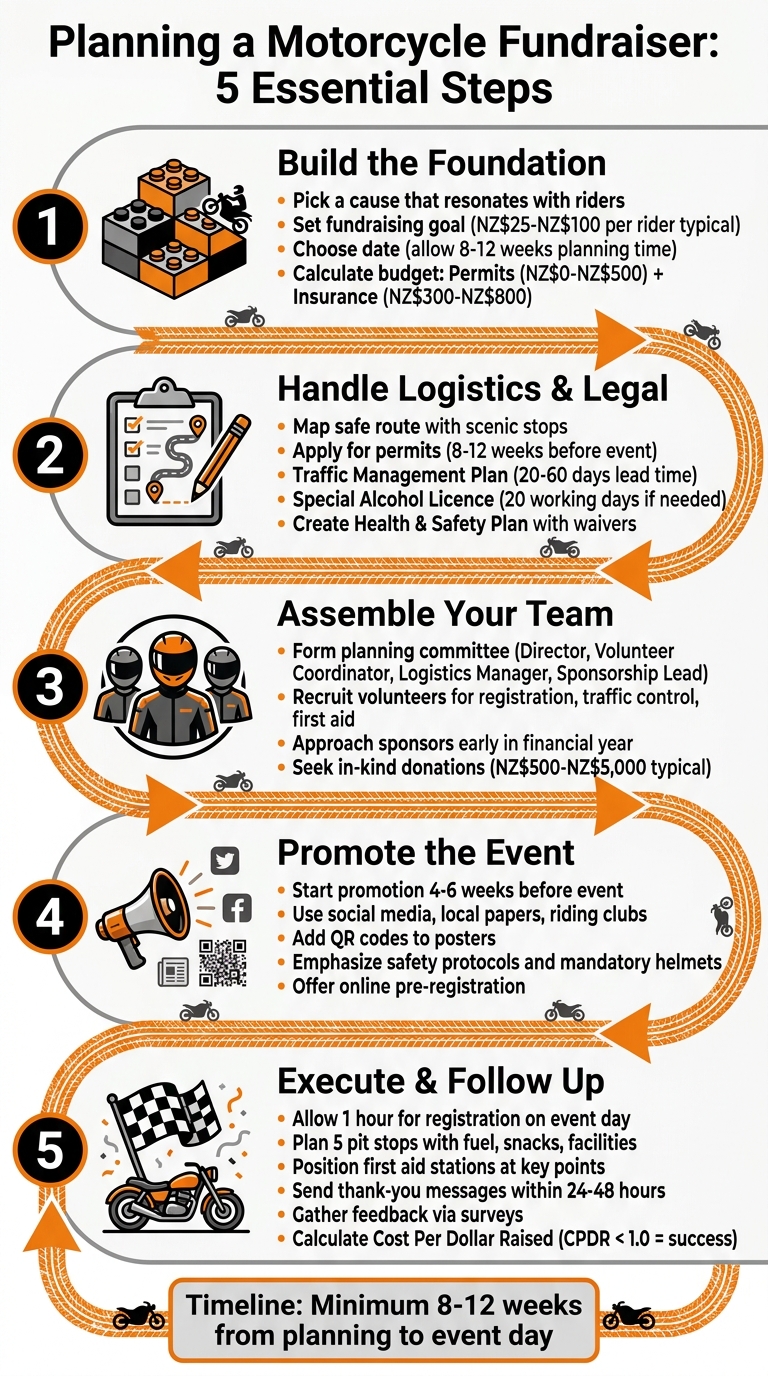
5-Step Guide to Planning a Motorcycle Fundraiser
Step 1: Build the Foundation for Your Event
Pick a Cause and Define Your Objectives
Start by selecting a cause that resonates with your local riding community. Causes like mental health support, veteran services, or memorial rides for fallen mates tend to draw strong interest. For memorial rides, adding a personal touch - such as highlighting a favourite route or hobby of the individual being honoured - can make the event even more meaningful.
Set a clear fundraising goal and estimate how many riders you expect to join. Registration fees in New Zealand typically range between NZ$25 and NZ$100 or more per rider. Decide whether your event will be local, regional, or national, as this will influence key aspects like the route length and the scope of your promotions. Partnering with a registered charity is a smart move, as it ensures donations are tax-deductible and gives you access to their reporting tools.
Choose a Date and Build a Timeline
Plan for at least 8 to 12 weeks to organise your event properly. This timeframe allows for recruiting volunteers, securing donations, and promoting your ride. Be sure to contact your local council or regional authority at least six weeks before the event to handle permits, as requirements can vary greatly depending on your location.
Check local event calendars and riding group schedules to avoid conflicts with other major rides or community activities. Select a date that aligns with New Zealand's weather patterns, and have a contingency plan for rain - such as an alternative route, ensuring everyone has the right road and off-road rider gear, or an indoor venue. Dates tied to specific occasions or anniversaries often create a stronger connection with participants.
Once your date is locked in, define your budget and expected turnout to ensure everything stays on track financially.
Calculate Your Budget and Expected Attendance
Collect registration fees in advance to secure an accurate headcount. Use numbered tickets to track payments and ensure you can cover fixed costs. Carefully calculate your total expenses, including venue hire, catering, entertainment, equipment, and legal requirements like permits (which can range from NZ$0 to NZ$500) and liability insurance (typically NZ$300 to NZ$800).
Set your ticket price to cover all costs while still leaving enough to contribute to your cause. Consider reaching out to local businesses for sponsorships - many are willing to cover specific expenses like printing or catering, which helps reduce your budget and increases the amount raised for charity. Keep an itemised record of all expenses from the start to avoid overspending. Confirm all bookings with vendors, such as caterers and venues, a couple of days before the event to ensure everything runs smoothly.
With your budget and attendance plans finalised, you’ll be ready to tackle the logistical details.
sbb-itb-bfda696
Step 2: Handle Logistics and Legal Requirements
Map Out a Safe Route
Plan a route that offers both stunning scenery and prioritises rider safety. New Zealand's varied landscapes - think alpine passes, coastal roads, and lush forests - make for an unforgettable ride. Include stops at scenic viewpoints, coffee spots, and safe regrouping areas to keep things enjoyable and organised.
To keep riders focused, use navigation apps compatible with bike touchscreens via Apple CarPlay or Android Auto. For remote routes with limited mobile coverage, equip your support crew with satellite emergency beacons. As Wandrith puts it:
"Satellite emergency beacon included on all routes - real safety, off the grid".
If your event spans both the North and South Islands, book ferry crossings in advance and provide tie-down kits to protect bikes during transport. Before setting off, hold a pre-ride briefing to go over the route and safety measures. For multi-day events, plan at least one full rest day, especially for riders travelling from afar. Also, ensure lead and support vehicles have a current Certificate of Fitness, and check that your organisation meets Transport Service Licence requirements if you're operating commercially.
Get Permits and Insurance
Reach out to your local council's event team 8 to 12 weeks before your fundraiser to determine the permits you'll need. Events held on council-owned land, like parks, roads, or footpaths, require formal approval. If your route involves public roads, you'll need a Traffic Management Plan (TMP) and a Corridor Access Request (CAR). For instance, in Gisborne, pre-approved plans cost $91.
For routes that include state highways, approval from NZ Transport Agency (Waka Kotahi) is necessary. This involves submitting an Early Access Request along with a TMP. Applications should be lodged at least 8 weeks in advance, or 12 weeks if road closures are involved. If your event includes food stalls, ensure they are registered under the Food Act. For events serving alcohol - or where alcohol is part of the ticket price - submit a Special Alcohol Licence application at least 20 working days before the event.
| Permit/Requirement | Typical Lead Time | Authority |
|---|---|---|
| Event Application | 8–12 weeks | Local Council |
| Road Closure Request | 10–12 weeks | Local Council |
| Traffic Management Plan | 20–60 days | Council / NZTA |
| Special Alcohol Licence | 20 working days | Local Council |
| Resource Consent | 20–90 working days | Local Council |
Once you've secured all approvals, shift your focus to ensuring participant safety and managing risks.
Create Waivers and Safety Plans
After getting permits and insurance sorted, finalise your safety measures. Develop a Health and Safety Management Plan that outlines risk management, emergency procedures, and first aid. Use standard motorsport indemnity templates to cover all legal aspects. Your waivers should include declarations for competitors, officials, passengers, and minors - requiring a guardian's signature for those underage.
Make sure every participant signs on at the start of the event using sign-on sheets to confirm they agree to the safety protocols and event rules. Include a Critical Incident Communications Plan in your safety documents to handle emergency reporting and response effectively. Address specific risks like fuel storage, first aid station locations, and emergency contact procedures. Some councils even offer pre-approved TMPs for popular locations, making the process easier and potentially cutting costs.
Step 3: Assemble Your Team and Find Support
Create a Planning Committee
Start by forming a small, reliable team to help share the workload. This way, you can avoid burnout and ensure every detail of your fundraiser gets the attention it deserves. Look for people with complementary skills - someone with a knack for budgeting, an organiser to handle logistics, and a people-oriented individual to coordinate volunteers.
Assign roles early to keep things running smoothly. Key positions might include a Director to oversee the event, a Volunteer Coordinator to manage staffing, a Logistics Manager to handle permits and routes, and a Sponsorship Lead to secure funding. If you're organising the event through a motorcycle club, you can use the existing leadership structure that members already trust. Having a representative from the charity involved can also lend credibility and inspire more support.
Find Volunteers and Delegate Tasks
Volunteers are crucial for managing event-day responsibilities like registration, traffic control, and first aid stations. Reach out to your local riding community or trusted contacts who share your passion for the cause. Experienced riders can serve as road captains, leading groups and ensuring safety during the ride.
Be clear about what each role involves so everyone knows their duties. For instance, registration staff can handle forms and waivers, while auction spotters can track bids if you're holding a fundraising auction. For traffic control, it's best to work directly with local law enforcement instead of relying solely on volunteers. To keep everyone connected on the day, use mobile apps or radios for seamless communication between your committee and lead volunteers.
Approach Sponsors and Donors
Once your team and volunteers are in place, it's time to reach out to sponsors for additional support. Start early in the financial year when companies are more likely to have available budgets. Focus on local businesses that align with your cause, such as motorcycle dealerships, repair shops, and other relevant organisations. Clearly outline what you’re offering in return - logo placements, speaking opportunities at the event, or social media promotion - and explain how your audience overlaps with their target customers.
Don’t just ask for cash; in-kind contributions can be just as helpful. For example, you could request free beverages from a local bar, discounted poster printing, or prizes like oil changes, tyre checks, or road gear. Sponsorship amounts from local businesses typically range from $500 to $5,000, and in-kind donations can cut down your costs significantly. Keep your sponsorship proposal concise - one page is ideal, with key details upfront, as decision-makers often skim through. Use a spreadsheet to track all interactions, including company names, contact details, and follow-up dates, to stay organised.
Step 4: Promote Your Fundraiser
Develop a Marketing Strategy
Begin promoting your fundraiser 4–6 weeks before the event. Use a mix of traditional and digital channels to get the word out. Local newspapers, radio stations, community posters, and newsletters from schools, clubs, or charities can all help spread the message [2, 14].
Digital tools can take your efforts even further. Add QR codes to posters so people can quickly access registration or donation pages [3, 14]. Create a Facebook Event to share updates, route details, and teasers leading up to the big day.
Email is another powerful tool. Use automated emails to share progress updates and keep donors engaged. Follow the "Rule of 7" - thank donors seven times before asking for another contribution. For every donation, report on how it’s helping and include an offer to stay involved.
Once you’ve set your strategy, tap into local networks to expand your reach.
Connect with Local Riding Groups
Local riding clubs and forums are excellent places to find participants. Post flyers at motorcycle dealerships, petrol stations, and popular hangouts like bars along your route. Word-of-mouth recommendations from past participants or respected local riders can also encourage more people to sign up.
Make it easy for participants to sign up by offering online pre-registration through platforms like Eventbrite. To build excitement, share videos or photos of your cause and the planned route on social media. These visuals can help potential riders feel more connected to the event [3, 14, 16].
This groundwork also sets the stage for promoting the importance of safety.
Emphasise Safety and Proper Gear
Safety should be front and centre in all your communications. Highlight your safety protocols and stress the importance of proper gear. Helmets are mandatory and must meet New Zealand regulations - make this clear in your materials. Enforce a zero-tolerance policy for intoxication, stunts, and reckless behaviour. Remind riders to follow group riding rules, including no overtaking, staying behind the leader, and maintaining the designated speed.
Encourage participants to check that their motorcycles are roadworthy and to bring weather-appropriate gear. Quality protective gear - helmets, gloves, jackets, and boots - is crucial for both safety and comfort. If riders need to upgrade their equipment, Moto 1 (https://moto1.nz) offers a variety of certified motorcycle gear suitable for road use, with free shipping on qualifying orders.
To reinforce your safety message, consider offering safety-themed promotional items like reflective wristbands or LED lights as part of the registration package. After the event, show your appreciation by placing a "thank you" notice in the local paper. It’s a great way to acknowledge participants and volunteers while building goodwill for future events.
Step 5: Run the Event and Follow Up
Manage Event-Day Activities
Kick off the day with a smooth registration process. Set aside about an hour for this, ensuring all registration forms, waivers, and photo releases are ready to go. Assign a volunteer coordinator to oversee roles and responsibilities, so everyone knows what they need to do.
Create a central information hub where participants can ask questions or get assistance. Keep organisers and volunteers connected through radios or mobile apps for seamless communication. Road captains should help maintain order on the route, while local law enforcement can assist with traffic control. Place support vehicles strategically along the route to handle any unexpected issues.
Plan for five pit stops along the way, complete with fuel, snacks, and toilet facilities. First aid stations should also be stationed at key points, and emergency contact numbers must be easily accessible. After the ride, transition into a post-ride celebration, whether it’s a BBQ, silent auction, or live music, to leave everyone with great memories of the day.
Once the event wraps up, shift gears to show appreciation to everyone who played a part.
Acknowledge Participants and Volunteers
Send out thank-you messages within 24–48 hours of the event. Tailor your emails to make them personal - acknowledge first-time riders differently from regular participants to make everyone feel valued. For major sponsors, key volunteers, or VIP attendees, go the extra mile with handwritten notes or event-themed gifts to strengthen those connections.
Use both private and public channels to show gratitude. Emails or letters work well for individual thanks, while social media and local newspapers are great for public recognition. Encourage riders to share their photos using an event hashtag, and when you reshare their posts, tag and thank them to keep the momentum going. A simple public "thank you" in the local paper can also go a long way in recognising the community’s support.
After expressing thanks, take time to evaluate how the event went to improve for next time.
Review and Record the Event
Gather feedback as soon as possible. Use surveys or comment cards right after the event, and follow up with an online survey 3–5 days later. To encourage responses, offer incentives like Moto1 rewards, early-bird discounts for next year’s ride, or entry into a prize draw.
Finalise your budget by recording all expenses and any outstanding funds, ensuring you have a clear picture of the charity’s final balance. Share a summary report on social media and your website, highlighting funds raised, feedback, and memorable moments from the event.
Keep a detailed record of reliable contacts - volunteers, sponsors, and local business donors - so you’re not starting from scratch next year. As FrontStream points out:
"If your bike-a-thon becomes an annual event, you'll be set up to reengage past participants so you're not starting from scratch every year or managing outdated spreadsheets".
Organizing a Motorcycle Charity Ride - Safety and Liability
Conclusion: Making Your Fundraiser a Success
Organising a motorcycle fundraiser takes effort, but the rewards can be well worth it. You’ve planned a safe route, secured the necessary permits, pulled together a strong team, and spread the word among local riders. Now comes the crucial step - figuring out if all that hard work paid off.
To measure your success, look at both financial and engagement metrics. Start with your Cost Per Dollar Raised (CPDR) by dividing total expenses by the total revenue. A CPDR below 1.0 means you’ve raised more money than you spent, which is a great result. But don’t stop there - consider how many riders participated, how much media coverage the event received, and how many attendees became first-time donors. These figures help you understand whether your event resonated with people or simply passed by unnoticed. They also provide a solid foundation for clear and accountable communication.
Transparency is key to building trust for future events. Share a summary report on your website and social media showing how much money was raised and exactly where it’s going. Riders want to see that their registration fees and donations made a real difference, whether it’s funding veteran services, mental health initiatives, or community projects. As Andre Silva wisely says:
"Trust is earned through consistency and clarity - not spectacle".
This level of accountability lays the groundwork for future rides. Keep the momentum alive by staying connected with everyone who contributed. Take note of what worked well and what didn’t - whether it’s route difficulties, volunteer engagement, or sponsor feedback - so you can improve next year’s event. Maintain an organised database of reliable volunteers, sponsors, and participants to save time and effort when planning the next ride. Starting fresh every year wastes valuable energy that could be channelled into making an even greater impact.
FAQs
What’s the best way to handle donations and receipts legally?
To manage donations and receipts properly for a motorcycle fundraiser in New Zealand, it's crucial to keep detailed records of every contribution. Make sure to issue official receipts to donors, as this not only ensures transparency but also reinforces the fundraiser's credibility.
It's a good idea to consult local laws or relevant authorities to understand specific requirements for handling donations. By maintaining thorough documentation and ensuring receipts meet legal standards, you'll stay compliant and demonstrate accountability to your supporters.
How do I decide if my ride needs a Traffic Management Plan or road closures?
When planning an event, think about its location, size, and potential impact on traffic. If the event takes place on a road or is likely to cause congestion, you might need a Traffic Management Plan (TMP) or even arrange a road closure. Larger events typically call for professional traffic management services to handle these requirements.
For smaller events with limited traffic disruption, it’s a good idea to check with local authorities or consult a traffic expert to see if a TMP or road closure is required. This ensures everything runs smoothly and complies with regulations.
What safety gear rules should I set for riders and passengers?
Ensure all riders and passengers wear safety gear that aligns with local regulations. Helmets are a must, along with protective clothing such as leather or reinforced synthetic jackets. Eye protection, like goggles or visors, is equally critical. Prioritising motorcycle-specific gear not only boosts safety but also ensures your event complies with legal standards.