

Motorcycle helmets have evolved significantly in 2026, with advancements in safety, comfort, and technology. The latest models meet the updated ECE 22.06 safety standard, offering better protection against rotational impacts and a broader range of crash scenarios. Key features include MIPS technology, Koroyd crumple zones, and noise-reduction designs to protect rider hearing. Some helmets also include modern conveniences like photochromic visors and integrated communication systems.
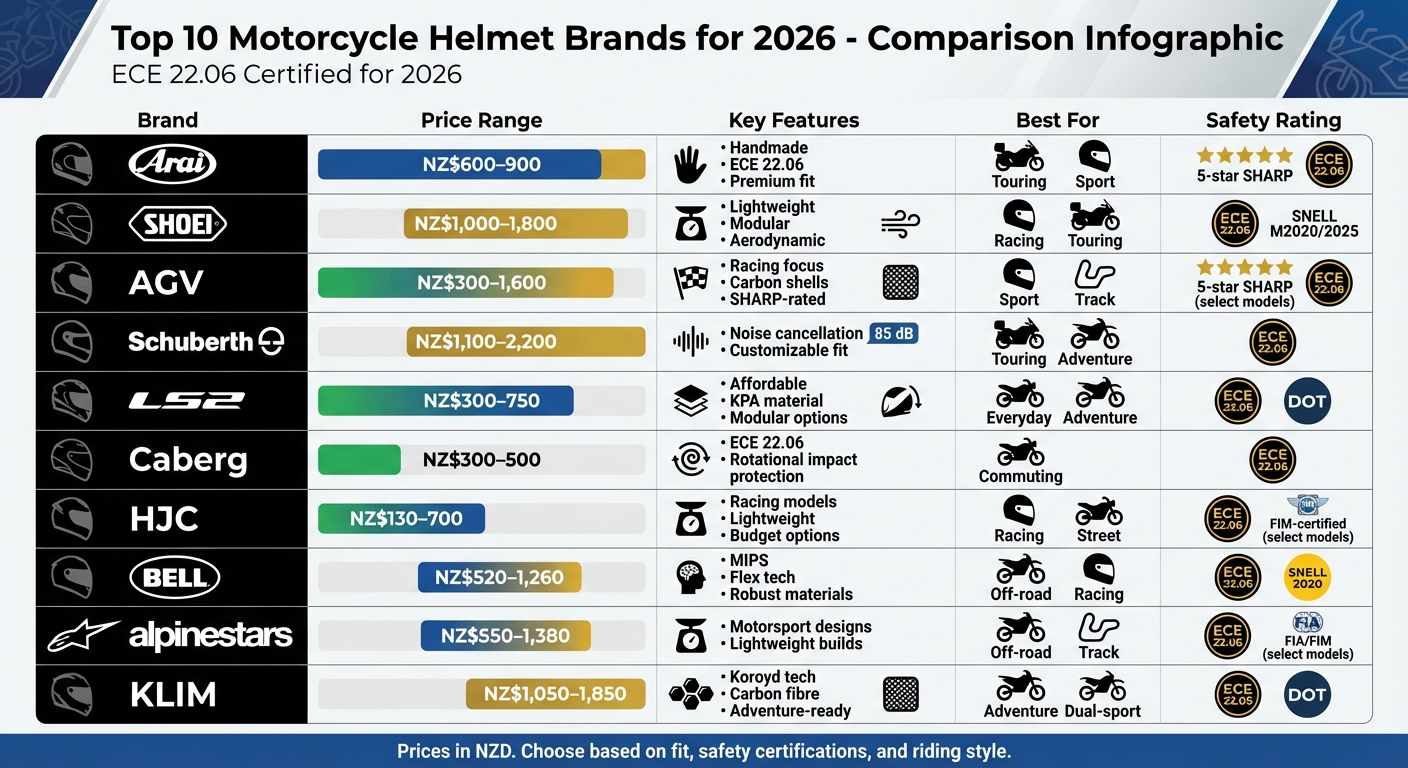
Here are the top 10 helmet brands for 2026:
- Arai: Known for hand-crafted precision, ECE 22.06-certified helmets, and superior ventilation.
- Shoei: Offers lightweight designs, excellent aerodynamics, and modular options like the Neotec 3.
- AGV: Focuses on racing and sport-touring helmets with robust materials and advanced safety protocols.
- Schuberth: German-engineered helmets with features like Active Noise Cancellation and customisable fits.
- LS2: Affordable yet reliable helmets using advanced materials like Kinetic Polymer Alloy (KPA).
- Caberg: Focused on safety updates with ECE 22.06 compliance and rotational impact protection.
- HJC: Combines affordability with high-end racing models, including FIM-certified helmets.
- Bell: Known for innovative safety technologies like Flex and MIPS, along with durable materials.
- Alpinestars: Motorsport-driven designs with lightweight builds and advanced ventilation.
- KLIM: Adventure-focused helmets with Koroyd technology for impact absorption and lightweight carbon shells.
Each brand caters to specific riding styles, from racing and touring to off-road adventures. Pricing varies widely, starting at around NZ$300 for entry-level models and exceeding NZ$2,000 for premium options.
Quick Comparison
| Brand | Key Features | Price Range (NZ$) | Best For |
|---|---|---|---|
| Arai | Handmade, ECE 22.06, premium fit | 600–900 | Touring, Sport |
| Shoei | Lightweight, modular, aerodynamic | 1,000–1,800 | Racing, Touring |
| AGV | Racing focus, carbon shells, SHARP-rated | 300–1,600 | Sport, Track |
| Schuberth | Noise cancellation, customisable fit | 1,100–2,200 | Touring, Adventure |
| LS2 | Affordable, KPA material, modular options | 300–750 | Everyday, Adventure |
| Caberg | ECE 22.06, rotational impact protection | 300–500 | Commuting |
| HJC | Racing models, lightweight, budget options | 130–700 | Racing, Street |
| Bell | MIPS, Flex tech, robust materials | 520–1,260 | Off-road, Racing |
| Alpinestars | Motorsport designs, lightweight builds | 550–1,380 | Off-road, Track |
| KLIM | Koroyd tech, carbon fibre, adventure-ready | 1,050–1,850 | Adventure, Dual-sport |
When choosing a helmet, prioritise safety certifications (ECE 22.06, DOT, SNELL), a snug fit for your head shape, and features that match your riding style. Whether you're touring across New Zealand or tackling off-road trails, there's a helmet designed for your needs.
Top 10 Motorcycle Helmet Brands 2026: Safety Features and Price Comparison
The Best Motorcycle Helmets of 2026
sbb-itb-bfda696
1. Arai
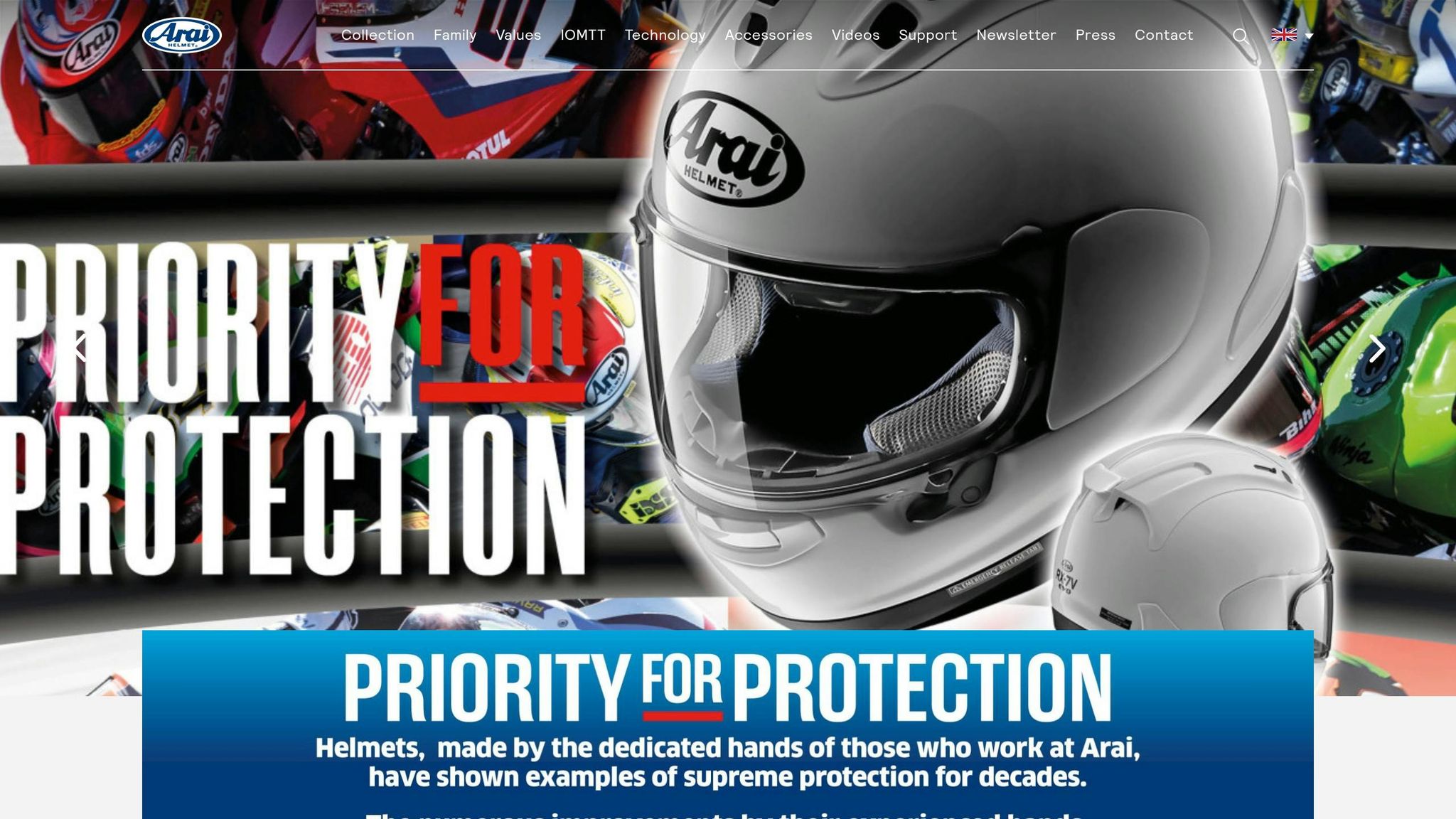
Arai helmets are crafted in Japan with meticulous attention to detail, using more than 20 hand-laid materials and a proprietary "Super Fiber" that's 30% stronger than typical fibreglass. Since 1978, each helmet has undergone two independent quality inspections to ensure exceptional standards.
Safety certifications
Arai's 2026 helmet range adheres to the latest ECE 22.06 standard. Models like the Quantic and MX-V EVO go through rigorous testing for oblique, high-, and low-speed impacts. Notably, the Quantic was the first to meet the ECE 22.06 standard. For competitive riders, Arai's racing helmets now comply with the FIM FRHPhe-02 standard, mandatory for international FIM championships starting 1 January 2026. This includes a new Skull Fracture Criterion (SFC) designed to reduce the risk of skull fractures. Riders should check for the official FIM homologation label on the chin strap, as earlier versions of the same model may not meet the updated requirements.
Comfort and ventilation
Arai helmets offer impressive ventilation, thanks to innovations like the 3D logo duct, which increases airflow by 40% at 50 km/h and improves ventilation by 7% at 120 km/h. To cater to various head shapes, Arai provides multiple interior-fit options, including the Intermediate Oval. For instance, the Regent X features a 5mm wider flare at the helmet's opening, making it easier to put on and take off without sacrificing a secure fit. Aerodynamic rear spoilers, tested at speeds up to 300 km/h on the Suzuka circuit, help smooth airflow and minimise buffeting during extended rides.
Build quality and durability
Arai uses a 10-step paint process that includes hand-applied primer and baked clear coats, designed to resist UV damage and temperature fluctuations. The helmets feature an R75 round-shell profile, inspired by the "Glancing Off" design philosophy, which helps deflect impact energy and reduce rotational forces. In independent testing by the UK's SHARP rating agency, Arai helmets consistently earn five-star ratings. Motorcycle.com Staff has even described them as "Handmade Japanese helmet art", frequently highlighting their reliable fit, even after years of daily use. These features make Arai helmets a durable choice for a variety of riding conditions.
Suitability for specific riding styles
| Model | Primary Use | Key Strength |
|---|---|---|
| MX-V EVO FIM Racing #2 | Off-road / Racing | FIM FRHPhe-02 certified; improved peak stability |
| Quantic | Sport-Touring | Outstanding airflow; first to meet ECE 22.06 |
| Tour-X 5 | Adventure | Exceptional versatility and rugged performance |
| Regent X | Everyday street use | Flared bottom for easier on/off |
Arai helmets are priced between NZ$600 and NZ$900, with the Regent X offering a more affordable option while maintaining top-tier quality. It's worth noting that Arai helmets tend to have a narrower fit. Riders with rounder face shapes should pay close attention to the cheek pads, as they might feel snug.
2. Shoei
Shoei has been crafting helmets in Japan since 1960, with each helmet undergoing inspection by more than 50 experts. This rigorous attention to detail has earned Shoei a reputation as a leader in motorcycle safety. The brand's AIM (Advanced Integrated Matrix) and AIM+ shell construction uses high-performance fibres layered with fibreglass, resulting in helmets that are both lightweight and incredibly strong. This craftsmanship continues to define Shoei's 2026 lineup, which incorporates advanced safety and comfort features.
Safety certifications
Shoei helmets for 2026 meet top safety standards, including DOT, ECE 22.06, and Snell M2020/M2025, making models like the RF‑1400 and X‑Fifteen suitable for professional racing. The Neotec 3 modular helmet stands out with a perfect 5‑star rating from the UK's SHARP testing agency. Shoei equips its helmets with multi-density EPS liners that vary in thickness to absorb impacts effectively. High-end models, such as the RF‑1400 and X‑Fifteen, also feature an Emergency Quick Release System (EQRS), enabling medical teams to safely remove cheek pads in emergencies. Considering that approximately 45% of helmet impacts occur in the chin bar area, Shoei’s full-face and modular helmets provide critical protection.
Comfort and ventilation
Shoei combines safety with rider comfort and noise reduction. The NXR2, for instance, boasts four intake and six exhaust vents to optimise airflow while minimising noise. Meanwhile, the X‑Fifteen uses a suction ventilation system to create negative pressure, effectively expelling hot air. Touring enthusiasts will appreciate the Neotec 3, which weighs around 1.88 kg and features "Noise Isolator" cheek pads to significantly reduce wind noise. The RF‑1400 offers aerodynamic improvements, including a 6% reduction in lift and a 4% reduction in drag compared to its predecessor, helping to minimise neck strain during long rides. Shoei also provides replaceable centre and cheek pads in various thicknesses, allowing riders to adjust the fit for maximum comfort.
Build quality and durability
Shoei's Multi‑Ply Matrix AIM shell construction ensures consistent strength, thickness, and elasticity across its helmets. Features like centre-locking visor latches and redesigned beading with dual drains offer a tighter seal against wind and rain, enhancing durability. Rigorous wind tunnel testing and stringent quality control ensure these helmets maintain their performance over time. High-end models like the RF‑1400 weigh between 1.54 and 1.68 kg, balancing robust protection with reduced strain on the neck.
Suitability for specific riding styles
| Model | Primary Use | Key Certifications | Price Range (NZ$) |
|---|---|---|---|
| X‑Fifteen | Track / Racing | DOT, SNELL M2020/2025, ECE 22.06 | $1,550–$1,820 |
| RF‑1400 | Sport / Street | DOT, SNELL M2020/2025, ECE 22.06 | $1,080–$1,310 |
| Neotec 3 | Touring / Modular | DOT, ECE 22.06 | $1,500–$1,660 |
| GT‑Air 3 | Sport‑Touring | DOT, ECE 22.06 | $1,230–$1,470 |
| VFX‑EVO | Off‑Road / Motocross | DOT, SNELL M2020/2025 | $1,000–$1,260 |
| Hornet X2 | Adventure / Dual‑Sport | DOT, SNELL M2020/2025 | $950+ |
For touring riders, models like the GT‑Air 3, which include internal sun visors, may lack Snell certification due to design compromises. For racing, the X‑Fifteen or RF‑1400 are better suited. Shoei also recommends trying on a helmet for at least 15 minutes before buying to identify any pressure points. Keep in mind that the interior foam typically adjusts by 10–15% after about 300–500 kilometres of use.
3. AGV
Since 2012, AGV has been redefining safety standards with its Extreme Safety Protocol. Instead of just meeting certification requirements, AGV goes above and beyond by testing its helmets at 15 different impact points - far surpassing standard testing practices. This dedication has earned AGV a reputation for exceeding expectations. As the brand proudly states:
We set new safety standards. We don't just follow them: That's how legends are made.
Safety Certifications
AGV helmets for 2026 meet ECE 22.06, DOT, and FIM racing standards, but they typically do not hold SNELL certification. Models like the Sportmodular and K6 S have achieved 5‑star SHARP ratings, while the K3 and K1 S scored 4 stars. AGV prioritises protection by using multi‑density EPS liners with five different densities, paired with carbon fibre or carbon‑aramid shells to distribute impact forces effectively. Additionally, the brand's Collarbone Safe Profile is designed to reduce the likelihood of collarbone injuries in crashes. AGV's visors are particularly robust, with a thickness of up to 5 mm - four times the industry standard - and include a central locking mechanism to prevent accidental openings during impacts.
Comfort and Ventilation
AGV's helmets are engineered for optimal airflow. Front air vents are strategically placed to maximise intake, while racing models like the Pista GP RR feature chin guard ducts to improve ventilation under extreme conditions. The Venturi effect is used to create low pressure at the rear extractors, helping to pull heat out of the helmet. For added comfort, AGV offers a patented reversible crown pad with two fabric options: Ritmo for warm weather and Shalimar for cooler conditions. The Pista GP RR takes personalisation further with its 360° Adaptive Fit system, allowing riders to customise the interior with 17 different thickness options to match their head shape. Aerodynamics also play a key role, with the Pista GP RR designed to feel almost weightless at speeds of 160 km/h. However, race-focused helmets like the Pista GP RR and K1 S may generate more noise during long rides.
Build Quality and Durability
AGV uses premium materials like 100% carbon fibre, carbon‑aramid composites, and high‑resistance thermoplastic resins to ensure their helmets maintain structural integrity over time. The K6 S, weighing just 1,298 g, is the lightest road helmet available, while the Pista GP RR, at around 1.5 kg, remains impressively lightweight for its category. AGV's visor mechanisms are compact, up to 70% smaller than the market average. Interiors are removable, washable, and made from antibacterial, moisture-wicking fabrics, ensuring long-term freshness. AGV advises replacing helmets after any significant impact or every 5–7 years due to material degradation.
Suitability for Specific Riding Styles
AGV offers a diverse range of helmets tailored to different riding needs.
| Model | Primary Use | Key Feature | Price Range (NZ$) |
|---|---|---|---|
| Pista GP RR | Track / Racing | FIM‑Homologated; 100% Carbon | NZ$1,100–NZ$1,600 |
| K6 S | Sport‑Touring | Lightest road helmet; 5‑star SHARP | NZ$450–NZ$580 |
| Sportmodular | Touring / Modular | 100% Carbon modular; 5‑star SHARP | NZ$450–NZ$580 |
| AX9 | Dual‑Sport | 4 configurations; 190° vision | NZ$750–NZ$900 |
| K3 | Street | 4‑star SHARP; Internal sun visor | NZ$300–NZ$380 |
| K1 S | Entry‑Level Sport | ECE 22.06; Aerodynamic spoiler | NZ$300–NZ$380 |
For track enthusiasts, the Pista GP RR delivers FIM certification and includes a built-in hydration system as standard. The AX9, designed for versatility, offers four configurations ideal for touring, dirt, or dual-sport riding, along with an impressive 190° horizontal and 110° vertical field of vision. AGV helmets are known for their snug, performance-oriented fit, so riders may need to size up or allow for a 300–500 km break-in period to let the foam adjust.
4. Schuberth
Schuberth continues to push the boundaries of helmet technology with its 2026 lineup. Known for its focus on reducing wind noise and rider fatigue, the German brand has been refining its designs since 1954, employing advanced aeroacoustics to enhance the riding experience. Drawing on expertise from Formula 1, Schuberth's premium models, like the S3 Carbon, are crafted by technicians with F1 experience. For 2026, Schuberth has introduced the C5 ANC, the first motorcycle helmet to feature Active Noise Cancellation. Developed in collaboration with Cardo, this technology filters out wind and turbulence noise while preserving essential sounds for rider safety.
Safety Certifications
Safety is at the core of Schuberth’s designs. All 2026 helmets, including the C5, S3, and E2 models, meet ECE 22.06 and DOT safety standards. Notably, the C5 achieves a noise level of just 85 dB at 100 km/h, making it one of the quietest modular motorcycle helmets on the market. Schuberth’s proprietary wind tunnel testing optimises helmet aerodynamics and neckroll seals, earning the C5 an 8.2/10 rating from GearJunkie as the "Quietest Modular Motorcycle Helmet". The brand’s Direct Fibre Process, which combines fibreglass and carbon fibre, results in lightweight yet impact-resistant shells, while the Anti-Roll-Off-System (AROS) provides additional protection in the throat area.
Comfort and Ventilation
Schuberth doesn’t just focus on safety - it also prioritises comfort and ventilation. The Schuberth Individual Program allows riders to customise the interior fit of the C5 by selecting from various padding options in sizes M, L, and XL. Ventilation is enhanced through a dual chin air intake system with an exchangeable filter, a top vent to circulate air, and a rear exhaust vent beneath the spoiler. While ventilation performance can vary under extreme conditions, the S3 Carbon stands out with its lightweight 100% carbon shell, weighing only 1,298 g - around 200 g less than its fibreglass counterpart.
Matteo Schieppati, Head of Business Unit Motorcycle at Schuberth, sums it up:
We believe that this product offers the ultimate helmet for Sport Touring riders, delivering a perfect balance of sporting performance and long-distance comfort.
Build Quality and Durability
Schuberth designs its helmets with durability in mind. Features like replaceable interior liners, widely available spare parts, and sturdy hinge mechanisms on modular models ensure longevity. The C5 ANC comes equipped with 53 mm speakers for high-quality audio and noise cancellation, while its SC2 communication system supports Mesh 2.0 conferencing for up to 24 riders. The multi-composite shells are designed to withstand UV exposure and extreme temperatures.
Suitability for Specific Riding Styles
| Model | Type | Weight | Key Feature | Price (NZ$) |
|---|---|---|---|---|
| S3 Carbon | Sport Touring | 1,298 g | F1 construction, ultra-lightweight | NZ$1,550–NZ$1,700 |
| C5 ANC | Modular | 1,660 g | Active Noise Cancellation, 53 mm speakers | NZ$2,050–NZ$2,200 |
| C5 | Modular | 1,660 g | 85 dB at 100 km/h, wide field of view | NZ$1,100–NZ$1,200 |
| E2 | Adventure | 1,700 g | Quiet ADV touring, Mesh integration | NZ$1,050–NZ$1,150 |
The S3 Carbon is ideal for high-speed sport touring, offering unmatched stability. For those seeking the quietest modular helmet on the market, the C5 ANC is a standout choice. Adventure riders will appreciate the E2, which delivers a quieter highway experience. The C5 also comes pre-wired with an integrated boosting antenna and speakers for seamless communication.
5. LS2
LS2 has carved out a reputation for combining cutting-edge materials with smart design, all at prices that won't break the bank. Launched in 2007, the brand has made its mark in elite racing circuits like MotoGP and the Dakar Rally. Offering helmets that meet rigorous safety standards and often available with discounts of up to 30% through major retailers, LS2 is a go-to choice for riders across New Zealand.
Safety Certifications
When it comes to safety, LS2 helmets meet the stringent ECE 22.06 and DOT standards, with certain models even achieving Snell M2015 certification. The brand employs its proprietary Kinetic Polymer Alloy (KPA), a material that uses nanoparticle technology to blend thermoplastics with aramid fibres, offering excellent energy absorption. Depending on the model, LS2 helmets feature a range of materials:
- Micro Weave Carbon Fibre for high-end helmets
- High Performance Fibreglass Composite (HPFC) for mid-tier options
- High Pressure Thermoplastic Technology (HPTT) for budget-friendly designs
Models such as the LIGHT, MX419, MX456, OHM, and STREET FIGHTER exemplify LS2's commitment to safety and durability.
Comfort and Ventilation
Comfort is a major focus for LS2. Their helmets feature multi-density, channelled EPS liners designed to improve airflow and manage heat and moisture effectively. Take the Storm 2 and MX701, for instance - both utilise a dynamic ventilation system with strategically placed intake and exhaust vents to keep riders cool.
Inside, 3D laser-cut foam padding ensures a snug fit, while removable, washable liners made from hypoallergenic, moisture-wicking fabrics add to the overall comfort. For a tailored fit, certain models, like the Storm 2, come in multiple shell sizes, reducing bulk without compromising protection.
Build Quality and Durability
LS2 helmets are built to last, with features tailored to different riding conditions. The MX701 Carbon Explorer, for example, uses a carbon fibre shell to handle the rigours of adventure riding, while the Storm 2’s KPA construction balances impact resistance with flexibility - perfect for touring.
Other highlights include integrated drop-down sun visors, Pinlock-ready shields to prevent fogging, and aerodynamic shapes that cut down on wind noise. For racers, the Thunder Carbon GP Pro FIM meets professional motorsport standards and includes emergency-release cheek pads for added safety.
Suitability for Specific Riding Styles
LS2 offers a diverse range of helmets designed to meet the needs of various riding styles. Whether you're an off-road enthusiast, adventure gear seeker, or a touring aficionado, there's likely a model that suits you.
| Model | Type | Shell Material | Key Feature | Price Range (NZ$) |
|---|---|---|---|---|
| Advant X | Modular | KPA | Best Seller 2026, ECE 22.06 | NZ$350–NZ$450 |
| Subverter EVO | Off-Road | KPA/HPFC | Best Seller 2026, dirt riding | NZ$300–NZ$400 |
| Storm 2 | Touring | KPA | Integrated sun visor, Pinlock 70 | NZ$400–NZ$500 |
| MX701 Explorer | Adventure | Carbon Fibre | Removable peak, high-flow vents | NZ$600–NZ$750 |
| Thunder Carbon | Racing | Carbon Fibre | FIM certified, optimised airflow | NZ$800–NZ$1,000 |
Notably, the Advant X and Subverter EVO have earned "Best Seller of 2026" accolades in their respective categories, while the Valiant stands out as a top modular helmet choice. For adventure riders, the MX701 Explorer remains a fan favourite.
As Matthew Jones from NZBike Store wisely points out:
The best motorcycle helmet is the one that fits you.
6. Caberg
Caberg helmets have been updated to comply with the ECE 22.06 safety standard. This includes stricter impact testing and better protection against rotational forces found in modern road gear. These upgrades highlight Caberg's dedication to prioritising safety advancements as we approach 2026.
7. HJC
HJC has been a trusted name in helmet manufacturing since 1971, focusing on safety, comfort, and affordability. The company allocates about 10% of its revenue to research and development, which is evident in their 2026 lineup. All their helmets now comply with the updated ECE 22.06 standard, and premium models like the RPHA 1 V2 Carbon have also achieved FIM 2 (FRHPhe-02) homologation for racing. In line with other leading brands, HJC continues to prioritise advancements in rider safety and technology.
Safety Certifications
The 2026 HJC helmets meet the stringent ECE 22.06 standard, which introduces tougher impact tests and better protection against rotational forces. Premium models, such as the RPHA 1 V2 Carbon, go a step further by meeting FIM 2 homologation, which becomes a requirement for many races in 2026. Updated models like the C50 and Y10 also conform to these new standards. HJC employs high-quality materials like carbon fibre shells and titanium double D-ring fasteners in their premium helmets, offering strength and lightweight performance. Additionally, the RPHA 72 includes a specially designed thicker neckroll to reduce neck movement during crashes.
Comfort and Ventilation
HJC helmets are designed with an intermediate-oval fit, catering to a broad range of riders, including those seeking small full face helmets. Their Advanced Channeling Ventilation System uses multiple intake and exhaust ports to maintain airflow. For instance, the RPHA 1N features 5 intake vents and 4 exhaust vents for optimal ventilation. Many models include SilverCool liners that wick moisture, resist bacteria, and are designed with grooves for riders who wear glasses. The RPHA 72 is about 150 grams (9%) lighter than its predecessor, the RPHA 71, reducing neck strain on long rides. Premium RPHA models are up to 18% lighter compared to their polycarbonate counterparts in the i-series. These thoughtful design choices ensure a balance between comfort and durability.
Build Quality and Durability
HJC's P.I.M. Plus (Premium Integrated Matrix Plus) technology combines carbon and carbon–glass hybrid fabrics, delivering excellent shock resistance while keeping weight low. Aerodynamic improvements on the RPHA 72 result in a 19.7% reduction in drag and a 6.2% decrease in lift force, providing better stability at high speeds. Helmets like the RPHA 70 and RPHA 90 have received CRASH safety scores of 75/100, reflecting their solid safety performance. Most models also feature removable and washable interior pads, making them easier to maintain and extending their lifespan.
Suitability for Specific Riding Styles
HJC offers helmet lines tailored to different riding preferences. The RPHA series is ideal for sport and touring, while the i-series and F-series are great for street commuting. For off-road and adventure enthusiasts, the C-series is a suitable choice. Prices vary to accommodate different budgets, starting at NZ$130 for the i10 and going up to NZ$699.99 for the RPHA 1 V2 Carbon. For young riders, the Y10 youth helmet meets both ECE 22.06 and DOT standards, with prices beginning at NZ$89.99.
8. Bell
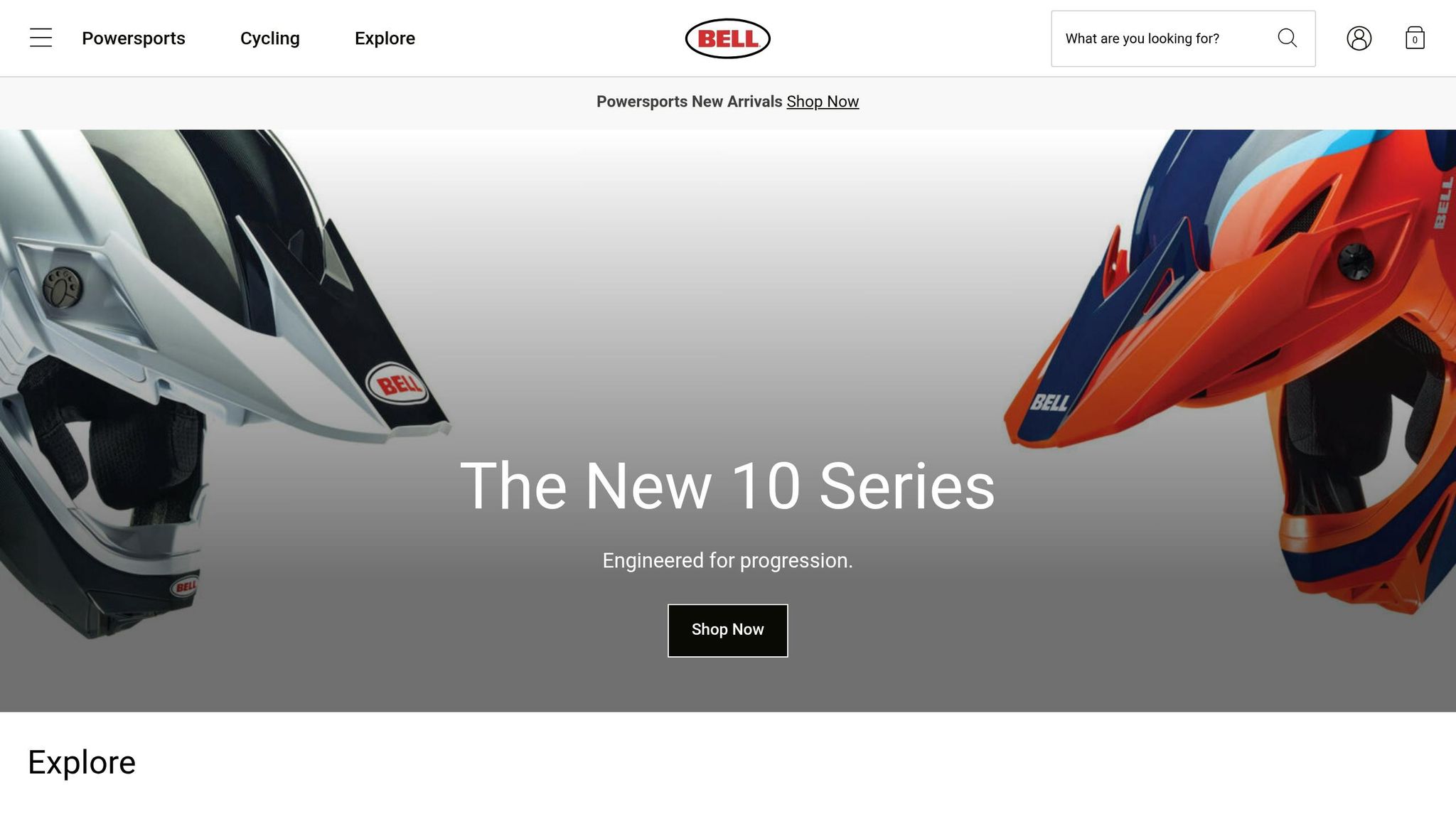
Bell revolutionised motorcycle safety back in 1967 with the launch of the first full-face helmet. Today, the brand continues to lead the way, offering helmets that meet ECE 22.06 and DOT certifications across all models. High-end options, like the Moto-10 Spherical, even achieve SNELL 2020 standards. Bell seamlessly blends decades of craftsmanship with advanced safety features to cater to every type of rider. Let’s dive into the innovations that make Bell helmets stand out.
Safety Certifications
Bell helmets are packed with advanced safety features designed to protect riders in a variety of crash scenarios. Take the Race Star DLX Flex, for example - it uses Flex Technology, which combines three layers of material: Expanded Polyolefin (EPO) for low-speed impacts, Expanded Polypropylene (EPP) for mid-speed impacts, and Expanded Polystyrene (EPS) for high-speed impacts. This trio works together to absorb kinetic energy effectively.
The Moto-10 Spherical takes safety further by incorporating Spherical Technology with MIPS. This system allows the outer shell to move independently, helping to manage rotational forces during a crash. Additionally, models like the Magnum 2026 employ a 5-Shell System, pairing five different shell sizes with matching EPS liners to ensure a snug and secure fit.
Comfort and Ventilation
Bell helmets are designed with rider comfort in mind, especially for long journeys. The Velocity Flow Ventilation system is a standout feature, channelling air efficiently through the helmet to keep riders cool. Some models even include magnetic cheek pads that can be easily removed and washed.
For convenience, the Panovision ProTint Photochromic shield - standard on DLX models - adjusts automatically to changing light conditions, so riders don’t have to swap visors. The Race Star DLX Flex has been highly rated for comfort, earning an 8.3/10 from GearJunkie, which described it as a "happy place lid." Similarly, the Moto-10 Spherical has received praise for its exceptional airflow, making it a top choice for off-road enthusiasts.
Build Quality and Durability
Bell uses premium materials like 3K and 6K carbon fibre, aramid, and fibreglass to create helmets that are both strong and lightweight. For instance, the Race Star DLX Flex features a 3K carbon fibre shell and weighs just 1.62 kg, while the open-face Magnum 2026 is even lighter at around 980 g in size M.
To keep helmets performing at their best, Bell recommends replacing them every three years. Cleaning is simple - stick to mild soap and water, and avoid harsh solvents that could damage materials like ABS or polycarbonate.
Suitability for Specific Riding Styles
Bell offers helmets tailored to a variety of riding disciplines. The Star series is perfect for high-performance street and track riders, while the SRT series is ideal for touring, featuring flip-up chin bars for easy communication. Motocross enthusiasts will appreciate the Moto series, which is built specifically for off-road adventures.
Adventure riders should check out the MX-9 Adventure DLX MIPS, which scored 8/10 for its excellent ventilation and adaptive shield. However, some reviewers noted it can be noisy at highway speeds. For those who prefer an open-face design, the Magnum 2026 delivers a classic, low-profile look while meeting modern ECE 22.06 standards. If you're planning faster rides, earplugs might be a good idea for added comfort.
9. Alpinestars
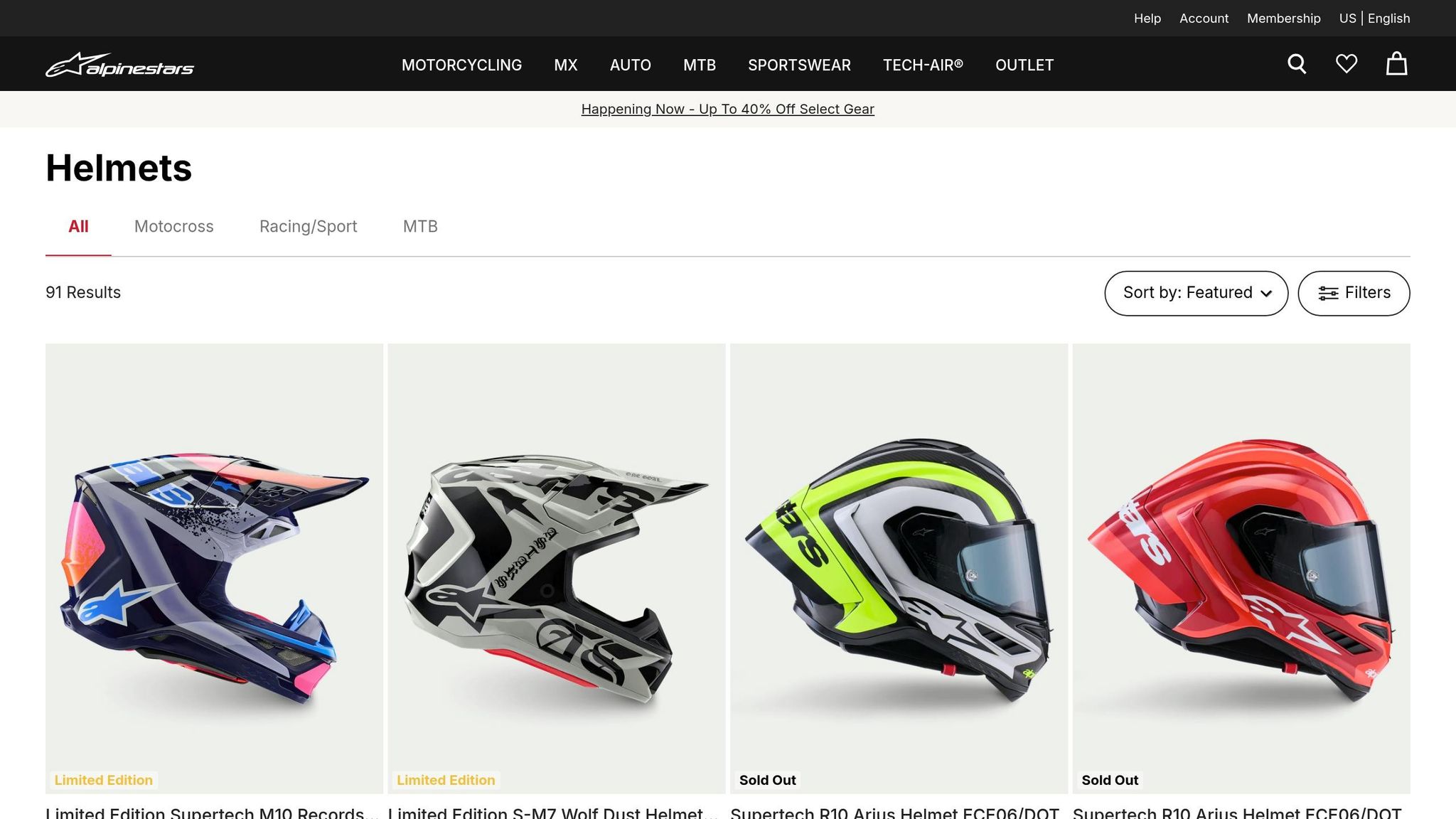
Alpinestars brings a wealth of motorsport knowledge to its helmet designs, earning the trust of professional racers with its 2026 lineup. Their "Race on Sunday, Innovate on Monday" approach ensures that technology tested in championships makes its way into consumer helmets. Whether you're racing, trail riding, or commuting, Alpinestars helmets are built for high performance.
Safety Certifications
Every Alpinestars helmet in 2026 meets the latest ECE 22.06 and DOT safety standards, including models like the Supertech R10 and S-R7 series. Top-tier options such as the Supertech M10 also comply with FIA and FIM standards, making them suitable for competitive racing. These helmets are constructed with multi-composite shells, combining materials like 3K carbon, unidirectional carbon, and aramid fibre bonded with epoxy for maximum strength. MIPS technology is integrated to reduce rotational forces during angled impacts, while EPS foam in four densities absorbs energy from impacts. Additionally, the EPS liner extends lower on the helmet's sides to minimise collarbone injuries, a common issue in off-road crashes.
Comfort and Ventilation
The A-Head adjustment system allows riders to fine-tune the helmet's height and angle, delivering a semi-custom fit for enhanced comfort. Alongside its lightweight design, this system ensures top-tier performance - the Supertech M10, for instance, weighs just 1.36 kg, making it one of the lightest off-road helmets available. GearJunkie gave the M10 an 8.3/10 rating for its lightweight build and excellent ventilation. Ventilation is optimised with multiple intake vents on the chin and forehead and rear exhaust ports, ensuring consistent airflow during intense rides. Removable, antibacterial liners wick moisture and can be easily washed to keep the helmet fresh.
Build Quality and Durability
Alpinestars uses premium materials like 3K carbon fibre, aramid, and advanced thermoplastics to craft helmets that deliver both strength and lightness. Updates to the Supertech line include a redesigned chin bar with a smoother profile, reducing the risk of snagging during a slide. With up to four shell sizes (XS to 2XL), Alpinestars ensures a secure and protective fit for all riders. This attention to detail and robust construction reflects their commitment to creating helmets tailored to diverse riding needs.
Suitability for Specific Riding Styles
Alpinestars caters to a wide range of riding styles with purpose-built helmets. The flagship Supertech R10, priced at NZ$1,379.95, is designed for racing and high-speed performance. For a more budget-friendly racing option, the S-R7 series is available at NZ$679.95–NZ$749.95. Off-road riders can choose the Supertech M10 at NZ$949.95 or the S-M7 at NZ$549.95, both equipped with extended chin bars, sun visors, and goggle compatibility. For adventure and trail riders, the lightweight construction and advanced ventilation reduce fatigue during long rides.
10. KLIM

KLIM has cemented its reputation as a leader in adventure helmet design, offering models for both dirt and sealed roads. The brand's standout model, the Krios Pro, received an impressive 9.4/10 rating from GearJunkie in March 2026. This high score reflects its lightweight carbon fibre construction, adaptable design, and compliance with ECE 22.06 and DOT safety standards. At just 1.54 kg (3.4 lbs), the helmet is designed to minimise neck strain during long rides, making it a go-to choice for adventure enthusiasts. Below, we dive into the features that make KLIM helmets a top pick.
Safety Certifications
KLIM helmets incorporate Koroyd technology, a design that uses thousands of tiny co-polymer tubes to absorb and disperse impact energy. Sean Galaway from GearJunkie likened its function to a car's crumple zone, explaining:
The material uniformly equalises force in a crash, like the crumple zone of a car, where the accordion dissipates force by spreading the energy.
Additionally, the Fidlock magnetic chin clasp ensures a secure fit, even when you're wearing gloves - an essential feature for riders tackling diverse terrains.
Comfort and Ventilation
KLIM blends safety with comfort, thanks to the Koroyd core, which provides excellent airflow at higher speeds. However, during slower off-road rides, riders may notice limited ventilation around the forehead. A generously sized mouth port enhances airflow and reduces visor fogging during low-speed manoeuvres. The helmet also includes antimicrobial, sweat-wicking liners and a photochromic visor that adjusts to changing light conditions - perfect for New Zealand's unpredictable weather.
Build Quality and Durability
The Krios Pro's carbon fibre shell is hand-laid to ensure consistent thickness and strength while keeping the weight low. Its tool-free design allows riders to quickly switch between configurations, whether for adventure, dual-sport, off-road (using goggles), or street riding. This versatility is particularly appealing to Kiwi riders who often switch between gravel roads and motorways. The Krios Pro is priced at NZ$1,050 (around $750 USD), while the premium X1 Alpha model is available for NZ$1,849.
Suitability for Specific Riding Styles
KLIM helmets are tailored for adventure and dual-sport riders who split their time between on-road and off-road terrain. Lisa Morris, an adventure rider who tested the Krios Pro over 10,460 kilometres across North America, shared:
The Krios Pro has earned its mantle as the best and lightest lid I've worn on dirt and slab.
While the helmet excels in comfort and noise reduction for on-road travel, its peaked design may generate more wind noise at higher speeds. For riders seeking a balance between road performance and off-road capability, KLIM helmets remain a standout option.
What to Consider When Choosing a Helmet Brand
After diving into the top helmet brands for 2026, it’s time to focus on what really matters - choosing the right helmet for your needs. Here are the key factors to keep in mind:
Safety certifications should always come first. Look for helmets that meet the ECE 22.06 standard, which tests impacts at various speeds and angles. By 2026, brands like Alpinestars, Bell, and Schuberth have updated their flagship models to meet this stringent standard. You might also encounter helmets with DOT certification, required for U.S. roads, or SNELL M2020, which is highly regarded for racing due to its rigorous testing. For riders in the UK, the SHARP rating provides a 1-5 star system based on 32 impact tests - Shoei’s Neotec 3 earned a flawless 5-star rating. Additionally, look for helmets with rotational impact protection systems like MIPS or Spherical Technology, which are designed to reduce the risk of brain injuries during crashes. Beyond certifications, the fit and shape of the helmet are just as crucial for safety and comfort.
Fit and head shape play a major role in how safe and comfortable your helmet feels. Helmets are typically designed for round, intermediate, or long oval head shapes. A well-fitted helmet should feel snug, with the liner gently compressing your cheeks. It shouldn’t create pressure points or allow the helmet to shift or rotate. Keep in mind that the liner will loosen slightly - by about 10% to 15% - after roughly 300-500 kilometres of use. To ensure the best fit, wear the helmet for at least 15 minutes before buying. This helps identify any pressure spots that could cause discomfort during long rides.
Weight and construction materials are also important considerations. Lightweight helmets, like the carbon fibre AGV K6S (1.37 kg), help reduce neck strain, especially for adventure and off-road riding where physical demands are higher. On the other hand, modular fibreglass models, such as the Shoei Neotec 3 (1.88 kg), provide more features but can be heavier, potentially leading to fatigue on longer rides. Polycarbonate helmets, while more affordable, tend to be heavier and may show surface damage after impacts.
Ventilation versus noise is another trade-off to think about. Helmets with high airflow are great for motocross but can be very noisy on highways. For touring riders, brands like Schuberth focus on aerodynamics and noise reduction, which is crucial since sustained exposure to noise levels around 100 dB can harm your hearing. If your rides are mostly on sealed roads, consider avoiding entry-level motocross or adventure helmets, as their wind noise can become unbearable at higher speeds.
Price ranges often reflect the quality of materials and features. Entry-level certified helmets start at around NZ$490-$520, with models like the Bell MX-9 Adventure priced at NZ$520 and the Fox Racing V3 at NZ$560. Mid-range helmets, which incorporate carbon fibre or advanced composites, range from NZ$700 to NZ$1,050 (e.g., the AGV K6S at NZ$770 or the KLIM Krios Pro at NZ$1,050). Premium racing helmets, such as the Bell Moto-10 Spherical (NZ$1,260) and the Alpinestars Supertech M10 (NZ$1,290), sit at the higher end of the spectrum.
Conclusion
Choosing the right helmet is all about combining top-tier safety standards with a fit that matches your riding style. The ten brands highlighted here - from the precision of Arai to the adaptability of KLIM - offer something for every rider. As Shark Leathers wisely states:
Your helmet is the one piece of gear you should never compromise on. Everything else protects your body. Your helmet protects your brain.
Your decision should align with how and where you ride. Whether you're carving through scenic curves on a sport bike, exploring the South Island on a touring motorcycle, or tackling rugged off-road trails, there’s a helmet designed specifically for your needs. From lightweight racing helmets to durable adventure models, these brands provide reliable options for all kinds of riding environments.
Focus on helmets with ECE 22.06 certification, a proper fit, and manageable weight - these factors are more critical than the brand itself. A high-end helmet that doesn’t fit well won’t protect as effectively as a mid-range option that fits snugly and comfortably. This list offers a variety of choices, ensuring every rider can find the perfect balance of safety and comfort.
For riders in New Zealand, Moto 1 is a trusted source for these leading helmet brands. They provide a broad range of motorcycle helmets and gear, with free shipping on qualifying orders. Whether you're upgrading to meet the latest safety standards or replacing a helmet that’s reached its recommended lifespan of 5–7 years, these brands represent decades of engineering expertise and cutting-edge safety technology.
FAQs
Is ECE 22.06 better than DOT or SNELL?
ECE 22.06 sets a higher safety standard compared to DOT by requiring pre-market testing for impacts, rotational forces, and other safety measures. In contrast, DOT operates on a self-certification system with fewer testing requirements. When lined up against SNELL, ECE 22.06 stands out for its global recognition and its ability to maintain strict safety protocols while being widely adopted. SNELL, on the other hand, prioritises rigorous impact testing but lacks the same international reach. Overall, ECE 22.06 is often seen as offering a safer and more dependable standard.
How do I know if a helmet fits my head shape?
Start by figuring out your head shape - long oval, intermediate oval, or round oval. Most helmets are crafted to suit one of these profiles, so knowing yours is key to finding a comfortable fit.
Once you know your shape, try on helmets designed for it. The fit should be snug, with no uncomfortable pressure points.
To get the right size, measure the circumference of your head about 1cm above your eyebrows. Use this measurement to check the manufacturer's sizing chart. A properly fitting helmet should sit evenly on your head, stay secure, and avoid being too tight or too loose.
Do I need MIPS or Koroyd for road riding?
For road cycling, MIPS is a popular choice as it provides rotational impact protection, helping to minimise certain types of brain injuries. On the other hand, Koroyd focuses on advanced impact absorption, aiming to lower the risk of injury during a crash. Both options offer protection, so your decision will come down to personal preference and the helmet style that suits you best.