

Riding in winter can be tough, especially in New Zealand, where weather conditions vary from rain and chilly winds in the North Island to snow and icy temperatures in the South. Staying warm, dry, and visible is key to riding safely. Here's a quick summary of what you need:
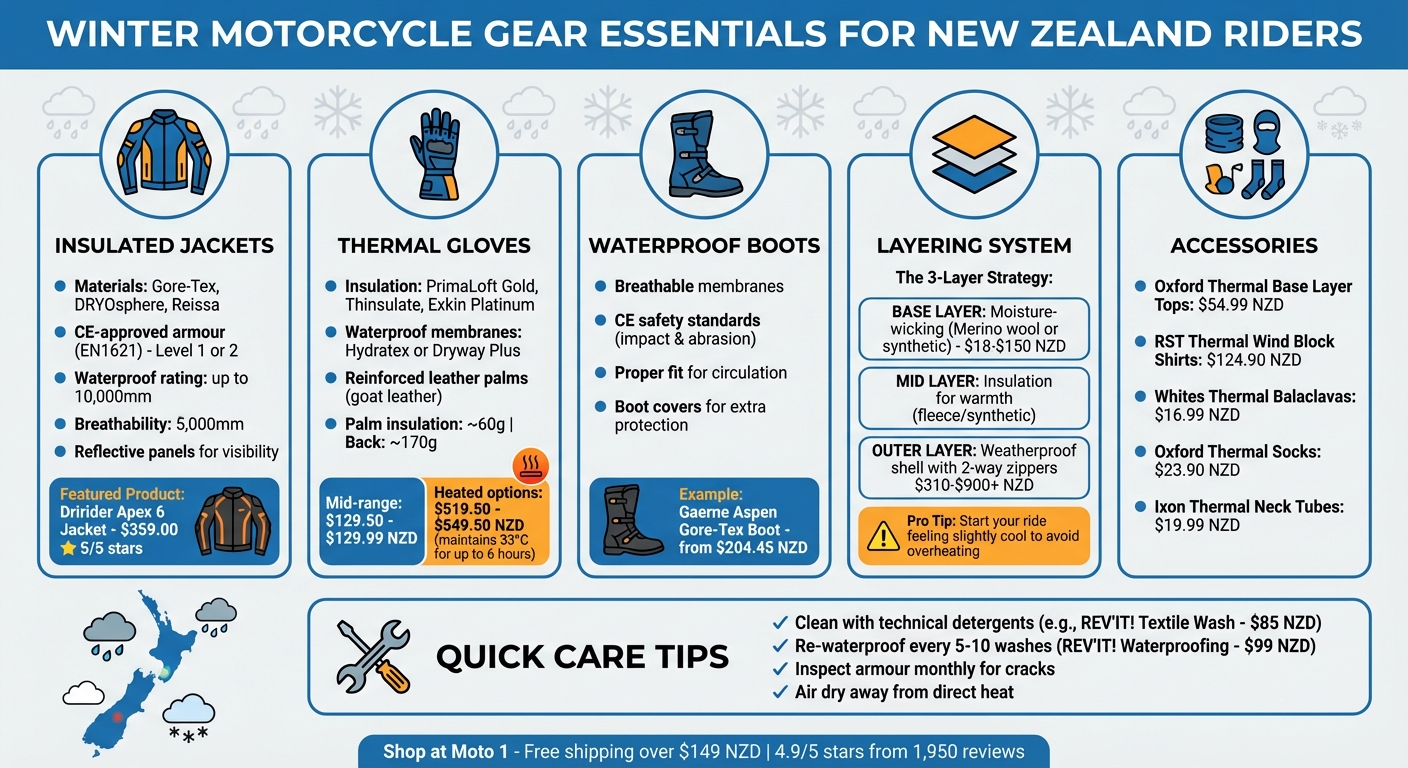
- Insulated Jackets: Look for textile options with Gore-Tex or Reissa materials, CE-approved armour, and reflective panels. Example: Dririder Apex 6 Jacket ($359.00).
- Thermal Gloves: Use gloves with insulation (e.g., PrimaLoft, Thinsulate), waterproof membranes, and reinforced palms. Heated options like REV'IT! Liberty H2O Heated Gloves ($519.50) are ideal for very cold conditions.
- Waterproof Boots: Ensure they have breathable membranes, proper fit, and CE safety standards. Boot covers are helpful if your boots aren't fully waterproof.
- Layering: Use a three-layer system - moisture-wicking base, insulating mid-layer, and weatherproof outer layer. Merino wool or synthetic fibres work well for base layers.
- Gear Maintenance: Clean gear with technical detergents, reapply waterproofing treatments, and inspect for damage regularly.
Investing in quality gear and maintaining it ensures you stay comfortable and safe during winter rides.
Essential Winter Motorcycle Gear Checklist for New Zealand Riders
Must-Have Winter Riding Gear
Insulated Jackets and Key Features
When it comes to New Zealand's unpredictable winters, textile jackets are a top choice. Thanks to advanced materials like Gore-Tex, DRYOsphere, and Reissa, these jackets handle wet and sleety conditions far better than traditional leather options. Key features to look for include sealed seams, storm flaps over zippers, and durable YKK zippers to keep water out. Many jackets also come with a removable 100g thermal liner, allowing you to adjust to fluctuating temperatures. For added wind protection, especially around the lower back, a three-quarter length cut - common in Adventure and Touring styles - is ideal.
Safety is just as important as comfort. Make sure your jacket has CE‐approved armour (EN1621) for the shoulders, elbows, and back. Armour ratings range from Level 1 for basic protection to Level 2 for higher impact resistance. The fit should be snug enough to keep the armour in place during a fall, while still allowing room for base layers. Adjustable cuffs, waistbands, and arm closures can help seal out cold air. For waterproofing, high-performance liners like Texland Reissa, rated up to 10,000mm for water resistance and 5,000mm for breathability, are highly effective. A great example is the Dririder Apex 6 Jacket ($359.00), which boasts a 5/5 star rating from users. For visibility during dark, misty mornings, reflective panels or high-visibility accents are essential.
Now, let's see how thermal gloves can keep your hands warm while maintaining control.
Thermal Gloves for Grip and Warmth
Cold, numb fingers can seriously compromise your riding control. That's why winter gloves with advanced insulation materials like PrimaLoft Gold, Thinsulate, or Exkin Platinum are a must. These materials trap warm air, keeping your hands toasty even in New Zealand's wet and chilly winters. Waterproof membranes such as Hydratex or Dryway Plus are equally important, as they prevent moisture from seeping in and cooling your hands rapidly.
To maintain grip and control, look for gloves with reinforced leather palms - goat leather is a popular choice - and anti-slip patches. Many gloves use thinner insulation (around 60g) on the palm side to preserve sensitivity, while the back of the hand gets thicker insulation (around 170g) for added warmth.
"The first thing anyone does when they fall is put their hands out... for this reason, the palm of a glove should be one of the strongest parts in terms of abrasion resistance." – Bryn Davies, Gear Reviewer
Gloves that are too tight can restrict movement and reduce warmth, so leave a little extra room for trapped air. During rainy rides, tuck glove cuffs under your jacket sleeves to stop water from sneaking in. Laminated waterproof membranes are a better option than drop liners for New Zealand's variable weather, as they prevent water saturation more effectively.
If you're looking for mid-range options, consider the FIVE WFX4 WP ($129.50), Dririder Apex 2 ($129.99), or Alpinestars WT-1 Drystar ($129.90). For extreme cold, heated gloves like the REV'IT! Liberty H2O Heated ($519.50) or FIVE HG1 EVO WP Heated ($549.50) are game-changers. These gloves can maintain a cosy 33°C for up to six hours, depending on the heat setting.
Up next, we'll explore how waterproof boots can keep your feet warm and dry on winter rides.
Waterproof Boots for Winter Rides
Cold, wet feet are not just uncomfortable - they can also affect your focus and reaction time, which is a serious risk on New Zealand's winter roads. Whether you're braving heavy rain in the North Island or icy winds in the South, your boots need to handle moisture effectively.
Look for boots with breathable membranes that keep water out while allowing internal moisture to escape. Proper fit is crucial: boots should be snug enough to keep protective features in place during a fall but loose enough to allow comfortable movement and maintain good blood circulation. After riding in wet conditions, always clean and dry your boots thoroughly to prevent mould, corrosion, and material wear. If your boots aren't fully waterproof, consider using boot covers for extra protection. And don't forget - your boots should meet CE safety standards for impact and abrasion resistance.
The right fit and regular maintenance are just as important for boots as they are for jackets and gloves. For example, professional rider Jake Whitaker relied on Sidi boots during the "No Way In Hell" hard enduro event in Oparau, New Zealand, back in March 2026. This highlights the importance of high-quality gear for staying safe and comfortable during challenging winter rides.
sbb-itb-bfda696
Cold Weather Riding Gear: How to Stay Warm on a Motorcycle!
How to Layer Clothing for Winter Riding
When cycling through New Zealand's chilly winter roads, layering your clothing is far more effective than relying on one bulky jacket. The three-layer system is your go-to strategy: a base layer to manage sweat, a mid-layer for warmth, and an outer layer to shield you from the elements. Thin layers not only trap warm air but also allow for easy adjustments and better circulation.
Here’s a pro tip: start your ride feeling slightly cool. Why? Overheating leads to sweat, and sweat-soaked clothes will leave you freezing once you slow down. As Dan Chabanov, Test Editor at Bicycling, puts it:
"If you're warm from the start, you will most likely overheat. This will make your clothes soaked in sweat, and eventually you will become very cold".
Cold wind can make things worse, so your outer layer must block wind and rain. And if you feel a chill sneaking in around your neck or wrists, stop and adjust your gear immediately. Andy Davidson, a seasoned round-the-world traveller, explains:
"It is easier to stay warm than to get warm. This means that once the cold has entered your body and you start to feel it in your bones, it is difficult to get back to a comfortable temperature".
Let’s take a closer look at the key layers, starting with the base.
Base Layers for Insulation
The base layer is the first line of defence, sitting directly against your skin to wick away sweat. Avoid cotton at all costs - it holds moisture and draws heat away from your body, leaving you cold and damp. Instead, go for merino wool or synthetic fibres like polyester.
- Merino wool: Ideal for long or low-intensity rides, it’s naturally temperature-regulating and resists odours, so you can wear it for days without washing.
- Synthetic fibres: Better for high-intensity rides, these dry faster and are more durable but may retain odours, requiring more frequent washing.
Your base layer should fit snugly to trap warm air and prevent gaps. Lightweight options range from $18 to $150 NZD, depending on the material and brand. For extremely cold conditions, synthetic fleece base layers offer extra warmth while still managing moisture.
Remember, your base layer choice should reflect how you'll feel about 15 minutes into your ride, once your body has warmed up.
Outer Layers for Weather Protection
The outer layer is your shield against wind and rain. Look for jackets with two-way zippers - these allow you to vent heat from the bottom while keeping your chest protected from wind chill. You can unzip during slow climbs and zip up for faster descents to maintain a consistent core temperature.
A jacket with pro-laminate technology is a smart investment. This design bonds the waterproof membrane directly to the outer shell, preventing it from getting waterlogged and heavy, even in heavy rain. If you often ride in fluctuating conditions, consider jackets with removable liners for added flexibility.
For most riders, one layer on the legs is enough. However, in extreme cold, trousers with wind-blocking panels on the knees and quads are a lifesaver. Pair these with breathable fabrics on the back for better mobility. Don’t overlook small but critical accessories like a breathable gaiter or snood to seal the gap between your helmet and jacket collar.
High-quality waterproof jackets can range from $310 to over $900 NZD, depending on features and materials. Always try on jackets in a riding position - sleeves should cover your wrists, and the back should extend over your hips when leaning forward.
Caring for Your Winter Riding Gear
Winter riding gear is an investment, and taking care of it ensures it stays safe and effective for many seasons. The secret? Regular cleaning with the right products and consistent inspections to catch wear and tear before it becomes a safety risk.
Cleaning and Waterproofing Your Gear
Before washing, always remove the armour from areas like the shoulders, elbows, and back. This step protects both the armour and your washing machine from damage. Also, make sure to fasten all zippers and Velcro tabs to prevent snagging during the wash cycle.
Skip regular laundry detergents. These often leave residues that compromise the fabric's waterproofing by creating pathways for water to seep through. Instead, opt for technical detergents specifically designed for motorcycle gear, such as REV'IT! Textile Wash ($85.00 NZD), which preserves both breathability and water repellency. As REV'IT! notes:
"By washing and re-waterproofing your garments and your equipment regularly, you improve the function and extend their lifespan".
The Durable Water Repellent (DWR) coating on your gear won’t last forever - it typically starts to wear off after 5–10 washes. You’ll know it’s time to reapply when water stops beading on the surface of your gear. For full textile jackets, a wash-in treatment like REV'IT! Textile Waterproofing Wash-In ($99.00 NZD) is ideal. For smaller items like gloves or multi-panel gear, spray-on treatments ($85.00 NZD) are more practical.
Avoid tumble drying unless the care label explicitly allows it. Instead, air dry your gear on a padded hanger, keeping it away from direct heat or sunlight, which can damage leather or weaken textile fibres. Leather items require special care - clean them with a damp cloth and condition them every three to four months to prevent cracking. For metal zippers, use wax or a dedicated lubricant to keep them rust-free.
Once your gear is clean and dry, take the time to inspect it for any signs of damage.
Inspecting Gear for Damage
Regular inspections are vital for spotting issues before they compromise your safety. After every cleaning, check high-impact areas like elbows and shoulders for thinning fabric or tears. Remove the armour inserts at least once a month and inspect them for cracks or any crushing in the foam. If you notice any damage, replace the inserts immediately.
When it comes to gloves, check the seams for splits and ensure Velcro closures or straps still hold securely. For boots, inspect the soles for excessive wear that could affect your grip, and confirm that external armour or sliders are firmly attached. As Ride Forever wisely points out:
"Money spent on good gear is never wasted, but you've got to look after it. Care for your gear and it will continue to look after you".
Make sure to store your gear only when it’s completely dry to prevent mildew. If your helmet has an integrated communication system like a Cardo unit, charge the battery at least once every three months during the off-season to maintain its capacity. And even if your gear doesn’t look dirty, clean it regularly - sweat residue can weaken taped seams over time.
Where to Buy Winter Riding Gear
Once you've ensured your gear is well-maintained, the next step is finding reliable equipment to tackle the challenges of winter riding. For riders in New Zealand, Moto 1 is a trusted destination offering a wide selection tailored to the country's unique winter conditions.
Moto 1's Winter Gear Range

Moto 1's collection is designed to handle everything from Auckland's persistent rain to the icy chill of the South Island. Their winter gear includes:
- Oxford Advanced Thermal Base Layer Tops - NZ$54.99
- RST Thermal Wind Block Shirts - NZ$124.90 and matching pants for NZ$99.00
- ACERBIS 2pc Rain Suit - NZ$99.50
- Dririder Hurricane 2 Rain Suit - NZ$110.92 (down from NZ$189.90)
- Whites Thermal Balaclavas - NZ$16.99
- Oxford Thermal Socks - NZ$23.90
- RJAYS Flex Inner Gloves - NZ$29.95
- Ixon Thermal Neck Tubes - NZ$19.99 (discounted from NZ$44.90)
- Waterproof boots like the Gaerne Aspen Gore-Tex Boot starting at NZ$204.45.
Moto 1 carries brands known for their durability and performance, such as Oxford, RST, Ixon, Dririder, Gaerne, and Acerbis. Their sizing guides are also highly praised by customers. Valerie Hanger, for instance, shared her experience:
"Sizing guide accurate and my Grand daughter loves her new pants."
Why Shop with Moto 1
Moto 1 doesn’t just offer a wide range of products - it has built a reputation for excellent customer service. With a stellar 4.9/5 rating from 1,950 reviews, customers frequently highlight the store's fast delivery and seamless shopping experience. As Carl Pakau noted:
"Since the ixon jacket I purchased, I have also bought ixon rs ring gloves, packtalk edge, motodry riding jeans... all arrived very quickly, exactly what I ordered. It's great to have a one-stop shop with great service and people."
Moto 1 offers free shipping on orders over NZ$149, and many customers report receiving their items within one to two days - even in rural areas. Tony Simpson shared his experience:
"Ordered bike pants over the weekend, they were sent within 2 days and arrived before the end of the week (rural Canterbury)."
The website is user-friendly, featuring real-time stock updates, verified reviews, and live chat support for quick answers to any product queries. Whether you're a seasoned rider or just gearing up for winter, Moto 1 provides the tools and support you need to ride comfortably and confidently.
Conclusion
Winter riding in New Zealand doesn’t mean packing away your bike until spring rolls around. With the right gear and a bit of preparation, you can handle everything from Auckland’s persistent drizzle to the alpine chill of the South Island. The secret? It’s much easier to stay warm from the start than to try and recover once you’re cold.
Layering is your best friend here: a moisture-wicking base layer, an insulating mid-layer, and a waterproof outer shell form a solid defence against the elements. Add quality thermal gloves and waterproof boots, and you’re ready to take on even the harshest wind chill. Shorter days and gloomy skies also mean visibility becomes a priority - high-visibility gear with reflective elements is a must to ensure you’re seen on the road.
But it’s not just about choosing the right gear. Keeping it in top shape is just as important. Regular cleaning, re-waterproofing, and inspections can extend the life of your equipment and keep it performing through the season. As one expert put it, "Winterizing is more than a chore. We would argue it is a way to save you from future repair bills or a bike that won't start on the first fine day of spring".